
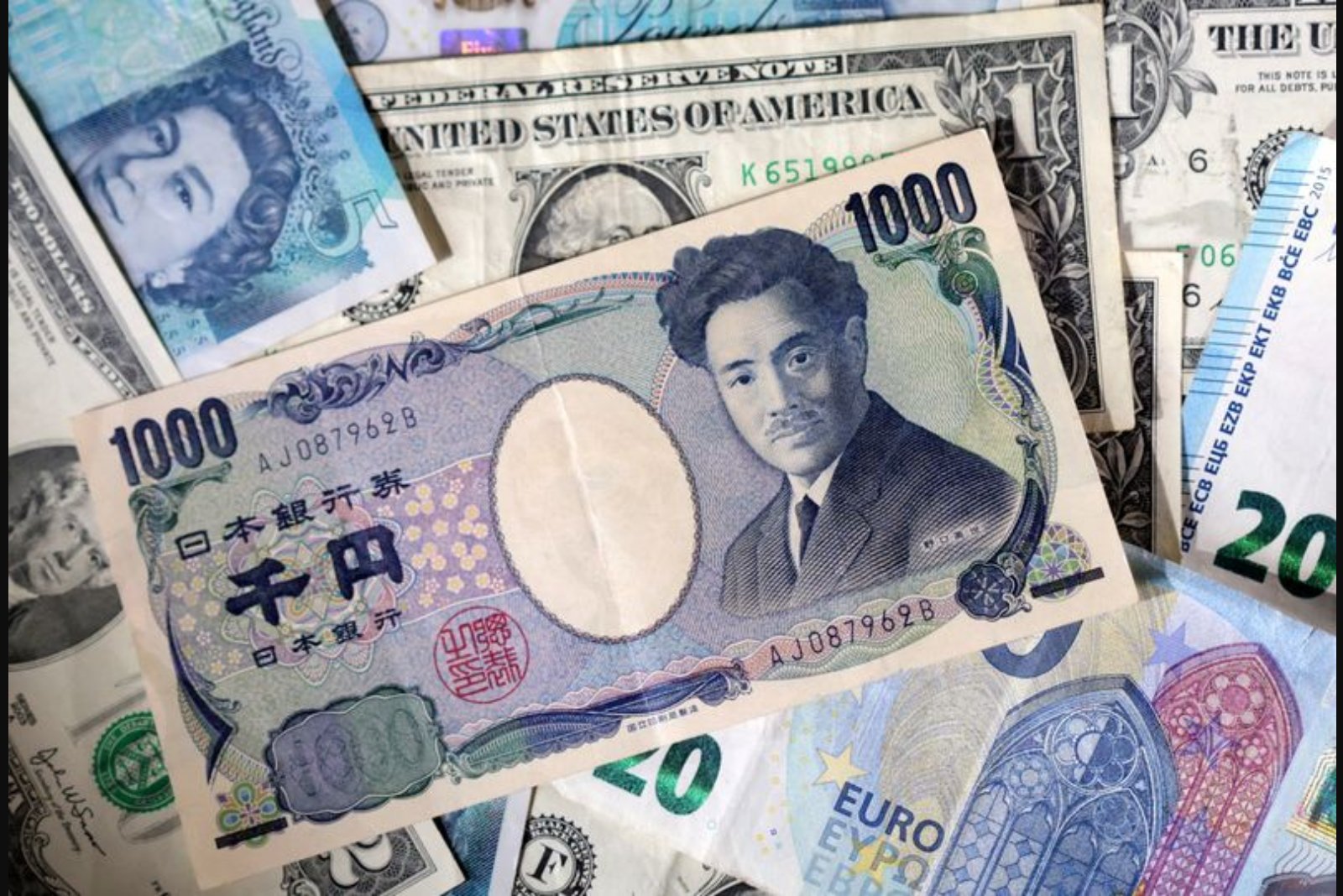
Tokyo's currency was steady on Tuesday morning in Asia as investors awaited the Bank of Japan's policy decision, which kicks off a packed calendar of rate announcements from major central banks later this week. The yen was unchanged against the U.S. dollar at 159.49 yen as market participants priced in a high likelihood that the BOJ will leave its policy rate unchanged at 0.75% during the decision later in the day.
Market attention is focused on central banks across several jurisdictions with the Federal Reserve, the European Central Bank, the Bank of England and the Bank of Canada all set to deliver policy decisions before the week is out. The difficult-to-predict trajectory of the Iran war is casting a shadow over those meetings and helping to keep policymakers cautious.
"With every central bank that's meeting, they've all made it very clear that in the fog of uncertainty about how the war will play out as far as both inflation and growth, it's giving them every excuse they need to sit on their hands," said Ray Attrill, head of FX strategy at National Australia Bank in Sydney. He added that expectations for a BOJ rate increase have evaporated, noting that market-implied odds for a hike are below 5%.
Analysts and traders will be watching the BOJ's updated macro projections closely. Attrill highlighted that the bank will present forecasts for growth and inflation that will, for the first time, extend through 2028 - an item investors say will be scrutinized for clues about the bank's medium-term outlook.
Persistent weakness in the yen remains a policy concern in Tokyo. Japanese Finance Minister Satsuki Katayama reiterated a warning to market participants on Tuesday, saying that volatility in crude oil futures is spilling over into currency markets. She stressed that authorities are "standing by around the clock" to take "decisive action" if necessary.
In the United States, the Federal Open Market Committee is scheduled to meet on Wednesday. The session is expected to result in rates being held steady. The timing of the meeting coincides with a transition at the Federal Reserve's leadership: it is likely to be Chair Jerome Powell's final meeting before a new nominee assumes the role after Republican Senator Thom Tillis removed his block on Kevin Warsh's confirmation late on Sunday.
Steve Englander, global head of G10 FX research at Standard Chartered in New York, said the upcoming FOMC meeting is not primarily about rate policy but could see an upward revision in the committee's assessment of the economy. He warned that the inflation picture is only improving "very slowly at best" and that this could become an immediate task for Warsh when he takes office.
The Senate Banking Committee is also expected to advance Warsh's nomination to the full Senate, with a vote scheduled for 10 a.m. EDT (1400 GMT) on Wednesday.
Currency markets showed only modest movement on Tuesday. The U.S. dollar index, which tracks the greenback against a basket of six currencies, ended a two-day losing streak with a 0.1% gain to 98.448. The euro eased 0.1% to $1.1715, while the British pound was trading at $1.3527. In the Asia-Pacific currency space, the Australian dollar was flat at $0.7187 and the New Zealand dollar fetched $0.5908.
Beyond fiat currencies, some digital assets posted modest gains. Bitcoin rose 0.5% to $77,365.65, while ether increased 0.6% to $2,306.63.
On the geopolitical front, U.S. President Donald Trump held discussions with top national security aides on Monday about a new Iranian proposal to resolve the conflict. A U.S. official later said that Trump was unhappy with the plan because it did not address Iran's nuclear program, a detail that underscores how diplomatic developments are being monitored closely by markets.
Traders and policy watchers enter the week looking for any signal that might prompt a change in central bank settings. For now, however, officials appear inclined to maintain their current stances until the path of both inflation and global growth becomes clearer amid the continuing uncertainty over the Iran war and oil market volatility.
Full market snapshot:
- Yen: 159.49 per dollar.
- BOJ policy rate: expected to remain at 0.75%.
- U.S. dollar index: 98.448.
- Euro: $1.1715. British pound: $1.3527.
- Australian dollar: $0.7187. New Zealand dollar: $0.5908.
- Bitcoin: $77,365.65. Ether: $2,306.63.
This week will test whether central banks maintain a patient stance in the face of geopolitical risk and volatile commodity markets, with potential implications for currency stability and broader financial conditions.