
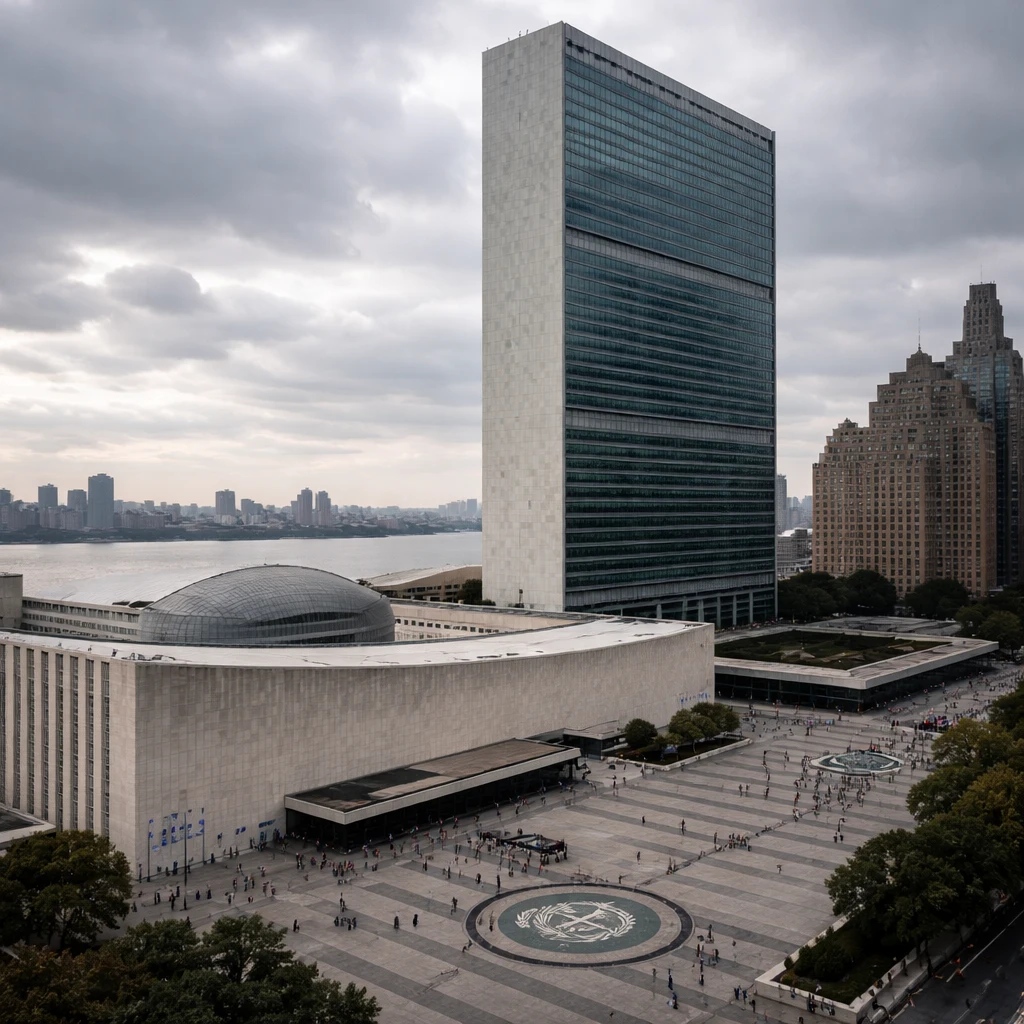
The United States has transferred $725 million to the United Nations for the organization’s regular budget, the U.N. said on Wednesday, narrowing a significant arrears position that had threatened Washington’s voting rights at the U.N. General Assembly.
U.N. spokesperson Farhan Haq confirmed the payment and noted an additional recent remittance: "We received $725 million yesterday from the United States for the U.N. regular budget, and we also received $102 million from the U.S. for peacekeeping on Friday," he said. "The U.S. still owes $1.312 billion to the regular budget," he added, and said that "with these payments, the U.S. is no longer in jeopardy of falling under Article 19 for 2027."
Article 19 of the U.N. Charter provides that a member state can lose its General Assembly voting rights if its arrears exceed the equivalent of two years in assessed contributions, though the text allows for grace periods to be granted in some circumstances.
U.S. officials had indicated in recent weeks that any further payments would be linked to progress on internal reforms at the U.N. When asked about the planned payment last month, a U.S. official said any payments will be contingent on continued reforms of the U.N.
The payment comes amid a period in which the Trump administration sharply reduced federal spending in certain areas and reallocated funds toward priorities it described as better aligned with U.S. taxpayer interests. The administration has been critical of the U.N., arguing that it has not fulfilled its potential, and it has curtailed funding to several U.N. agencies. In addition to slowing mandatory transfers to both the regular and peacekeeping budgets, the administration has cut voluntary funding that agencies with separate budgets had previously received.
China, the U.N.'s second-largest contributor, made a regular budget payment of $641.4 million on September 1, according to U.N. records. The organization itself is pursuing a reform and cost-reduction program under the label "UN80" as it confronts broader financial strain.
U.N. officials said the incoming funds reduce the immediate threat of Article 19 consequences for the United States for 2027 but leave a remaining assessed-balance on the regular budget that will need to be addressed in future budget cycles. The organization’s mix of mandatory and voluntary funding streams, and ongoing reform efforts, remain central to its ability to balance obligations and programs amid changing contributor behavior.
Context note: The payments reported by U.N. officials included both the $725 million directed to the regular budget and the $102 million designated for peacekeeping. The remaining regular-budget arrears identified by the U.N. total $1.312 billion.