
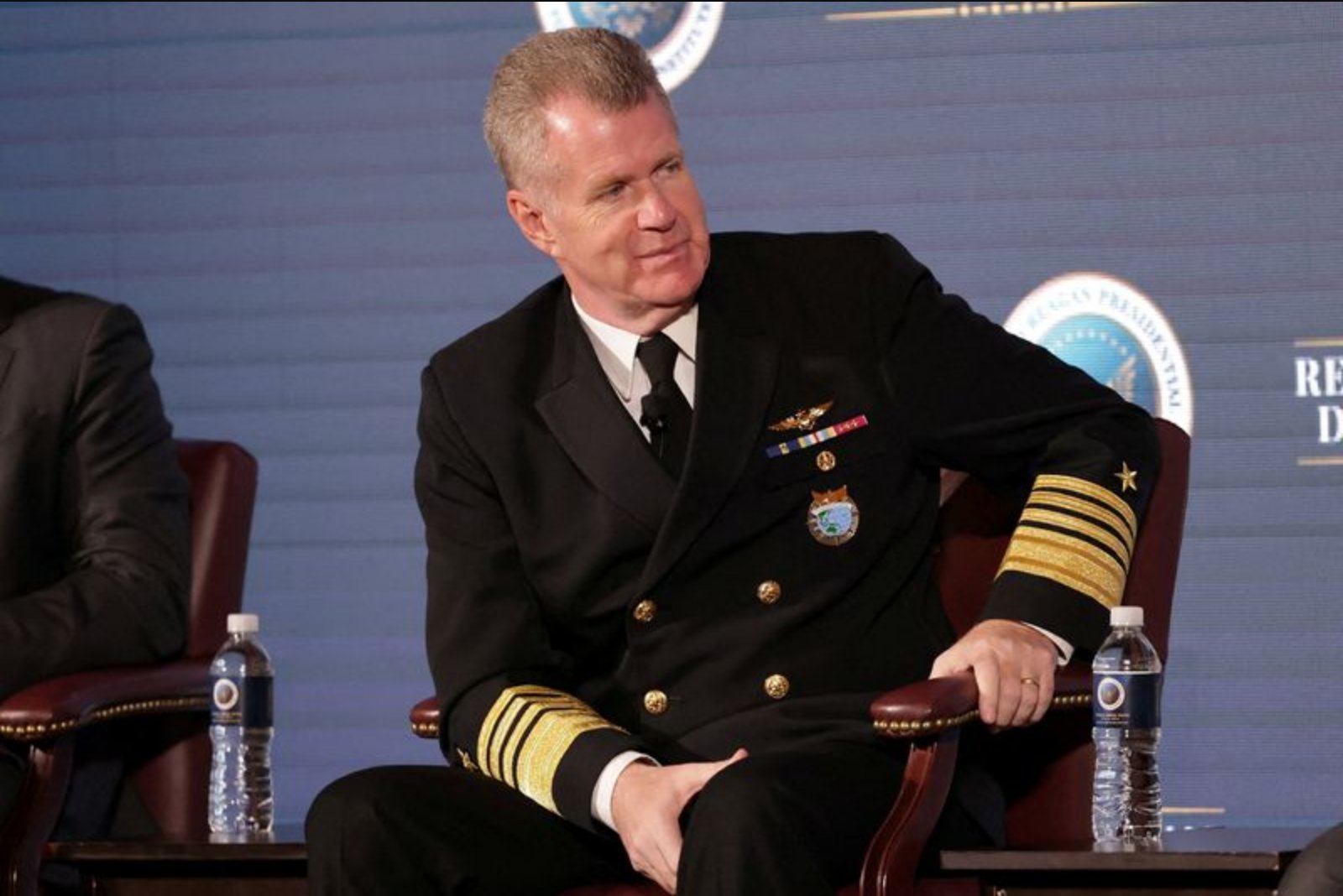
The top U.S. military official for the Indo-Pacific pressed the case on Tuesday that Taiwan must move forward with its stalled defense budget, saying Taipei must demonstrate the political will to fund its own security.
Asked about ongoing budget talks, Admiral Samuel Paparo told the Senate Committee on Armed Services: "we can’t want Taiwan’s defense more than they want it itself." He cautioned against delaying domestic defense funding with an analogy that underscored the urgency: "It’s not a chicken and the egg, because you’re not going to get chicken or eggs if you starve the chicken," he said.
Taiwanese President Lai Ching-te proposed additional defense spending last year, seeking $40 billion in extra resources to strengthen the island's capabilities relative to China, which regards Taiwan as its own territory. That proposal remains under discussion in Taiwan's parliament, where the opposition Kuomintang (KMT) party holds a majority and has advanced alternative, less costly plans.
Under U.S. law, Washington is obliged to provide Taiwan with the means to defend itself. American senators have worked to reassure Taiwanese officials that the United States will move forward with another round of arms sales, which could total as much as $14 billion in value soon.
Concerns in Washington about Taipei's budget process have prompted direct outreach. In February, a group of 37 bipartisan U.S. lawmakers wrote to senior Taiwanese politicians expressing worry that the parliament was stalling defense spending plans. A separate delegation of U.S. lawmakers repeated a similar message during a later visit to Taipei.
Reflecting discussions held during recent congressional travel, a Democratic congressional aide who had recently been to Taiwan said, "We did secure private assurances from KMT leadership that a robust defense package would eventually be approved."
The KMT maintains that it supports defense spending but has resisted signing "blank checks," arguing that engagement and dialogue with Beijing also matter. This stance has fueled tension with ruling party lawmakers in Taipei, who have criticized the KMT for missing defense budget discussions and for the party leader Cheng Li-wun's visit to China.
During that trip, Cheng Li-wun appealed for peace and made a public comment urging that "birds not missiles should fly in the skies." The dispute over the budget and the political optics of cross-strait engagement continue to shape Taiwan's internal debate on how best to prioritize and finance defense.
Contextual note: The matter remains dynamic within Taiwan's legislature, where competing proposals and political considerations are influencing the timing and content of any final defense package.