
A protracted conflict in the Middle East, now in its ninth week, has produced sharply different reactions across U.S. fixed-income markets, exposing a fracture in investor sentiment that complicates the Federal Reserve's task this week.
At the center of the divide is the contrast between corporate credit and U.S. Treasuries. In corporate debt markets, spreads have tightened and investors appear to be treating the conflict as a muted event. By contrast, Treasury investors are more cautious, focusing on inflation risks that could prevent, or delay, interest rate cuts by the Fed.
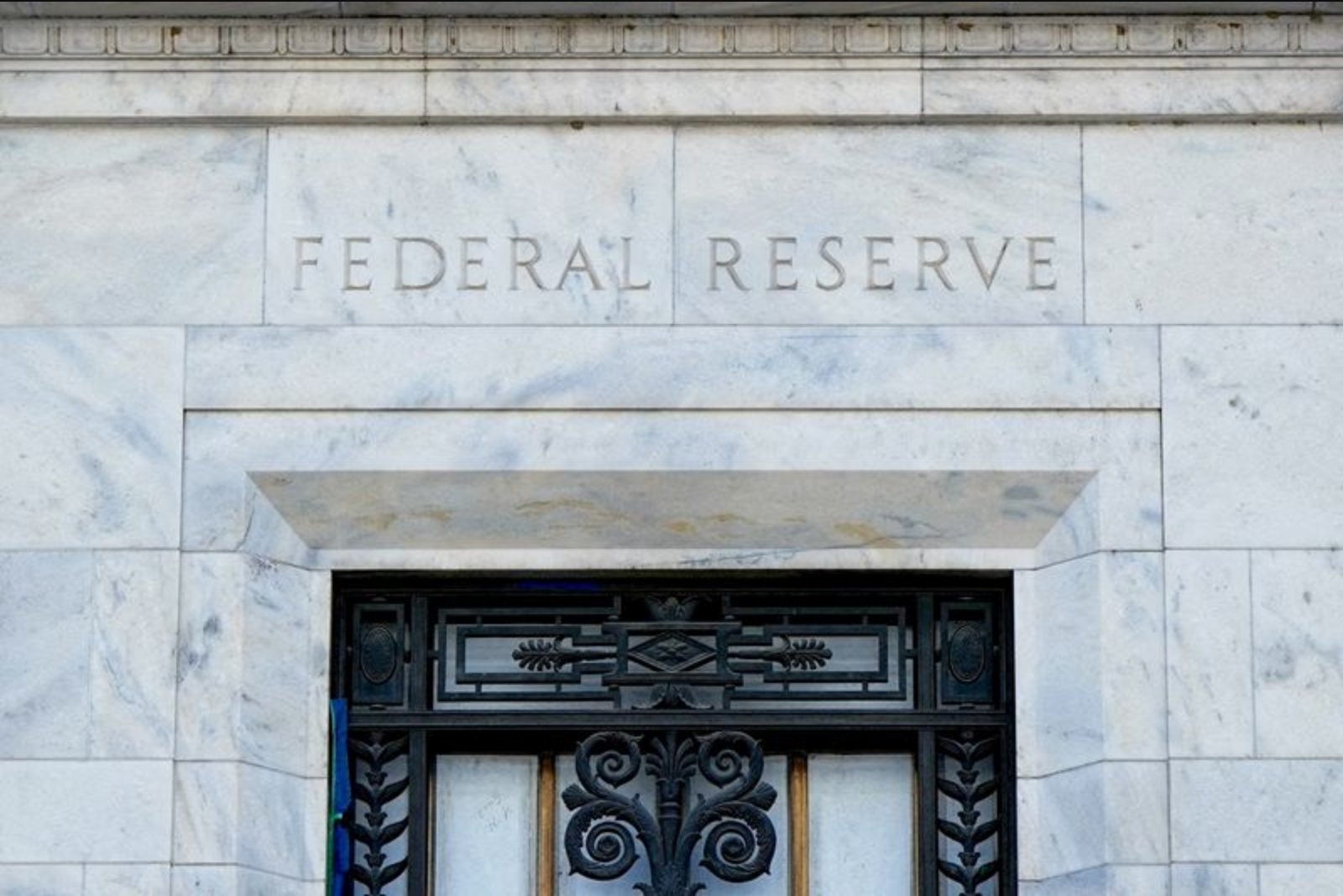
The Federal Open Market Committee is widely expected to hold its benchmark overnight interest rate in the 3.50% to 3.75% range at the conclusion of its two-day meeting on Wednesday, as policymakers weigh how the conflict might affect the inflation outlook amid persistent growth concerns. Market pricing has shifted significantly: expectations for rate cuts have been pushed out to next year, rather than the prewar outlook of more than 50 basis points of easing in 2026.
In corporate credit, the tone is markedly different. "From a credit standpoint, spreads are tightening back to low levels," said Jim Barnes, director of fixed income at Bryn Mawr Trust in Berwyn, Pennsylvania. "Credit investors aren’t risk averse. It’s as if the Middle East conflict is a non-event."
Data from ICE BofA U.S. Corporate Index showed U.S. high-yield credit spreads at 284 basis points over Treasuries late on Monday. By comparison, high-yield spreads reached 461 basis points in early April last year in the days after "Liberation Day," when President Donald Trump imposed tariffs on imports from around the world. Portfolio manager Ali Hassan at Thornburg Investment Management noted that in prior market dislocations - 2013, 2016, 2018 and 2020 - spreads have widened above 800 basis points, and they climbed to as much as 2,000 basis points during the global financial crisis of 2008.
Investment-grade spreads have also moved toward tighter ranges, approaching their narrowest levels since mid-February and standing at about 81 basis points, according to the same data.
Nathaniel Rosenbaum, head of U.S. high-grade credit strategy at J.P. Morgan, attributed the compression in spreads to expectations that "the conflict is grinding to a halt and thus risk markets are letting very strong earnings take center stage." Analysts point out that the most visible economic effect of the conflict so far has been through energy prices rather than a broad-based hit to demand or corporate profits. While CEOs have warned of rising cost pressures from higher oil prices, corporate earnings have shown resilience, and there has been no broad-based downgrade cycle or a visible increase in default risk.
By contrast, the Treasury market has adopted a more cautious posture. Investors in government debt are increasingly concerned that rising oil prices will translate into higher inflation down the line, and that persistent inflation could keep the Fed from easing policy. That concern has even spurred positions that price in the possibility of further rate moves to counter inflation.
Noel Dixon, senior macro strategist for State Street in Boston, pointed to elevated energy prices and the recent inflation readings to explain the cautious tone. "Energy prices are elevated and while we did get some encouraging CPI (Consumer Price Index) on the core side, it’s clear that the headline drivers on oil prices are not impacting core CPI just yet," he said.
Recent data showed core CPI up 0.2% in March and 2.6% year-on-year, even as headline inflation rose 0.9% in the same month - the largest monthly increase in nearly four years. Those figures have helped push the U.S. 10-year Treasury yield to around 4.3%. Dixon argued that the 10-year yield is not fairly valued at that level and sees room for it to climb further, citing inflation and higher term premiums - the extra yield investors demand for holding long-term debt. He suggested 4.5% as a more appropriate level for the benchmark yield at present.
Neutral positioning among Treasury investors has risen, reflecting the cautious mindset. J.P. Morgan's Treasury Client Survey as of April 20 showed that the share of active clients taking a neutral stance increased by 11 percentage points to 34%.
"It’s unclear how this war is going to play out," said Anders Persson, chief investment officer for global fixed income at Nuveen, noting that the 10-year yield has hovered near current levels for several weeks and that caution is warranted.
Not all bond investors agree. Some have extended duration relative to benchmarks, arguing the market is overstating inflation risks and underestimating the potential for weaker growth to pull yields down. Extending duration increases sensitivity to interest-rate moves, and while it can be seen as a risk-seeking stance, it can also signal an expectation that softer growth or recession risks will ultimately reduce yields.
The divergence in bets across fixed-income markets highlights the uncertainty surrounding how the Iran war will filter through to inflation and growth. It also reflects the Fed's difficult balancing act: fighting inflation while avoiding steps that could undermine economic momentum.
"The market is currently overpricing the inflation shock and underpricing the growth element," said Vishal Khanduja, head of the broad markets fixed income team at Morgan Stanley Investment Management in Boston. "As the market normalizes, the growth shock will come through, which will bring down real and nominal yields."
The split reaction between corporate credit and Treasuries underscores the uneven way in which geopolitical shocks can be absorbed by different corners of the financial markets. Corporate credit investors are leaning on earnings resilience; Treasury holders are focused on the path of inflation and policy. That tension will be a central consideration for policymakers when they meet, and for investors monitoring the trajectory of both inflation and growth as the conflict continues.