
Economy June 21, 2026 05:47 AM

UK pushes ahead with domestically designed long-range weapons for Ukraine, bypassing U.S. components

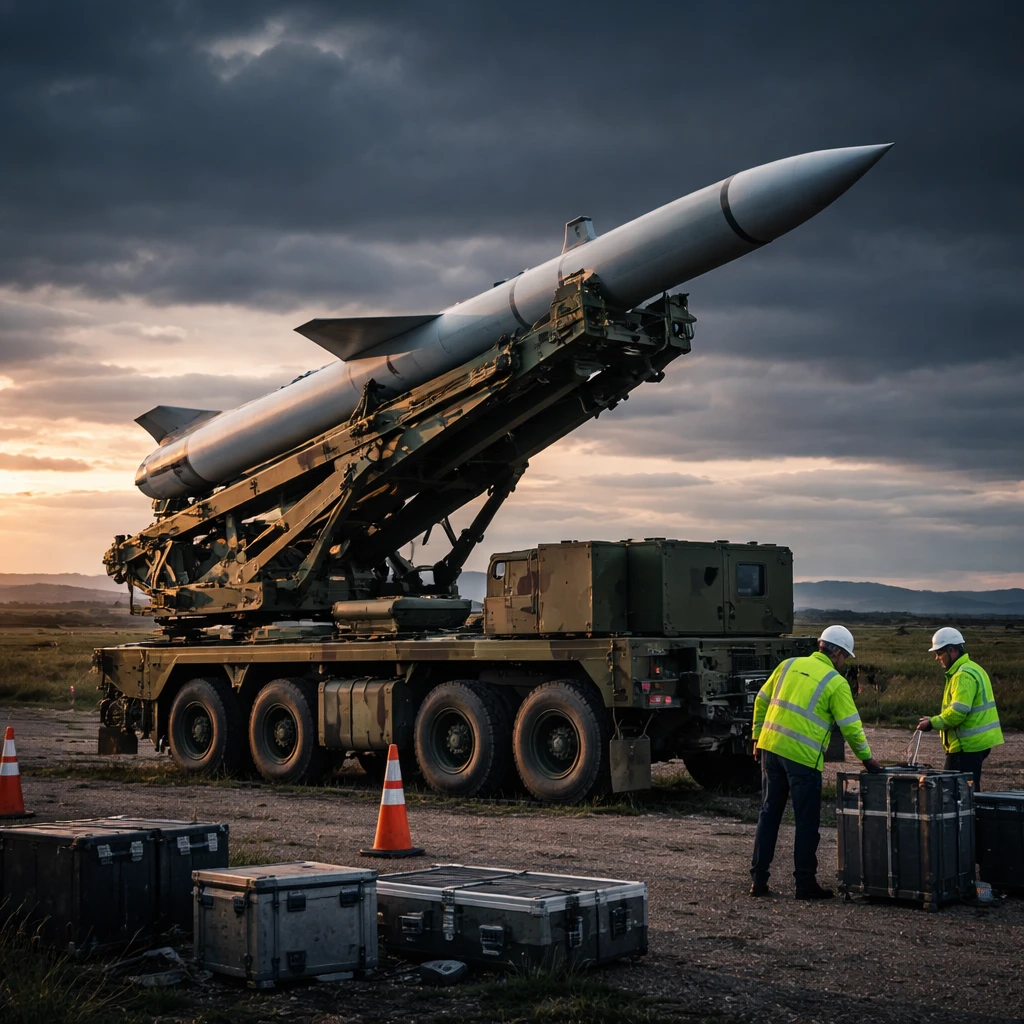
Project Brakestop seeks rapid delivery of low-cost, ground-launched systems capable of striking beyond 500 km without reliance on American hardware or data

By Caleb Monroe
Share
Twitter Reddit Facebook LinkedIn

The United Kingdom is advancing Project Brakestop, a program to develop low-cost, long-range weapons for Ukraine that do not use U.S. components or data. Three British-designed systems from MBDA, MGI Engineering, and Rotron Aerospace will undergo testing in the UK and Ukraine in the coming months, with officials aiming for battlefield deployment within a year. The initiative, launched in late 2024 and accelerated to support Kyiv, targets roughly half the cost of a Storm Shadow missile and sets performance and production benchmarks intended to ensure rapid availability.

UK pushes ahead with domestically designed long-range weapons for Ukraine, bypassing U.S. components
Summarize with
ChatGPT Perplexity Claude Grok Gemini

Key Points

  • Project Brakestop targets rapid development and deployment of UK-designed long-range weapons for Ukraine, with testing in the UK and Ukraine and battlefield deployment aimed within a year.
  • The three finalist systems from MBDA, MGI Engineering, and Rotron Aerospace are required to be ground-launched, carry at least a 225 kg warhead, and reach targets beyond 500 km while avoiding U.S. components or data.
  • Cost and production targets: approximately £400,000 per weapon (excluding warhead), roughly half the cost of a Storm Shadow, and a production goal of at least 40 units per month per manufacturer.

The United Kingdom is moving forward with a program to build a new generation of low-cost, long-range weapons for Ukraine designed to operate without U.S. components or American data, according to defence officials familiar with the plans.

The effort, named Project Brakestop and initiated in late 2024, has been accelerated to provide additional support for Kyiv in its conflict with Russia. Three British-designed systems - produced by MBDA, MGI Engineering, and Rotron Aerospace - have been selected as finalists and are scheduled to undergo testing in both the UK and Ukraine over the coming months.

Officials involved with the programme said the systems are intended to be ready for use on the battlefield within about a year if testing proceeds as planned. The UK government has set specific technical and cost targets for the effort: each weapon should be ground-launched, carry a warhead of at least 225 kilograms, and strike targets at distances beyond 500 kilometres.

Cost targets are a major driver of the project. Officials said the new weapons are expected to cost roughly half as much as the Storm Shadow cruise missile, which Ukraine has used for long-range strikes. The UK government is targeting a price of about £400,000 per weapon, excluding the warhead.

While the new systems are not anticipated to match the bunker-busting capability or the precision associated with Storm Shadow missiles, defence officials said they would still be capable of delivering significant damage to designated targets. A further operational constraint is that the systems must not contain U.S.-made components or depend on American data, allowing them to operate independently of Washington.

The stipulation reflects growing concern among some European governments about dependence on U.S. military technology as the current U.S. administration re-examines America's security commitments on the continent. The defence policy debate was highlighted when U.S. Defense Secretary Pete Hegseth announced a six-month review of the U.S. military presence in Europe, a development officials say has increased worries that American support could be scaled back.

On production, each of the three finalists told officials they expect to be able to manufacture at least 40 units per month within several months of receiving production orders. Even if a company does not win the final contract, officials anticipate those firms will seek to market their systems directly to Ukraine and to other European countries.


Context and timeline

Project Brakestop began in late 2024 and has been sped up to align with urgent battlefield needs. Testing in the UK and Ukraine is planned in the near term, with deployment a target within one year.


Technical and cost goals

  • Ground-launched weapons with range greater than 500 kilometres.
  • Minimum warhead size of 225 kilograms.
  • Target unit cost of about £400,000 each, excluding warhead.
  • Production capacity of at least 40 units per month per finalist after orders are placed.

Risks

  • Performance trade-offs - Officials note the new systems are not expected to match the bunker-busting capability or precision of Storm Shadow missiles, which could limit mission profiles and require different target selection; this affects defence procurement and operational planning.
  • Supply and production uncertainty - Firms say they can produce at least 40 units per month only after receiving production orders and after several months, so scaling to meet urgent demand may face manufacturing ramp-up risks impacting defence contractors and related supply chains.
  • Geopolitical and policy uncertainty - The move to avoid U.S. components and data reflects concern about possible shifts in U.S. commitments; changes in transatlantic security policy could influence demand for alternative systems and market dynamics for European defence firms.

More from Economy

India Seeks Lower Duties Before Moving to Implement U.S. Trade Pact Jun 21, 2026 After the fracture: Britain’s finance sector finds resilience but not full recovery Jun 21, 2026 Tentative U.S.-Iran Truce Eases Near-Term Market Risks but Leaves Larger Threats Intact Jun 21, 2026 Zelenskiy Presses Belarus to Remove Relay Stations He Says Aid Russian Drone Campaign Jun 21, 2026 Sanctions Face Growing Limits as Targeted States Exploit Complex Evasion Networks Jun 21, 2026