
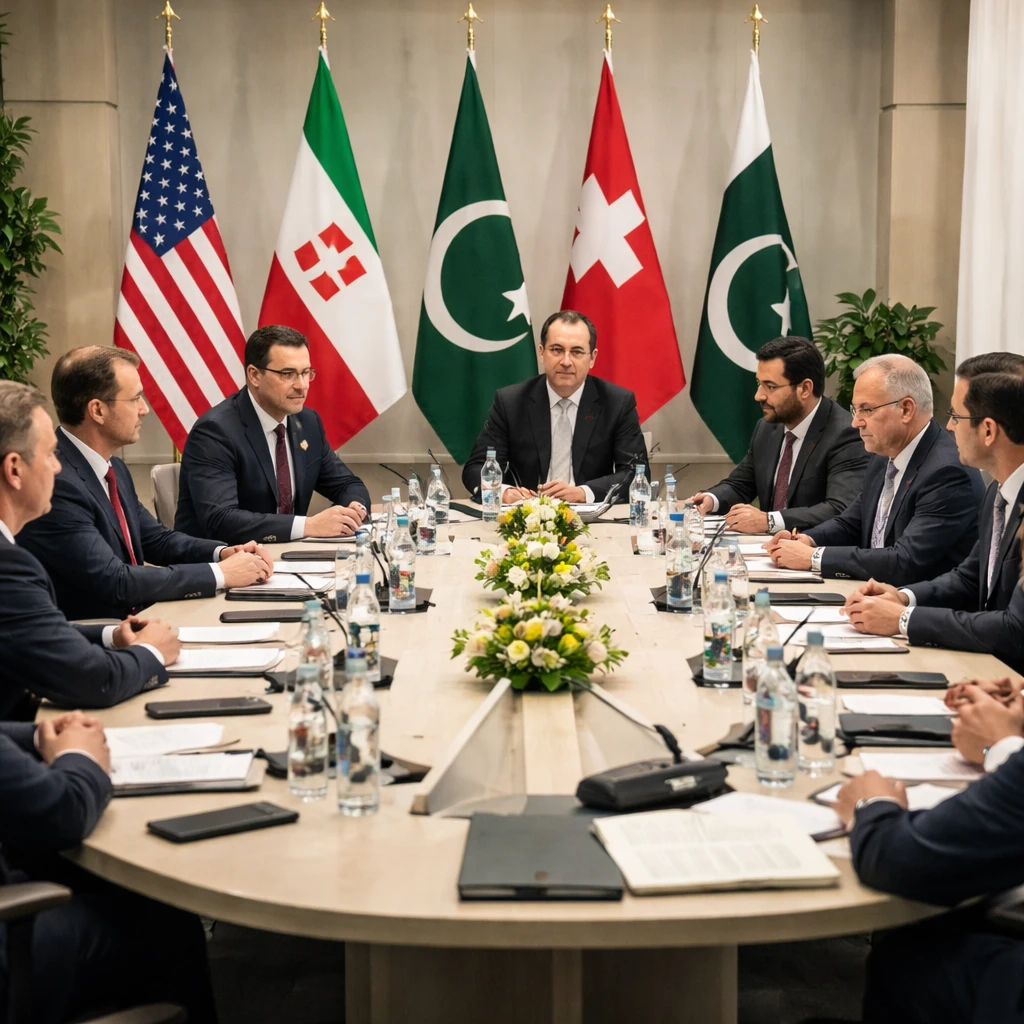
Diplomatic engagements between Washington and Tehran are poised to advance as officials prepare for preliminary talks in Switzerland this Sunday. The discussions aim to secure a permanent ceasefire and move forward with negotiations concerning Iran’s nuclear program, according to reports from Bloomberg. The timing of these talks follows a memorandum of understanding signed by President Donald Trump, which established a 60-day negotiating window between the two nations. This period includes provisions for potential extension if required to achieve substantive outcomes.
U.S. Vice President JD Vance traveled to Switzerland in advance of the summit, outlining the immediate goal as creating a framework to facilitate future negotiations. Before departing Washington, Vance emphasized the dual focus of the diplomatic mission. "I think we’re going to hopefully make progress on the nuclear issue, make progress on the Lebanon ceasefire issue," Vance stated. His presence underscores the administration's commitment to addressing both the nuclear dossier and regional stability in the Levant.
The diplomatic lineup includes significant regional involvement. Pakistan Prime Minister Shehbaz Sharif and Army Chief Asim Munir are expected to attend, bringing key mediators to the table. On the Iranian side, state media confirmed that Parliament Speaker Mohammad Bagher Ghalibaf, Foreign Minister Abbas Araghchi, and Central Bank Governor Abdolnaser Hemmati comprise the delegation. This high-level participation signals the seriousness with which Tehran views the proceedings.
However, the path to dialogue has faced recent hurdles. The negotiations were delayed earlier this week due to renewed clashes in southern Lebanon between Israeli forces and Hezbollah. Despite the memorandum of understanding halting direct hostilities between Washington and Tehran, tensions linger over the practical implementation of the agreement and the long-term status of Iran’s nuclear activities. Furthermore, uncertainty was introduced when Iran renewed its order to close the Strait of Hormuz, contradicting previous commitments to reopen the strategic waterway under the memorandum terms.
The economic implications of the Strait of Hormuz are substantial, as the waterway handles approximately one-fifth of global oil and gas shipments. The U.S. Central Command reported that commercial traffic through the route increased on Saturday, with 55 merchant vessels transporting more than 17 million barrels of oil. Questions remain regarding whether Iran’s renewed closure order will materially disrupt shipping operations. President Trump issued a directive on Saturday prohibiting transit tolls during the negotiation period, warning against actions that could impede commercial traffic.
The scope of the upcoming talks is broad, covering the nuclear program, ceasefire framework implementation, and broader regional security concerns, including Israel-Hezbollah tensions. Washington has already taken steps to de-escalate, including lifting a naval blockade of Iranian ports and pledging sanctions waivers on Iranian oil exports. In return, Tehran committed to reopening the Strait of Hormuz. The success of these negotiations will depend on aligning these commitments with on-the-ground security dynamics.