
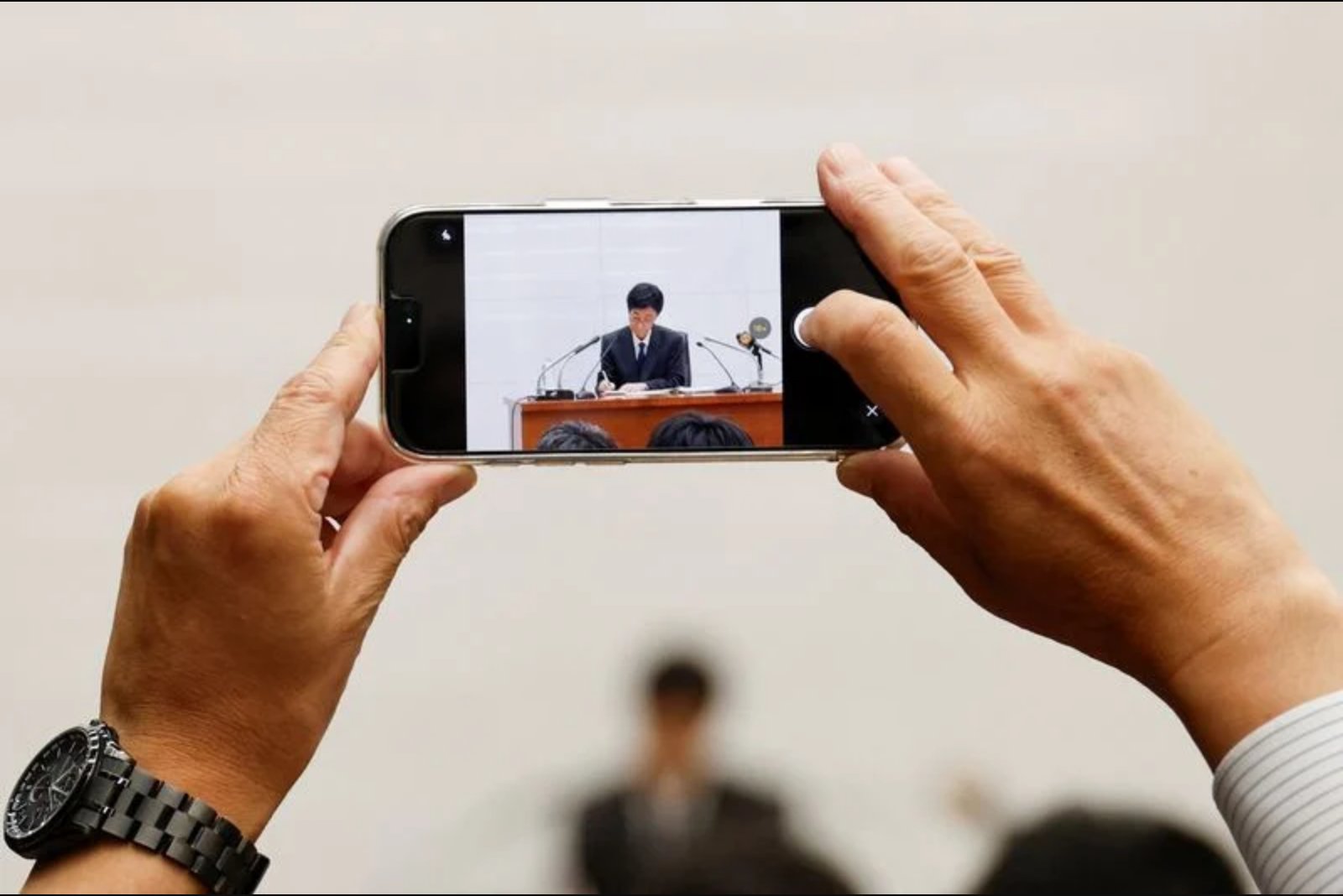
At this week's landmark policy meeting the Bank of Japan moved policy rates to 1% - the highest level in 31 years - and the bank’s deputy took the unusual step of fronting media briefings while the governor was unwell. That deputy, Shinichi Uchida, delivered a plain, focused account of the bank’s judgement, warning that inflation was broadening and that there was a material risk of underlying price growth straying from the BOJ’s 2% target.
Uchida, a career central banker and the bank’s second-in-command, read from a prepared statement and emphasised a consistent policy theme: financial conditions remain accommodative and the BOJ must be prepared to raise borrowing costs further if necessary to stabilise price growth around its goal. While he did not set out a timetable for the next hike, his tone was sufficiently hawkish to avoid prompting a sharp yen sell-off, market participants said.
“Price rises are broadening, and there is a risk that underlying inflation may deviate from our target,” Uchida said, stressing the need to stabilise price growth around the 2% goal. He also flagged the BOJ’s vigilance toward foreign exchange moves, noting firms have become more active in passing rising import costs to domestic prices amid yen weakness.
The clarity of Uchida’s delivery contrasted with a more elaborate, model-driven approach favoured by Governor Kazuo Ueda in prior briefings. Market participants recall instances where Ueda’s remarks were perceived as tolerating a weak yen, episodes that helped trigger a currency plunge and subsequent yen-buying intervention by the Ministry of Finance. In this case, Uchida’s comments left little scope for speculative FX trading.
“Uchida was as always, clear and stable. His remarks left no room for error, leaving FX markets with no opportunity to engage in speculative trading,” said Shigeto Nagai, a former BOJ official who now heads Japan economics at Oxford Economics.
The deputy governor’s presentation also reflected his distinct communicative style. Having been discharged from hospital just last month after treatment for leukemia, the 63-year-old read a carefully scripted statement outlining the case for further rate increases to counter risks of an inflation overshoot. Observers note that Uchida tends to speak pragmatically, focusing on decision-making in an environment of uncertainty rather than layering arguments with detailed modelling and forecasts.
“While Ueda would add layers of explanations to make his case, Uchida keeps his comments simple and concise,” said Seisaku Kameda, a former top BOJ economist who worked with both figures. “Uchida will be clear and brief on what the BOJ knows or can say. For the unknowns, he’s completely silent.”
That pragmatic outlook was evident when Uchida played down the usefulness of the BOJ’s neutral rate estimate as a central guide for future policy. Although Governor Ueda has acknowledged limits to using a neutral-rate gauge and signalled internal work to improve such estimates, Uchida was less inclined to treat the figure as an effective policy anchor.
Uchida’s profile within the BOJ is rooted in deep institutional knowledge. Before his appointment as deputy governor in 2023, he spent most of his career in the bank’s monetary affairs department, the unit responsible for drafting policy proposals and preparing speeches for senior officials. He played a role in both introducing and later dismantling unconventional policy measures such as negative interest rates and yield curve control - tools deployed to reflate the economy.
Given that background, some market participants view him as a credible candidate to succeed Governor Ueda when the current term ends in 2028. The view of Uchida as a central banker with hands-on operational experience informs how markets interpret his public remarks.
“Uchida’s remarks were solid and grounded on his long experience as a career central banker,” said Mari Iwashita, executive rates strategist at Nomura Securities. “Instead of elaborating on the various uncertainties, he laid out the BOJ’s focus on inflation risks very clearly.”
Uchida’s public pivot from earlier views that had been seen as dovish by some market participants was notable. Under the previous governor, Haruhiko Kuroda, Uchida drafted a speech that criticised weak wage growth for prolonging deflation and supported ultra-loose policy designed to push the economy toward conditions where labour shortages would force firms to raise pay. This week, by contrast, Uchida declared that deflation had been successfully overcome thanks to the BOJ’s prior stimulus measures and identified upward price risks as the new policy challenge.
Uchida’s elevated visibility and firm messaging mean his comments will likely continue to attract market attention even after the governor returns. The BOJ has said Governor Ueda will be back in time to chair the next policy meeting in July. If health permits, Uchida would be expected to make public appearances a few times a year, consistent with the practice for other board members.
Analysts suggest Governor Ueda may also begin to mirror some of Uchida’s language more openly, acknowledging concerns that the BOJ risks falling behind the curve in addressing rising prices. “For the first time, the BOJ cited the risk of being behind the curve as among reasons to raise rates. That’s a big change showing its alarm over mounting price pressures,” said Kameda, who is currently an economist at Japan’s Sompo Institute Plus. “With such imminent and real risk looming, the policy message should be pretty clear with little room for ambiguity.”
The substance of Uchida’s briefing - emphasising broadening price rises, vigilance on exchange-rate pass-through and readiness to tighten further - provides markets with a more explicit mapping of the BOJ’s risk priorities. It also underscores the role that communication style can play in shaping market reaction: concise, unambiguous language can reduce opportunities for speculative moves in currency markets, while more expansive, model-focused commentary can leave greater scope for interpretation.
Looking ahead, the central bank’s next steps will be watched closely for signals about whether the BOJ continues to prioritize preventing an inflation overshoot over concerns about the economic impact of higher rates, including spillovers from geopolitical headwinds such as the Middle East conflict that Uchida noted as a consideration.
Summary
When the BOJ raised its policy rate to 1%, Deputy Governor Shinichi Uchida briefed the media in place of the governor and set out a clear warning that inflation is broadening and could deviate from the 2% target. Uchida’s concise, pragmatic messaging differed from the governor’s more model-focused approach, emphasising the need to stabilise inflation and the bank’s vigilance on yen moves as firms pass through import costs. His background in monetary policy drafting and his recent public presence lend weight to his comments and may influence future BOJ communication.
Key points
- Uchida warned that price rises are broadening and flagged the risk of underlying inflation deviating from the BOJ’s 2% target - a clear signal the bank is concerned about upward price pressures. (Impacted sectors: banking, fixed income, consumer-facing industries)
- His straightforward communication reduced space for speculative FX moves, avoiding a sharp yen plunge and reflecting attention to exchange-rate pass-through into corporate pricing. (Impacted sectors: exporters, importers, forex markets)
- Uchida’s background in the BOJ’s monetary affairs department and role in both the introduction and removal of unconventional policy tools underpin his policy credibility and market influence. (Impacted sectors: monetary policy instruments, bond markets)
Risks and uncertainties
- Risk of the BOJ being seen as behind the curve on inflation - this influences expectations for further rate rises and affects interest-rate sensitive assets. (Impacted sectors: sovereign and corporate bond markets, banking)
- Exchange-rate volatility - although Uchida’s comments temporarily limited speculative FX activity, persistent yen weakness could continue to drive higher import costs and corporate price pass-through. (Impacted sectors: exporters, importers, consumer goods)
- Uncertainty over communication and policy timing - while Uchida signalled readiness to raise rates, he did not commit to a timetable, leaving markets to interpret the BOJ’s path. (Impacted sectors: equities, currency traders, rate-sensitive sectors)
Tags: ["inflation","BOJ","yen","rates","monetary"]