
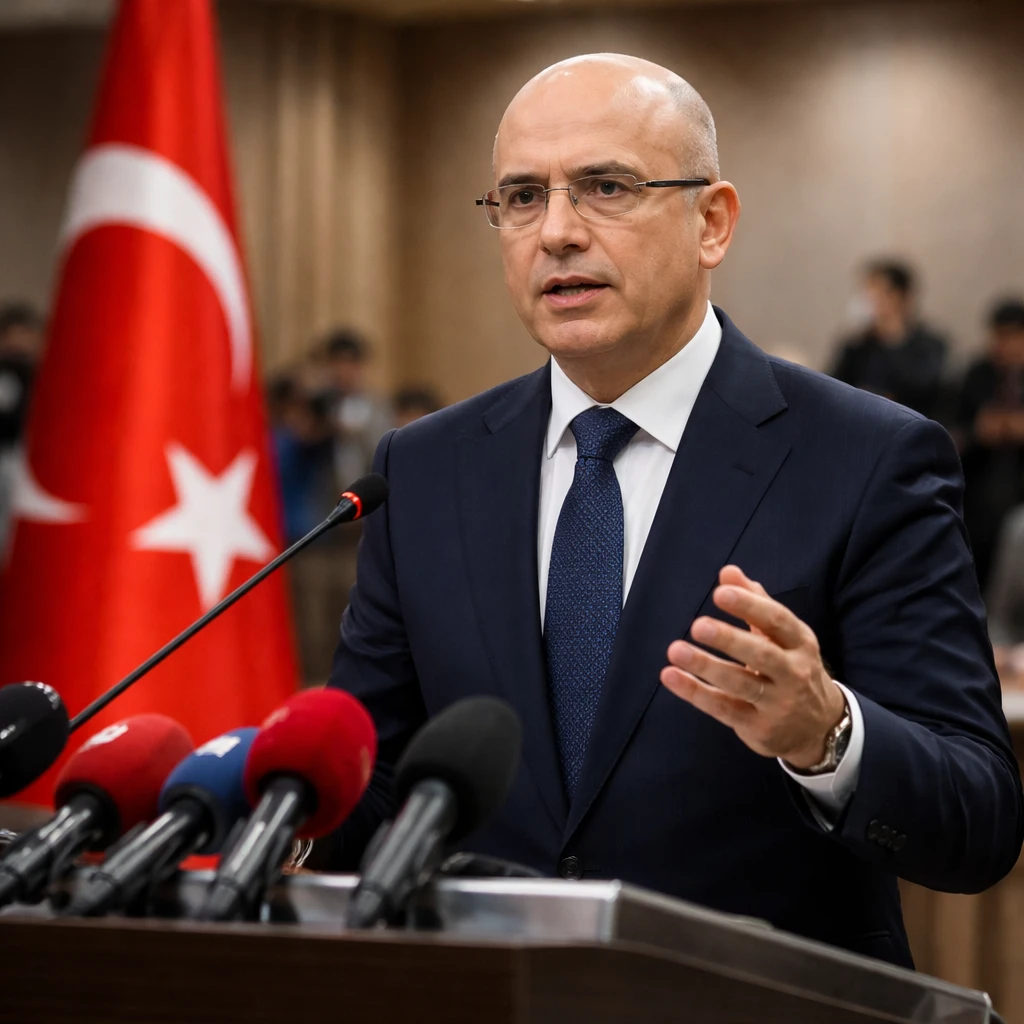
Turkey's Finance Minister Mehmet Simsek said on Friday that the government will achieve its budget deficit target despite putting in place measures that reduce the immediate impact of higher crude oil prices on consumers.
Central to the government's approach is a sliding fuel pricing mechanism that moderates increases in pump prices. The mechanism is part of a broader package of measures that the government says will shield households and businesses from sharp fuel-cost increases, albeit at the cost of forgoing some government income.
Simsek also set out the government's expectation for external imbalances, projecting that the country's current account deficit will be 3% of GDP or lower by the end of the year. He described that projected level as manageable.
The finance minister acknowledged that the process of disinflation has been delayed by several months but said it will return to its intended course. He tied that outlook to a continued mix of fiscal policy support and planned structural reforms aimed at reducing inflation to low single digits.
Officials have effectively reduced near-term price pressure at the pump by limiting how much fuel prices can rise at retail. Those steps involve the government foregoing some revenue in order to cushion consumers from higher crude oil prices.
Policy stance and priorities
- The government intends to maintain fiscal support while pursuing structural reforms intended to lower inflation to low single digits.
- The sliding fuel-price mechanism is designed to limit pass-through from crude oil to consumer pump prices.
- Officials expect the current account deficit to be 3% of GDP or lower by year-end and regard that as manageable.
Simsek's comments underscore a balancing act between short-term support for consumers and the maintenance of longer-run fiscal and macroeconomic objectives. The measures described include explicit trade-offs: cushioning consumers from higher commodity costs while accepting reduced government income in the near term.
While the minister forecast a return to the planned disinflation trajectory, he also acknowledged a setback in timing, saying the slowdown of disinflation has lasted several months.
Beyond the immediate measures on fuel prices, the minister reiterated the government's commitment to combine fiscal policy support with structural reform efforts to reach the targeted inflation outcome.
Note: The article reflects statements attributed to Turkey's finance minister about fiscal targets, the sliding fuel-price mechanism, the projected current account deficit and the trajectory of disinflation, as described in the cited remarks.