
Economy June 17, 2026 06:16 AM

Third Iranian Crude Tanker Clears US Blockade Line, Heads Toward Asia

Suezmax Sonia I departs Chabahar fully laden as two VLCCs also transit the marked blockade corridor ahead of a planned ceasefire

By Derek Hwang
Share
Twitter Reddit Facebook LinkedIn

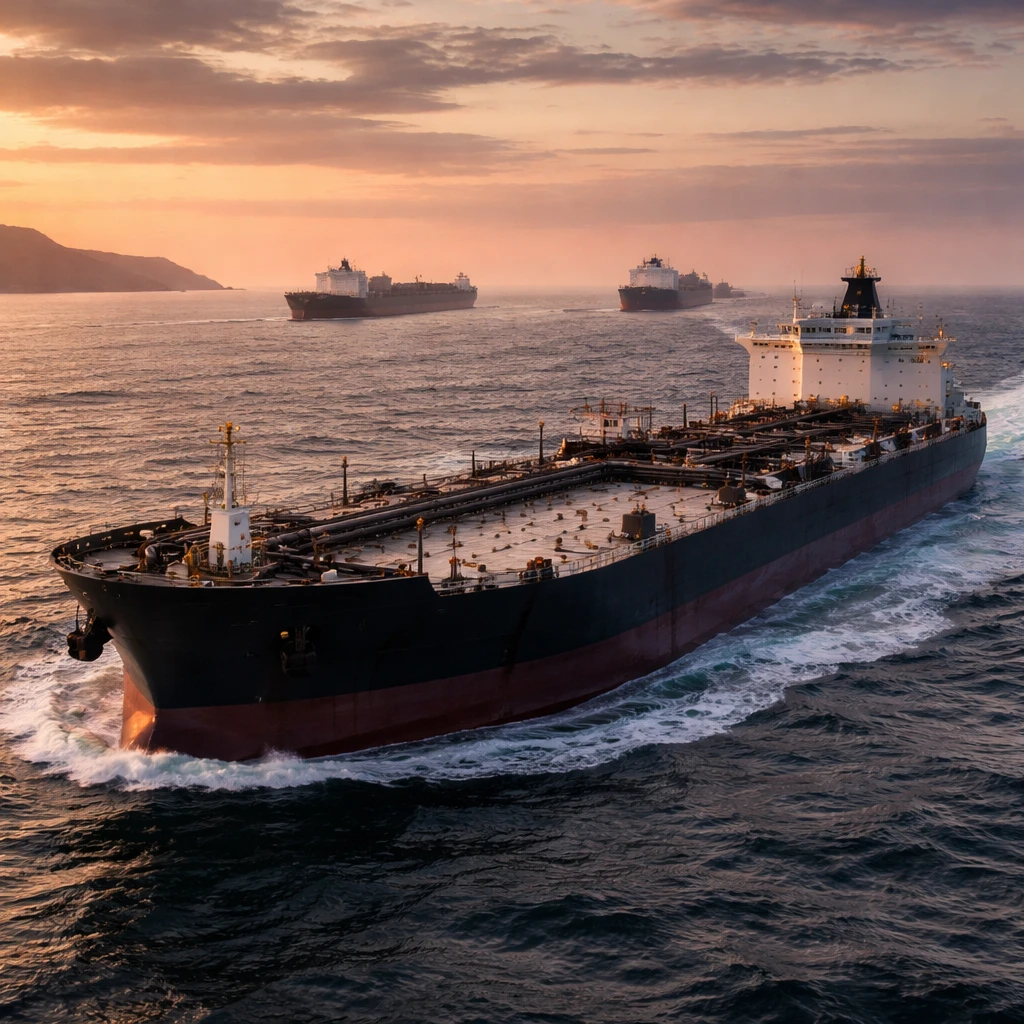
A third oil tanker carrying Iranian crude has left Chabahar and crossed a line identified on US maps as the blockade boundary, according to vessel-tracking information. The Suezmax Sonia I is fully loaded and bound for Singapore, following two very large crude carriers that are transiting toward the southern tip of India. Iranian media report the US blockade is being lifted days before a planned ceasefire that would allow Tehran to resume immediate oil sales.

Third Iranian Crude Tanker Clears US Blockade Line, Heads Toward Asia
Summarize with
ChatGPT Perplexity Claude Grok Gemini

Key Points

  • Three tankers carrying Iranian crude have transited past a line identified on US maps as the blockade boundary, signaling increased shipping activity from Iranian ports; sectors impacted include crude oil markets and maritime shipping.
  • The Suezmax Sonia I, estimated at about 1 million barrels capacity, is fully loaded and bound for Singapore, a frequent staging point for Asian deliveries; this influences regional fuel supply routes and logistics.
  • Two very large crude carriers, Hero II and Diona, each with about 2 million barrels, are navigating toward the southern tip of India on the standard route to the Strait of Malacca; destination fields remain undisclosed, introducing market and logistics uncertainty.

Vessel-tracking data compiled by Bloomberg show a third tanker carrying a full cargo of Iranian crude has departed Chabahar and traversed the line designated by US charts as the blockade limit for Iranian ports.

The ship, identified as the Suezmax Sonia I, has a capacity of roughly 1 million barrels. It sailed from the port near Iran's border with Pakistan on Tuesday. Based on the vessel's draft, the Sonia I is fully loaded and is heading toward Singapore, a frequent waypoint for tankers en route to Asian buyers.

Earlier this week two very large crude carriers - named Hero II and Diona - also left with substantial cargoes. Each of those VLCCs carries about 2 million barrels of oil. Both are on courses that take them toward the southern tip of India, the conventional passage to the Strait of Malacca and the Singapore region. Neither Hero II nor Diona is currently displaying a destination.

All three vessels crossed a maritime line drawn between Iran's Pakistan border and the Omani coastline east of the town of Sur. That line appears on US maps as the blockade line for Iranian ports. Previously, ships linked to Iran approaching that boundary were reportedly turned back, boarded, or disabled by US naval forces.

On Tuesday Iranian state media reported that the American blockade of Iranian ports - which began in mid-April - is being lifted. The departures occur in the days before a planned ceasefire signing that sources say will permit Tehran to sell oil immediately.

The sequence of movements - a Suezmax laden for Singapore and two VLCCs heading along the standard southern India corridor - marks a notable set of transits through a zone that had been the focus of interception activity. The ships' courses and load indications were visible in the tracking data used to confirm the departures.


Context note - The reporting here relies on vessel-tracking information and statements reported by Iranian media about the status of the blockade. Details on the intended final destinations for two of the tankers remain undisclosed by those vessels.

Risks

  • Enforcement uncertainty - vessels crossing a US-designated blockade line introduces the risk that naval interdiction actions could occur, affecting oil shipments and maritime insurance costs; this primarily impacts the shipping sector and oil logistics.
  • Destination opacity - two VLCCs are not displaying destinations, creating uncertainty for buyers and traders about where crude will be delivered; this affects crude oil market transparency and short-term supply expectations.
  • Political timing - departures coincide with Iranian media statements that the blockade is being lifted and occur days before a planned ceasefire signing that would permit immediate oil sales; evolving diplomatic outcomes could change the status quo and affect market access for Iranian oil.

More from Economy

SandboxAQ Wins $500 Million CHIPS R&D Award to Build Domestic Supply of Critical Semiconductor Materials Jun 17, 2026 EIB President Says Brexit Has Set Back European Capital Markets Integration Jun 17, 2026 China Unveils Support for IPOs in 'Future Industry' Startups and Large-Model AI Firms Jun 17, 2026 Markets Tick Up Ahead of Warsh’s First Fed Decision as Chips Rebound Jun 17, 2026 Europe and Canada Raise NATO Force Commitments After U.S. Reduces Crisis Contributions Jun 17, 2026