
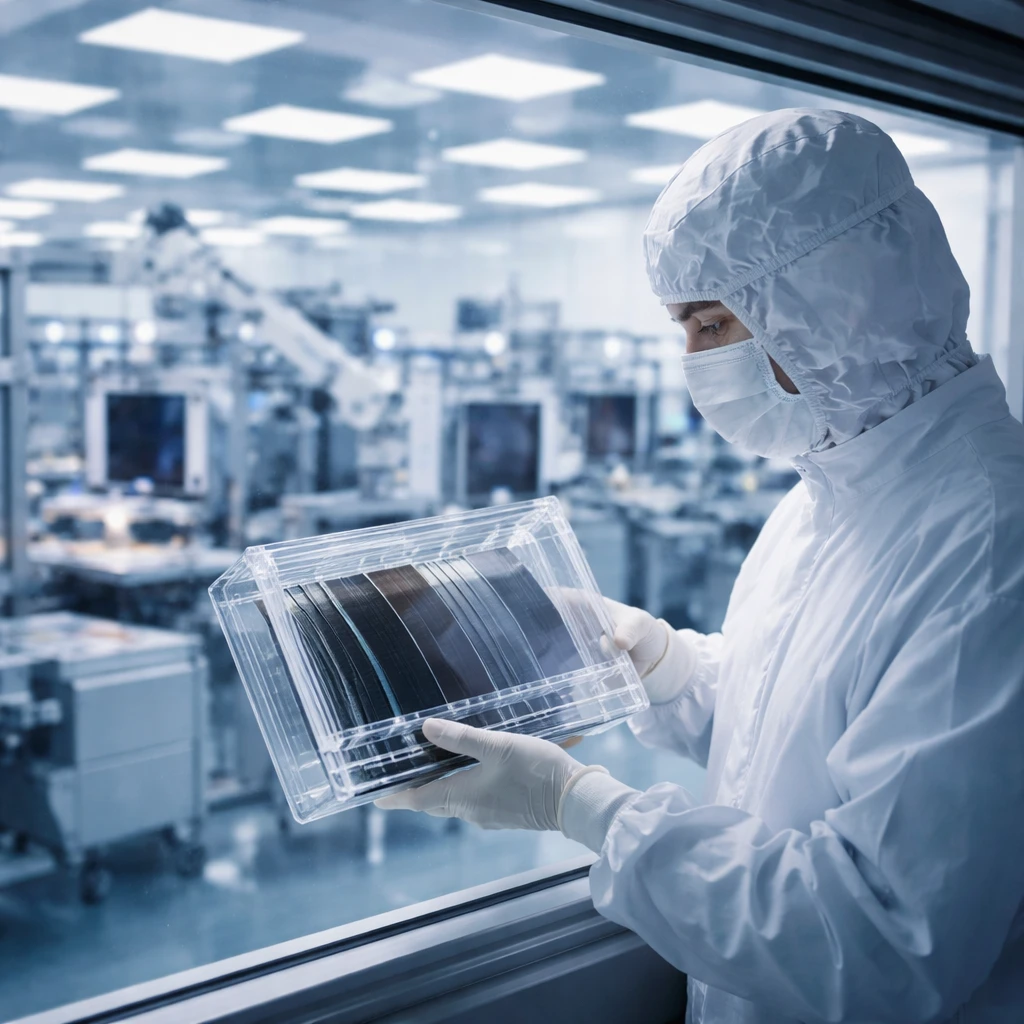
Chip shares rallied in premarket trading Wednesday, led by a near 4% advance in Intel shares after the company said its next-generation 18A-P manufacturing node had reached the risk production stage.
Premarket strength among semiconductor stocks extended to several peers: Marvell Technology rose 2.8%, Lam Research added 2.9% and Micron Technology climbed 3.5%. The upward moves followed a pullback across chip names in Tuesday's session.
Intel described the 18A-P process as delivering a 9% performance improvement over the original 18A node at equivalent power levels. The company also said the node can achieve an 18% reduction in power consumption while maintaining the same processing speeds. In addition to performance and power metrics, Intel cited enhancements to thermal management and design flexibility.
Crucially, Intel noted that 18A-P keeps the same design rules as 18A. That continuity means chipmakers can carry over existing intellectual property rather than rebuilding designs from the ground up, according to the company's announcement.
The update reinforces Intel's manufacturing roadmap at a time the company says demand for its processors is accelerating. Intel linked that demand boost to firms building out artificial intelligence infrastructure.
Earlier this month, Intel announced a slate of strategic collaborations with a range of industry partners, including Foxconn, Siemens, Hitachi, Echo Neurotechnologies and Greenstone Biosciences. Those partnerships were described as focused on integrated vertical customer solutions based on Intel processors and purpose-built silicon.
The premarket gains centered on expectations tied directly to the manufacturing milestone Intel reported and the potential operational advantages the company highlighted. Market participants reacted to the update with buying across multiple semiconductor-related names in early trading.
While the move represented a rebound following Tuesday's declines, the broader tape will likely watch how risk production progresses and how that translates into wider manufacturing deployment over time.