
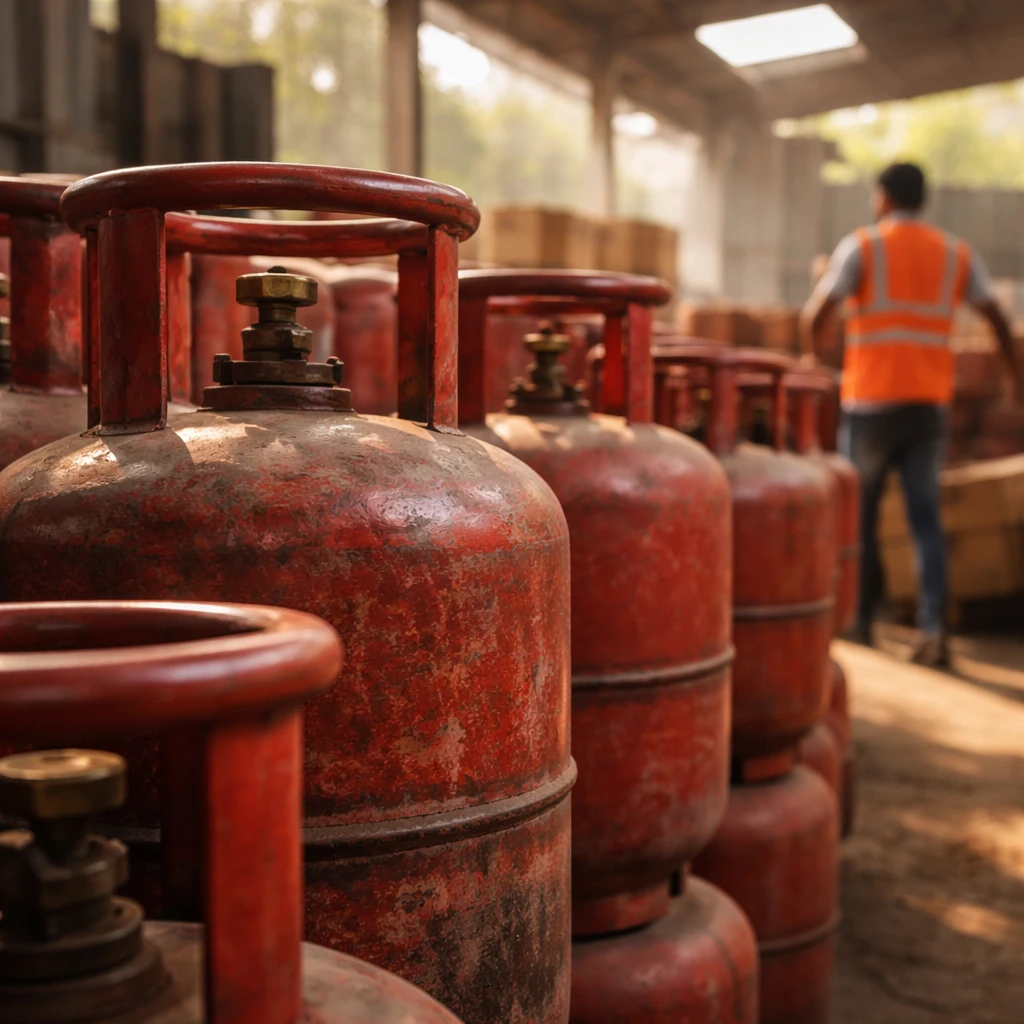
State-controlled Indian refiners implemented an upward revision to domestic cooking gas prices on Saturday, ending a near 12-month stretch without a household tariff change. The adjustment comes as a deepening conflict in the Middle East tightens energy movements through the Strait of Hormuz, the route through which a large share of the country’s LPG supplies transit.
Indian Oil Corporation Ltd increased the list price of a 14.2-kilogram LPG cylinder in New Delhi by 7% to 913 rupees (about $9.95). Bharat Petroleum Corp. Ltd. and Hindustan Petroleum Corporation Ltd enacted identical hikes on the same product. For households, this is the first upward revision since April 2025.
The refiners also raised commercial tariffs. Cylinders intended for hotels and restaurants climbed by 6.5% to 1,883 rupees. That change follows a smaller 1.6% adjustment that took place on March 1, reflecting that commercial rates are subject to more frequent monthly updates than the subsidized domestic segment.
Officials and industry participants tie the price moves directly to an effective blockade of the Strait of Hormuz. India sources more than 90% of its LPG imports from suppliers in the Middle East, and the disruption has squeezed shipments and pushed up global fuel costs. In response, the government has used emergency powers to require refiners to give priority to household users over petrochemical plants while the government assesses the heightened "supply-chain risk."
About 222 million households - roughly two-thirds of India’s LPG-using population - will face the higher retail price. The remainder continue to receive government subsidization under existing arrangements. Policymakers are observing the balance between managing inflationary pressures and the political sensitivity of cooking-fuel costs.
LPG pricing has long been a politically sensitive topic in India. The article notes that women make up nearly half of the electorate, a factor that has historically encouraged governments to avoid raising household cooking fuel costs. Yet officials appear to have limited options in the face of the current energy shock, which has materially altered the supply and cost dynamics for imported LPG.
Market participants and observers are watching whether the government will increase its subsidy bill to shield the most vulnerable consumers or allow further market-linked price adjustments. The decision will have implications for household budgets, commercial food service operations, and downstream petrochemical consumers who may face constrained feedstock supplies due to prioritization of household supply.
Contextual note: The price changes described here are the measures reported by the state refiners and the government actions referenced reflect the response to current disruptions in the Strait of Hormuz as provided above.