
Overview
April 24 - The coming week compresses the three forces most on investors' minds: the war in Iran, the direction of interest rates and the surge in AI-related optimism. Four major central banks will hold policy meetings while five of the so-called "Magnificent Seven" U.S. technology heavyweights file first-quarter results. Market participants will watch closely to see how each of these strands interacts and which carries the day.
1. The strategic choke point and market sensitivity
At the centre of market anxiety is the Strait of Hormuz, the maritime corridor that has become a focal point for the conflict in the region. Iran's tightened control over the shipping lane has pushed oil prices well above $100 a barrel again, underlining the market's view of elevated geopolitical risk. There have been isolated moments of relief - including extensions of respective ceasefires between Washington and Tehran, and between Israel and Lebanon - but those pauses have not reduced the baseline level of worry.
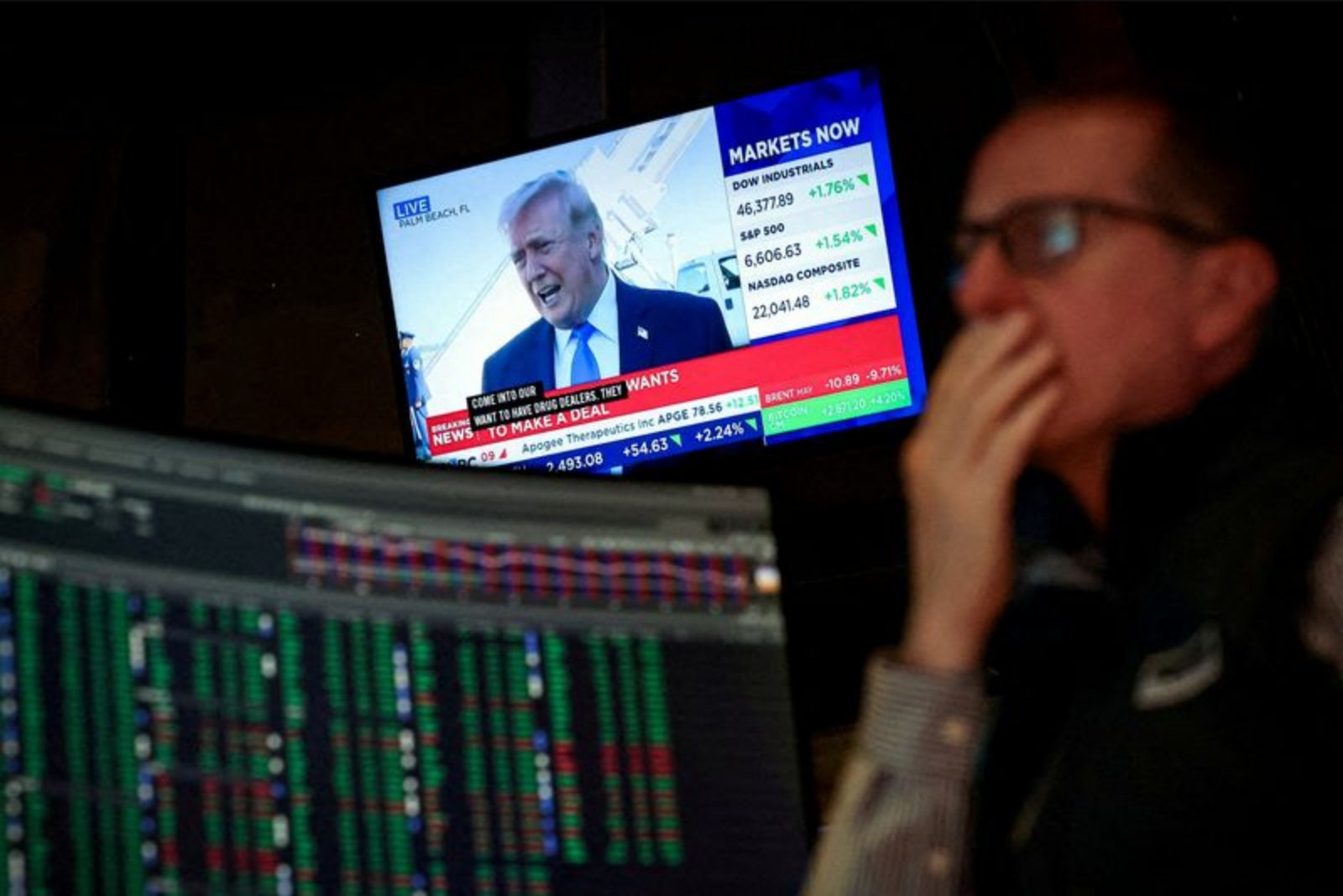
Diplomatic developments, any back-channel engagement, and public statements - including social media posts by U.S. President Donald Trump and Iran's Supreme Leader Ayatollah Mojtaba Khamenei - are likely to remain key drivers of intraday and multi-day volatility. President Trump has said he will not be rushed into a deal, arguing he seeks an outcome that is "everlasting."
The ongoing confrontation is also widening tensions within the U.S.-NATO relationship. President Trump has publicly criticised alliance members for not supporting his actions on Iran, and U.S. officials say Washington is considering punitive measures against what they describe as "difficult" countries, naming Spain as an example.
2. Ka-Powell? The Federal Reserve and the data spotlight
The Federal Reserve is widely expected to hold U.S. interest rates steady at its Wednesday meeting. With the presumption of a pause, attention will shift to the language around the future path for policy rather than an immediate change in the policy rate. Many economists currently view cuts as off the table for the near term.
There is an additional element of institutional drama. Jerome Powell's term as Fed chair is due to end next month, and questions about whether this meeting will be his last as chair are now part of the narrative. His broader tenure as a Fed governor - which runs until 2028 - has also come under scrutiny. Political opposition to President Trump's choice to succeed him - former Fed governor Kevin Warsh - has emerged, with a key U.S. senator vowing to block Warsh's confirmation until a probe into Powell's renovations of the Fed's headquarters is resolved.
Economic releases will add texture to the Fed's assessment. First-quarter U.S. GDP and the March personal consumption expenditures price index - the Fed's preferred measure of inflation - are due on Thursday and will be parsed for signs of persistence or cooling in domestic demand and inflationary pressure.
3. The big tech earnings cluster
Investor faith in AI-driven revenue and profit upside has been a substantial underpinning for near-record equity market levels. That optimism will be tested by a heavy slate of first-quarter results. On Wednesday, four major cloud and AI infrastructure spenders - Alphabet, Microsoft, Amazon and Meta - will report. These firms are among the "hyperscalers" that have committed billions to data centres and advanced computing infrastructure.
Apple is scheduled to report the following day. The company also recently named longtime hardware executive John Ternus to take over the CEO role from Tim Cook, who became CEO 15 years after succeeding Apple co-founder Steve Jobs.
It is not solely a technology story: more than a third of the S&P 500 will issue quarterly results next week. Names due include Eli Lilly, Exxon Mobil and Visa, which means sectors such as healthcare, energy and financial services will also feed into the week's market narrative.
4. Europe and the UK - optionality and caution
The European Central Bank and the Bank of England are both expected to maintain their key interest rates at 2% and 3.75% respectively when they meet on Thursday. Both institutions have recently signalled a deliberate move to temper bets on pre-emptive hikes.
With oil prices back above $100, market-implied pricing still anticipates that each central bank could raise rates twice before year-end. The term "optionality" captures the approach policymakers are likely to communicate - they want to keep the possibility of further tightening open while avoiding actions that would be seen as premature.
ECB President Christine Lagarde will face questions about the likelihood of a pre-summer increase and will be mindful of the reputational costs of tightening too early. The article notes parallels with the experience of another former French ECB head, Jean-Claude Trichet, whose early tightening came before the euro area crisis.
In London, Governor Andrew Bailey has cautioned markets against getting ahead of themselves. Domestically driven political uncertainty has made gilt markets more nervous, reinforcing the tightrope the BoE must walk between headline inflation risks and financial stability considerations.
5. Japan: patience for now
The Bank of Japan will open the sequence of major central bank meetings with its Tuesday session. What recently looked like an opportunity to move policy has turned into another potential pause. Some sources say Governor Kazuo Ueda and his colleagues require additional time to evaluate the economic implications of the Middle East war.
Observers nonetheless expect the BOJ to leave the door open to a move in June. There are concerns that waiting too long could allow the BOJ to fall behind the inflation curve. The head of the Asian Development Bank has warned that the yen could face further pressure if markets conclude the BOJ's response is too slow.
For the time being, the yen remains near 160 to the dollar - a threshold market participants have often flagged as a potential trigger point for FX market intervention. Authorities and markets continue to watch that level closely.
What this means for markets
The convergence of a geopolitically driven oil shock, a dense calendar of central bank decisions and quarterly results from some of the largest tech companies presents multiple vectors for volatility. Equity indices are being supported by AI-related growth expectations, but higher energy prices and policy uncertainty could weigh on rate-sensitive sectors and on real rates more broadly.
Investors will parse policy statements for subtle shifts in wording about optionality and the probability of future tightening. In FX markets, the yen's proximity to 160 will remain a focal point for potential intervention discussions. Credit-sensitive assets, energy names and large-cap tech will likely see the most immediate repricing depending on developments in each of these three arenas.