
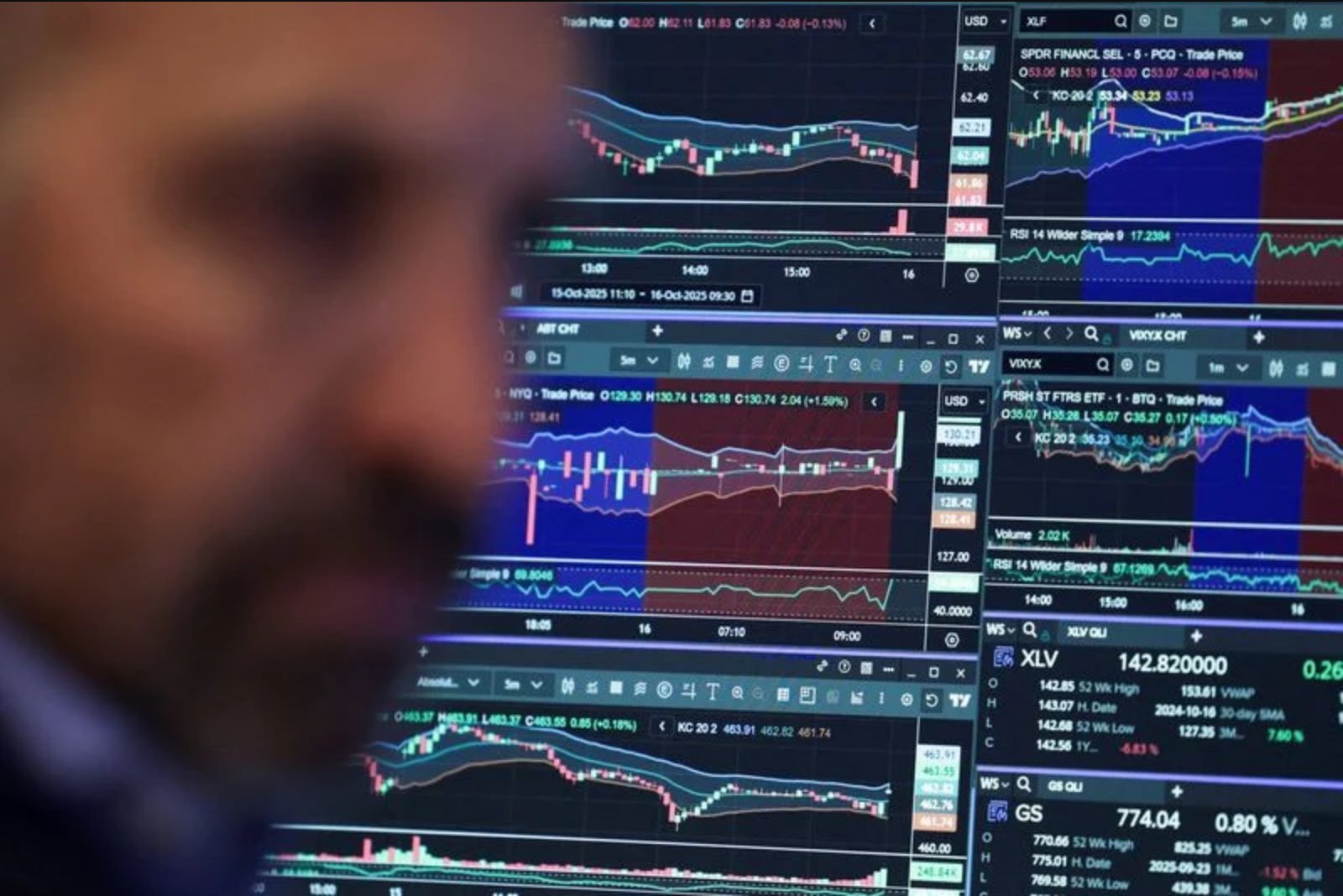
The U.S. stock market, which enjoyed a sharp advance in recent months, has cooled markedly heading into a high-profile week for monetary policy. Investors are now focused on the Federal Reserve as Kevin Warsh prepares to lead his first meeting as chair, a closely watched event that could trigger large moves across asset classes.
Major benchmarks have retreated from recent peaks. The S&P 500 traded nearly 3% below its record closing high set on June 2, while the Nasdaq Composite had slipped almost 5% from its high that same day. Volatility has ticked up in tandem with the pullback: the Cboe Volatility Index reached two-month highs this week, and the major averages experienced pronounced daily swings, including sharp gains on Thursday.
Technology stocks, which powered much of the market’s advance from late March lows, have been among the weakest performers during the pullback. That loss of leadership comes as investors weigh whether an exuberant rally, partly driven by expectations for AI-related earnings gains, has outpaced fundamentals. Market participants are also monitoring geopolitical developments in the Middle East and the potential for higher energy costs to feed through to inflation.
Market positioning is further complicated by a flurry of headline events this week. Traders will be watching the trading debut of Elon Musk’s SpaceX on Friday following its massive initial public offering, while headline macro data and the Fed’s policy meeting promise to set the tone for risk assets.
Despite recent weakness, benchmarks remain higher year to date. The S&P 500 is up 8% so far this year, and the Nasdaq is ahead about 11%.
Policy expectations and market implications
The Federal Reserve is widely expected to keep the federal funds rate unchanged when it issues its policy statement on Wednesday. Even with a pause likely in this meeting, investors are parsing commentary and projections for signals about how officials see the path of rates over the remainder of the year.
Any hint that the central bank may resume tightening could present headwinds for equities by pushing up borrowing costs for households and businesses, and by making fixed-income instruments more attractive relative to stocks. Fed fund futures, according to LSEG data, indicate that markets expect the central bank could raise rates before the end of the year.
Adding to the rate discussion, economic reports this week showed U.S. consumer inflation in May rose at the fastest pace in three years. That development, together with recent solid employment figures, has led many investors to believe the Fed’s priority will remain containing inflation, which could imply a greater readiness to consider additional rate increases.
Warsh’s first meeting - what investors will watch
Investors will examine a number of elements as Warsh presides over his first policy decision. Alongside the statement, Fed officials are expected to release projections outlining anticipated paths for interest rates and key economic indicators including inflation.
Warsh’s public remarks at the post-decision press conference will attract particular attention. "As we’ve seen at times in the past, it can be a bit of a challenge for a newer Fed chief to get the message right, to stick the landing," said Jim Baird, chief investment officer at Plante Moran Financial Advisors. "The market is watching and parsing every word that’s said." Investors will seek clarity on the Fed’s description of inflation and its outlook for policy moves.
Observers note Warsh was selected by President Donald Trump, who repeatedly criticized the central bank and his predecessor Jerome Powell for not cutting rates to his satisfaction. Market watchers say understanding how this new leadership reacts to incoming data will be critical. "Trying to understand the reaction function of this new administration at the Fed is going to be key," said Marvin Loh, senior global macro strategist at State Street. "If we get that type of a hawkish hold, if you will, I think that that would kind of surprise the market."
Balance sheet and communication changes a potential source of volatility
Beyond the near-term interest rate stance, investors will also look for signs of Warsh’s longer-term policy priorities. He has expressed an interest in reducing the Fed’s $6.7 trillion balance sheet, a move that could reverberate through financial markets if enacted. Market participants are also attentive to the possibility Warsh will alter how the Fed communicates or provides forward guidance.
Fixed income managers warn that a shift to a more data-dependent approach combined with reduced visibility from the Fed on its intentions could magnify market reactions to routine economic releases. "If we are more data dependent and we’re not getting visibility from the Fed of what they want to do, then I would think every economic release gets a little bit more attention and can create a little bit more volatility than we’ve seen over the last few years," said Jeff Given, head of developed-market fixed income at Manulife Investment Management.
Marta Norton, chief investment strategist at retirement and wealth services provider Empower, summed up the market’s focus: "The biggest thing is will the Fed hold, and what’s the language around it? How does it describe inflation?"
What this means for investors
In the near term, investors face a combination of higher inflation readings, robust employment data and a leadership transition at the Fed. Together these factors are contributing to heightened volatility and a reassessment of risk across sectors, particularly in technology and interest-rate sensitive industries. Traders and portfolio managers will be closely parsing the Fed’s statement, projections and Warsh’s press remarks for any nuances that could alter expectations for borrowing costs and the attractiveness of equities relative to bonds.
How the new Fed leadership frames its policy approach and whether it signals changes to the balance sheet or communications framework will likely determine the degree of market reaction in the coming days and weeks.