
In the dense forests of Bolivia's Chapare region, Evo Morales remains a focal point of national unrest even as he keeps a low profile. From a concealed rural base, the former president - who governed for nearly 14 years - has been in regular contact with protesters as a wave of blockades entered its 50th day, grinding major highways to a halt, leaving trucks stranded and strangling the flow of fuel, food and medical supplies nationwide.
The stoppages, organized by labor unions and indigenous groups, have contributed to a spike in violence and hardship: at least 14 people have died since demonstrations began. The government of President Rodrigo Paz, a center-right leader who assumed office in November 2025 with backing from President Donald Trump as part of a U.S. strategy to expand influence in the region, is under severe strain and risks collapse as talks to end the paralysis falter.
In an exclusive video interview, Morales said he has been in steady contact with protesters and that the swell of popular discontent has "made him think" about a return to politics, though he maintained he is not actively campaigning. He rejected accusations that he orchestrated the unrest, framing the demonstrations as an "indigenous rebellion" born of economic hardship.
"In my experience as a former president, if there is a conflict, it is the fault of the state if it is a social demand," Morales said, and he accused Paz of making "unfulfilled commitments." Morales also urged Paz to step down and called for new elections, warning that excluding his movement from a future vote could push the standoff to a dangerous breaking point - a warning he followed by saying, "If they don’t want it with votes, it’s with bullets." He did, however, say he did not support further escalation.
Paz has placed partial responsibility for the turmoil on Morales, accusing the former leader of fanning the flames of dissent. Analysts and critics, including Andres Arauz of the Center for Economic and Policy Research, say the administration has leaned heavily on portraying Morales as the primary antagonist in an effort to divert attention from the social and economic grievances driving the protests. "Paz is trying to spin this and frame it as political confrontation, and thus basically wait it out," Arauz said.
The present crisis was ignited by Paz's sudden decision to cut long-standing fuel subsidies as part of an effort to reduce a ballooning budget deficit. Bolivia, a major producer of lithium, has been grappling with a deepening dollar shortage and is also in negotiations with the International Monetary Fund over a potential rescue package. The fuel subsidy rollback was intended to stabilize public finances, but it provoked immediate public backlash.
In response to the initial uproar, Paz implemented measures to stabilize fuel prices and backtracked on controversial land reform proposals that had further inflamed public opinion. Despite these concessions, the blockades spread and broadened in scope, evolving from protests over subsidies into a wider expression of discontent. Unions are pressing for wage increases, an end to shortages of fuel and U.S. dollars, and the resignation of Paz.
Efforts at negotiation have been fragile. Paz opened talks with union leaders in La Paz on Wednesday with an appeal for reconciliation: "We must build the nation, but we have to build it by accepting diverse ways of thinking," he said, urging both sides to end mutual mistrust. Yet the blockade movement has resisted immediate de-escalation.
A city under siege
La Paz, perched at high altitude, has adopted a siege-like atmosphere. Restaurants sit empty as customers vanish and nearly half of establishments have shut their doors. Supermarkets show sold-out meat counters and have dimmed lights; hospitals are reporting shortages of critical medicines. Local businesses and residents describe a city struggling to maintain basic services.
"We feel deeply suffocated," said Pamela Espada, a regional supermarket manager, who described the lengths her operation has gone to secure supplies: flying meat in from Santa Cruz and rising at 2 a.m. to source eggs. Prices have surged. According to local sellers, the price of tomatoes has doubled and chicken has climbed by about 70% since the roadblocks began.
Ernesto Olivares, head of the Gastronomic Association of La Paz, estimated that 42% of restaurants have been forced to close. "The exhaustion has reached its limits," he said, adding that "La Paz is being held hostage by politics."
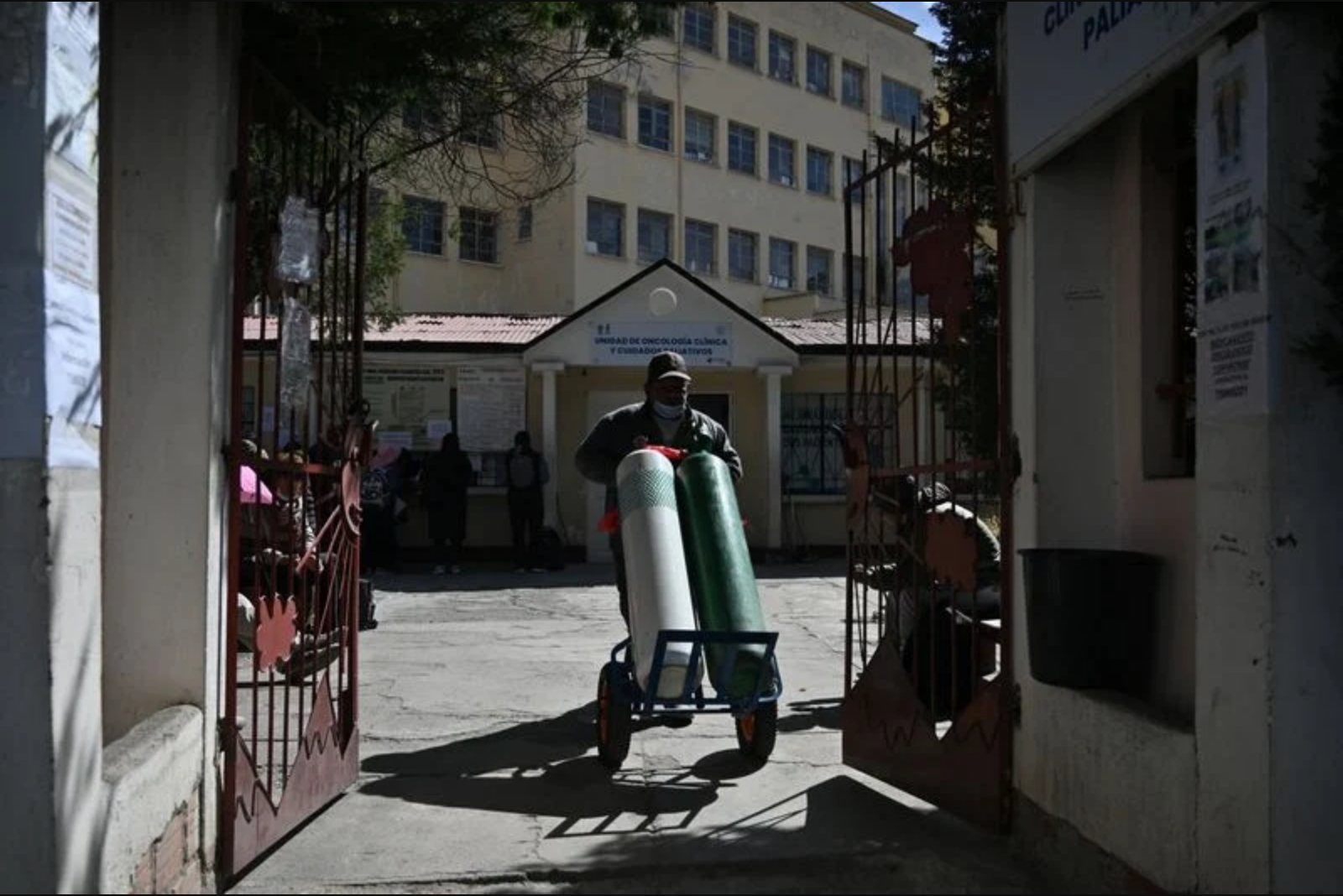
Medical services are also under acute pressure. Blockades have made routine and emergency transfers nearly impossible, leaving patients unable to reach facilities or obtain necessary treatments. At La Paz's main public hospital, groups of cancer patients and their relatives gathered, chanting "We want to live!"
Erika Alvarez, whose brother requires chemotherapy in Oruro - about 140 miles (225 km) south of La Paz - said she was unable to secure care for him. "They tell me he needs chemo, but in Oruro there is nothing, there are no medicines. With these political problems, with these blockades, I cannot bring my brother here," she said, breaking into tears.
Rosario Calle, president of the Association of Cancer Patients and Families, said she knows of patients, particularly in rural areas, who have died after failing to receive timely care because of the blockades. The shortages extend to critical pain-relief medications; morphine and tramadol are reported to be in short supply.
"They cry out and they don’t know how to soothe the pain," Calle said. "What we want are solutions. Enough already."
The standoff remains unresolved. Morales' influence looms over fragile negotiations aimed at dismantling the blockades. The government continues to pursue talks while also managing a deepening economic strain that has reverberated across supply chains and public services. The outcome of those negotiations will determine whether Bolivia can restore the flow of goods and medical care, or whether the political crisis will further destabilize the country.