
Lead
When Donald Trump took office for a second presidential term in 2025, Italy’s prime minister was the only European leader invited to the inauguration, a gesture that signalled, at least publicly, a special affinity and the potential for a close bilateral relationship. Eighteen months later, that apparent closeness has deteriorated into an open rift, analysts say, undermining key elements of Rome’s foreign strategy and exposing Prime Minister Giorgia Meloni on the international stage.
How tensions surfaced
The widening breach between the two right-wing leaders became visible after the start of the U.S.-Israeli war on Iran, a conflict that inflicted damage on Europe’s economy and revived strong anti-war sentiment within Italy. Diplomatic strains briefly appeared to ease after a series of interactions at the G7 summit in France, where video suggested a possible thaw. That hope was short-lived.
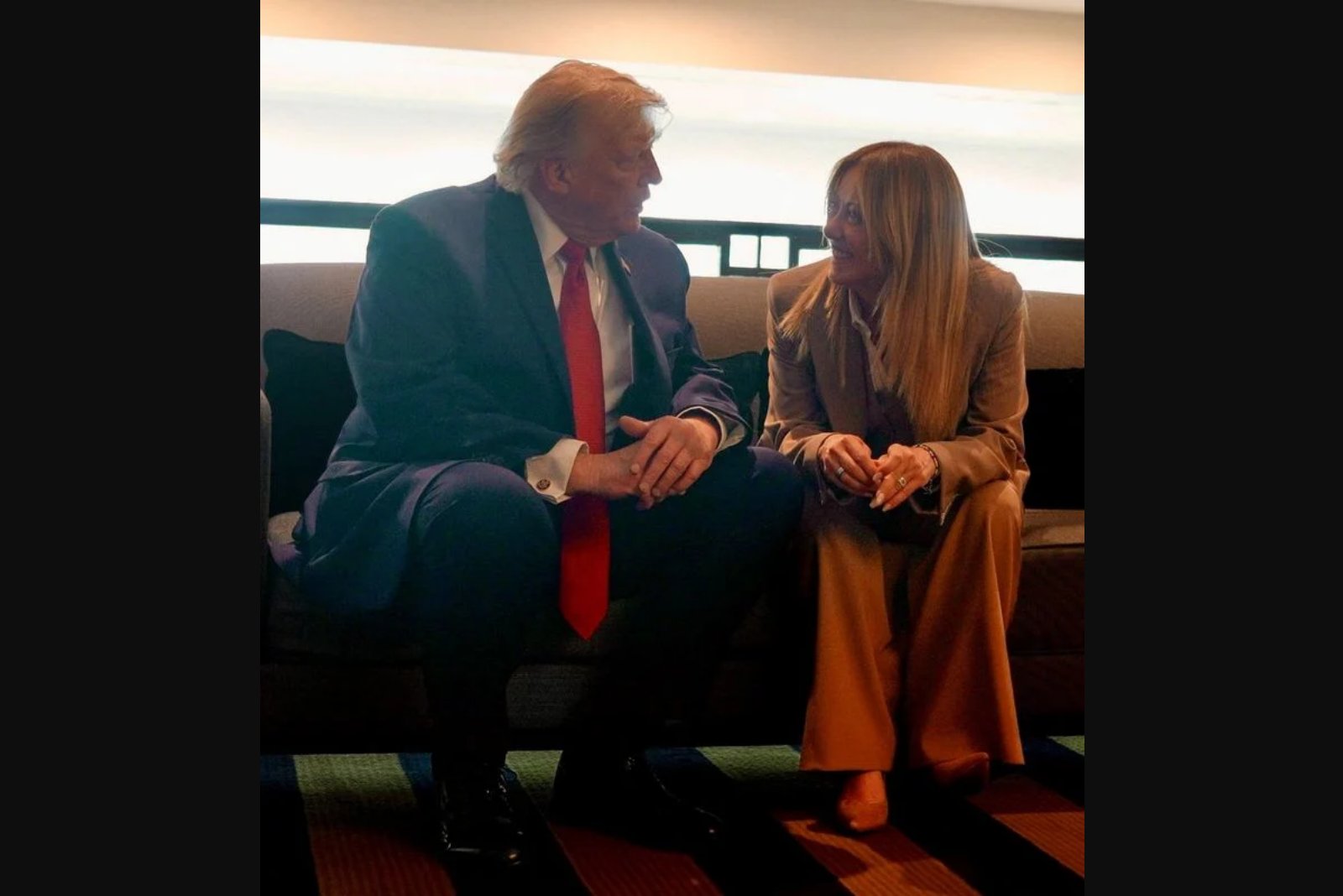
On Friday, the U.S. president told an Italian television outlet that Meloni had "begged" him to take a photo with her. Meloni immediately rejected the account, accusing Trump of inventing the episode. She escalated her response, saying he treated "the enemies of the West" with greater deference than he afforded long-standing friends. "There is one thing he should remember: neither I nor Italy ever beg," she wrote, and her swift rebuttal on social media drew broad bipartisan approval at home.
Domestic political reaction
Meloni’s strong public reaction was welcomed across the Italian political spectrum, with many viewing Trump’s characterization as an affront to national dignity. But analysts warn that the breakdown forces Italy to choose a clearer, steadier line in its dealings with Washington after a period in which Meloni frequently adjusted her posture in response to volatile comments from the U.S. president.
Piero Ignazi, a political analyst at the University of Bologna, framed the dilemma directly: "Meloni cannot keep changing her approach depending on Trump’s unpleasant remarks. She must decide whether to adopt a less accommodating stance or, like other countries such as Canada, a firmer approach."
Opposition figures seized on the rupture as proof that Meloni’s original tactic of flattering the U.S. president had been flawed. Former prime minister Matteo Renzi, who leads a centrist opposition group, criticised the earlier alignment and urged an end to symbolic gestures tied to the Trump movement: "Have you finally understood that allying with those people means going against Italy? Enough with MAGA caps and enough with building bridges with Trump," he said.
Roots of the rapprochement
Trump’s victory in the 2024 U.S. election initially opened a window for Meloni to cultivate special ties with a like-minded leader and, in turn, to act as a conduit between Washington and a broadly sceptical Europe. During 2024 and into 2025, Trump repeatedly lavished praise on Meloni, calling her "a fantastic leader and person," "a beautiful young woman," "a very successful politician" and "an inspiration to all."
When the U.S. imposed sweeping tariffs on the European Union, Meloni stood out among European leaders by adopting a conciliatory tone, arguing it was more important to preserve unity among Western allies against common adversaries. She also refrained from public criticism even as other European leaders expressed concern about Trump’s approach to Ukraine and his hesitancy to exert pressure on Israel to end the Gaza conflict.
The Iran war and a turning point
Observers identify the war in Iran as a turning point that cornered Meloni politically. Tensions worsened in April when Trump attacked Pope Leo after the pope criticised the conflict; Meloni publicly defended the pontiff. Trump criticised her response, accusing her of lacking courage. She further angered Washington by denying that a Sicilian airbase had been used by U.S. military aircraft carrying weapons for the war in Iran, stating that necessary procedures had not been followed.
Francesco Galietti of political risk consultancy Policy Sonar described that episode as "the original sin, in Trump’s eyes." Galietti added that, in the short term, Meloni could gain politically at home by standing up to an unpopular foreign leader, but cautioned that she risked undermining a key element of her electoral pitch heading into next year’s national vote.
"This is like a horrible slap in the face," Galietti said. "It completely jeopardizes her strategy that when we hold elections, the Italians will eventually choose her because she is the safest pair of hands."
Implications and outlook
The public rupture leaves Meloni facing a choice about whether to pursue a more consistent and possibly firmer stance toward Washington or to continue attempting ad hoc rapprochements with a mercurial U.S. president. Analysts say Italy’s foreign strategy is now compromised, at least temporarily, and that the episode will have consequences for domestic politics, where perceptions of leadership steadiness are crucial ahead of scheduled elections.
For now, the break in relations remains defined by public statements, denials and political reactions rather than by formal diplomatic measures. The longer-term diplomatic and electoral consequences will depend on decisions Meloni makes in response to the rupture, and on how the U.S. president chooses to proceed.
Reporting and analysis based on statements and reactions from political figures, analysts and public comments as described.