
U.S. stock index futures moved broadly higher on Tuesday as market participants digested a combination of geopolitical developments in the Middle East and a partial rebound in semiconductor and AI-linked equities. At 03:28 ET (07:28 GMT), S&P 500 futures were up by 17 points, or roughly 0.2%, and Nasdaq 100 futures were higher by about 159 points, or 0.5%. The Dow futures contract was largely unchanged at that time.
The previous session on Wall Street produced a mixed set of moves across major averages. The blue-chip Dow Jones Industrial Average finished the prior trading day down 0.2%, while the benchmark S&P 500 rose 0.3% and the tech-heavy Nasdaq Composite climbed 0.9%. Analysts at Deutsche Bank characterized the mood of that session as "cautious," reflecting a market balancing macroeconomic data, monetary policy expectations and geopolitical risk.
Chipmaking stocks led the market's upside momentum on Monday, recovering some of the heavy losses incurred late last week after a wave of profit-taking and disappointing guidance from one large equipment and server supplier. The Philadelphia semiconductor index registered a 5.61% gain, roughly clawing back half of the index's decline from Friday.
Economic calendar and policy backdrop
Investors also had an eye on the domestic data slate. Traders planned to review U.S. trade figures for April and existing-home sales for May, with the coming CPI reading for May slated as the week's focal point. The consumer price index, due Wednesday, is expected to offer fresh signals on inflation and would likely influence how Federal Reserve policymakers approach interest rates in the months ahead. Market pricing at the moment implies that market participants expect at least one Fed rate increase this year amid inflationary concerns and signs of a resilient labor market.
De-escalation in the Middle East, but fragility remains
Developments in the Iran-Israel theater appeared to moderate early in the week. Deutsche Bank analysts noted that the conflict has followed a recurring pattern in recent weeks - oscillating between moments that bring talks of an agreement and episodes of renewed strikes - and said they were currently back in a camp that believes "a deal is still possible."
Iran and Israel announced a halt to direct attacks on one another after a fresh round of strikes, though the ceasefire showed signs of fragility. Israeli Prime Minister Benjamin Netanyahu stated his intention to continue strikes against Iran-backed Hezbollah militants in Lebanon, underscoring that the pause between Tehran and Israel was not absolute.
President Donald Trump, who has been involved in efforts to forge a more durable resolution to the conflict that has drawn in U.S. forces alongside Israeli partners, told reporters that he had had a "very good conversation" with Prime Minister Netanyahu. He added that Israel and Iran would refrain from attacking one another for at least a week and predicted that a "total victory" over Iran would arrive "over the next two weeks."
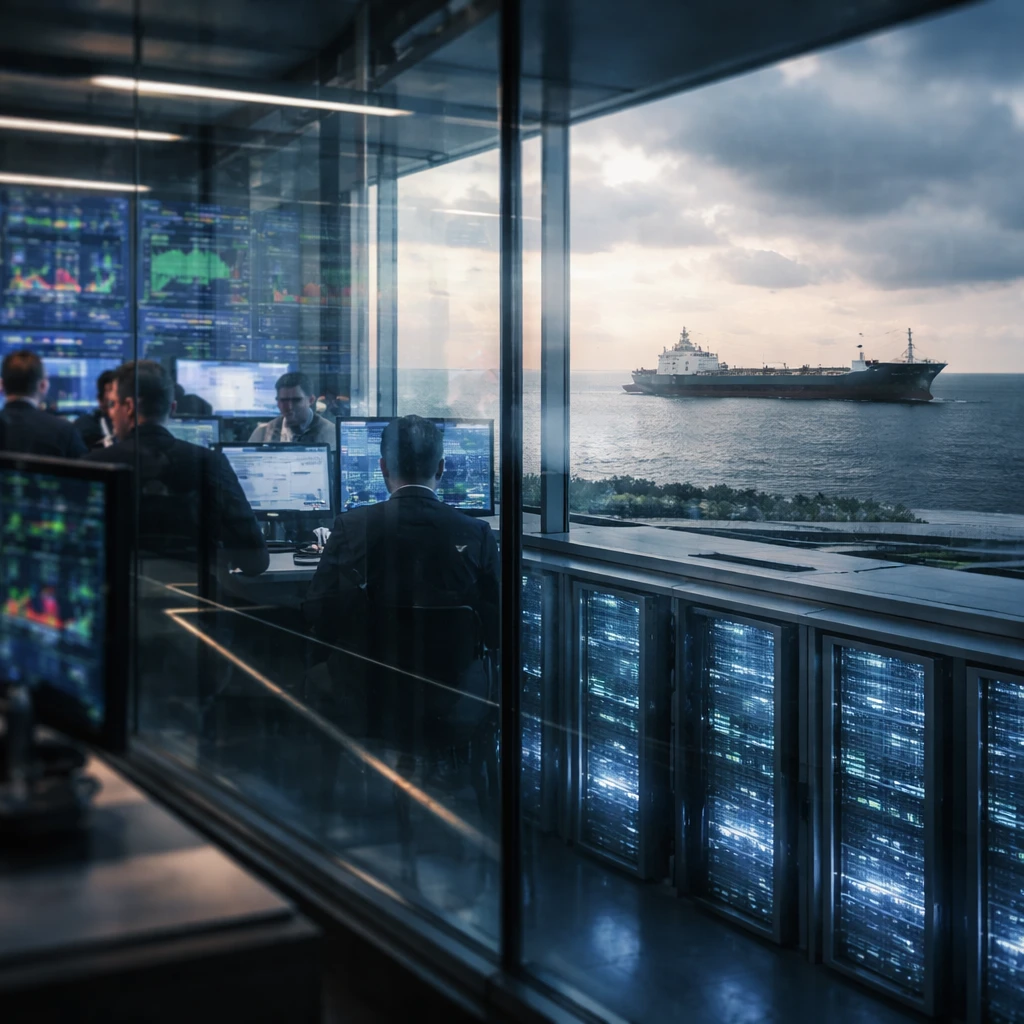
Amid this tentative cooling, Brent crude eased from recent peaks, though it remained significantly above levels seen before the conflict began. Market participants have been tracking oil closely because the extended closure of the Strait of Hormuz has been a key driver of the higher oil prices, which in turn have fed concerns about accelerating inflation and slowing global growth.
OpenAI confidential IPO filing
In corporate news, OpenAI submitted a confidential filing indicating potential plans for an initial public offering, becoming the latest high-profile artificial intelligence company to take steps toward a public debut. In a written statement, the company cautioned that "it may be a while" before it actually lists, noting that there are "a complicated set of tradeoffs" associated with going public and saying some objectives are easier to pursue while private.
OpenAI's confidential filing follows a recent IPO filing by rival Anthropic, which announced plans for a public offering and has been widely discussed as a potential high-profile debut. According to the Wall Street Journal, OpenAI executives are concerned that Anthropic - which in private-market valuations has reportedly exceeded OpenAI's - might complete an initial public offering sooner.
The announcement comes amid broader market enthusiasm for AI, an element of investor demand that has helped lift major indexes to record levels. The emergence of multiple potential blockbuster AI-related IPOs has the potential to test investor appetite for large, transformational technology listings.
South Korean memory chip rebound
Memory chip manufacturers in South Korea posted strong gains as buyers stepped in following recent heavy selling. SK Hynix rose more than 15% after falling about 8% in the session prior, with investors reacting to a reported multi-year tie-up with Nvidia to supply advanced memory for artificial intelligence workloads. Samsung Electronics advanced nearly 9% after a steep 10.2% drop on Monday.
Both companies had been hit hard by a broader rout across technology and AI names, driven in part by investor concern about higher U.S. interest rates and the geopolitical tensions in the Middle East that prompted profit-taking among high-flying tech stocks. Investor questions about AI's long-term demand trajectory were amplified after lackluster guidance from a major American server supplier last week, a company regarded as a bellwether for data center orders.
Market optimism around AI had previously lifted Samsung and SK Hynix to trillion-dollar valuations in May, as investors focused on expected demand for the advanced memory chips required for training large AI models. Alongside Micron, these firms are among the primary producers of memory chips used in AI applications.
Applied Digital secures hyperscaler lease, shares surge
Applied Digital experienced a notable premarket move, with shares climbing more than 11% after the company disclosed a 15-year lease with a U.S.-based hyperscaler. The arrangement is estimated to translate to roughly $5.2 billion in revenue for the company and covers 210 megawatts of computing capacity at Applied Digital's new Delta Forge 2 AI campus.
The company said approximately 70% of its contracted revenue is now tied to U.S. hyperscalers - a term used to describe large technology firms that are investing heavily in the infrastructure necessary to support their artificial intelligence operations. Applied Digital did not disclose the identity of the hyperscaler client, but indicated that, if the contract were to be renewed over its full duration, it could amount to $12.7 billion in revenue over a 30-year span.
What investors are watching next
Traders will be parsing trade, housing and inflation data this week, with particular emphasis on the May CPI report for signals about the Fed's likely path on rates. At the same time, market participants will continue to weigh geopolitical developments in the Middle East and incoming corporate moves in the AI sector that could sway sentiment across technology, chipmakers, energy and broader risk assets.
Given the mix of macroeconomic inputs and geopolitical headlines, market participants were behaving cautiously even as pockets of buying returned to areas beaten down last week. The interplay between oil prices, driven by disruptions to key shipping lanes and production risks, and AI-driven technology demand will likely remain central to near-term market narratives.
Note: All figures and company statements in this report are drawn from the available disclosures and market data discussed by market participants and corporate announcements.