
DUBAI/CAIRO, Sept 8 - The conflict sweeping the Middle East intensified on Tuesday in a series of linked military actions that drew new countries deeper into the fighting.
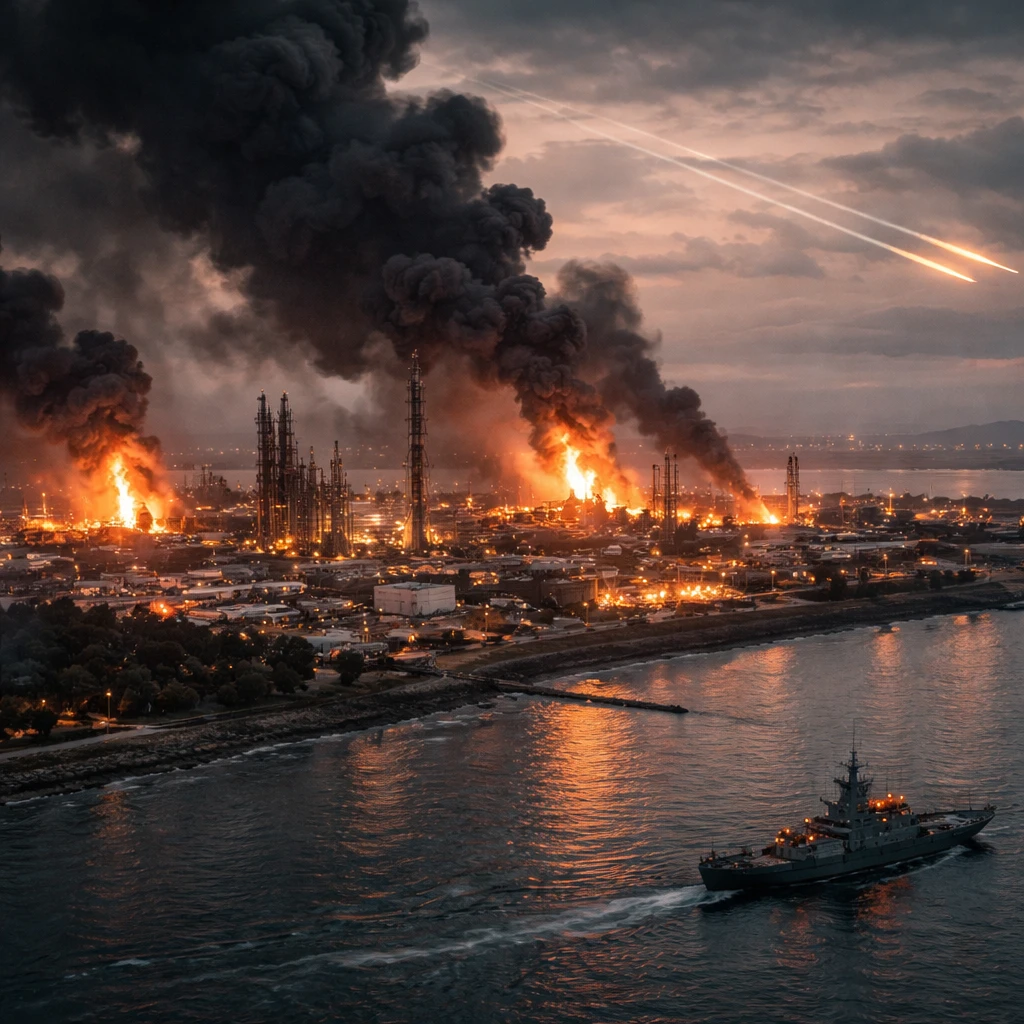
Iranian-backed Houthi forces in Yemen announced they had mounted a broad operation into Saudi territory using drones and missiles to hit multiple targets. The strikes, aimed at military and energy infrastructure, affected a southern Saudi airbase in Khamis Mushait and oil-related facilities in Abha, Najran and Jazan. Saudi authorities reported fires at the struck sites and said 73 people were wounded, including women and children.
Satellite imagery from NASA captured a thick column of black smoke over the Jazan refinery and a plume of white smoke rising from an oil distribution center in Abha, consistent with Saudi descriptions of significant blazes at those locations.
Separately on Tuesday, the U.S. military’s Central Command released video and said it had destroyed five Iranian crude oil carriers, describing the vessels as part of a shadow network that funnels funds to Iran’s Islamic Revolutionary Guard Corps and its regional proxies. The strikes, Central Command said, were carried out in response to the IRGC targeting a U.S. Navy warship with ballistic missiles twice over the previous two days. U.S. officials said no Americans were harmed.
Reacting to the destruction of the tankers, U.S. Secretary of State Marco Rubio told reporters during a visit to Colombia: "Iran continues to try to hit U.S. naval ships, and for every time they do that or try to do that, they’re going to lose tankers."
Iran then said it had launched a ballistic missile attack on a U.S. base near Al Azraq in Jordan, according to a statement by the IRGC carried on state media. Iranian state outlets published footage they said showed missiles being fired toward Jordan. Iran claimed the missiles caused heavy damage.
Jordan, however, reported that its air defenses intercepted 18 of the 20 missiles fired, with the remaining two falling in unpopulated areas. Jordanian authorities said there were no casualties from the attack.
The war has already seen Iran strike U.S. allies across the region multiple times, including attacks on Jordan. One such strike in July reportedly killed two U.S. military personnel, according to the account in this sequence of events.
State media also cited an IRGC statement saying it had attacked two U.S. destroyers, though the U.S. military had not, at the time of those reports, publicly confirmed or responded to that claim.
In addition to military targets, Iranian officials warned they could target oil tankers in Kuwaiti and Bahraini ports, a move reported on state media. A maritime security contact said a liquefied natural gas tanker was damaged in the Emirati port of Khor Fakkan, but investigators had not established responsibility for that incident.
After a relative lull in August, exchanges of fire between Iran and U.S. forces have resumed in recent days, contributing to upward pressure on global crude prices. The benchmark Brent futures rose to their highest level since July 23 and jumped another dollar per barrel following the reported missile strike on Jordan, though prices remained below $100 per barrel despite the disruptions.
Analysts who track the conflict note a pattern of pauses and renewed flare-ups: Iran has retained the capacity to conduct missile and drone strikes against neighboring countries and to threaten shipping in key waterways such as the Strait of Hormuz, even as U.S. operations have degraded portions of Iran’s conventional forces and taken a toll on its economy.
Meanwhile, the Houthis have applied pressure on shipping outside the Gulf by periodically disrupting maritime traffic at the southern approaches to the Red Sea, adding another avenue of risk to global transport routes.
Saudi Arabia, which has led an Arab coalition against the Houthis for more than a decade after the rebels forced the Yemeni government from the capital, faces a renewed threat to energy infrastructure within its borders. The resumption of Houthi attacks follows the breakdown of a previously negotiated ceasefire in Yemen, and the group’s reach into southern Saudi provinces represents a notable escalation of the six-month-old regional war.
Officials and military statements characterized the broader Gulf conflict as a contest between the U.S. and Iran, with each side aiming to exert economic pressure through competing maritime measures. Washington has sought to facilitate oil flows by escorting ships through the Strait of Hormuz, while also attempting to curtail Iran’s own exports through a blockade.
Central Command described the tankers it destroyed as linked to a covert network supporting the IRGC and its allied militias and movements across the region. Iran’s longstanding foreign policy posture includes backing an "Axis of Resistance," which it says comprises groups such as Hamas, Lebanon’s Hezbollah, Iraqi Shi’ite militias and the Houthis.
The chain of recent events underscores the persistent risk that localized strikes could trigger wider disruptions to energy supplies and raise the potential for further military confrontations involving U.S. forces and their regional partners. For now, the exchanges have produced significant damage to energy facilities in Saudi Arabia, the destruction of vessels tied to Iranian interests, and a contested missile strike on a U.S. base in Jordan.
Authorities in the affected countries continue to assess the full scope of the damage and to monitor the evolving security situation across the Gulf and the Red Sea approaches.