
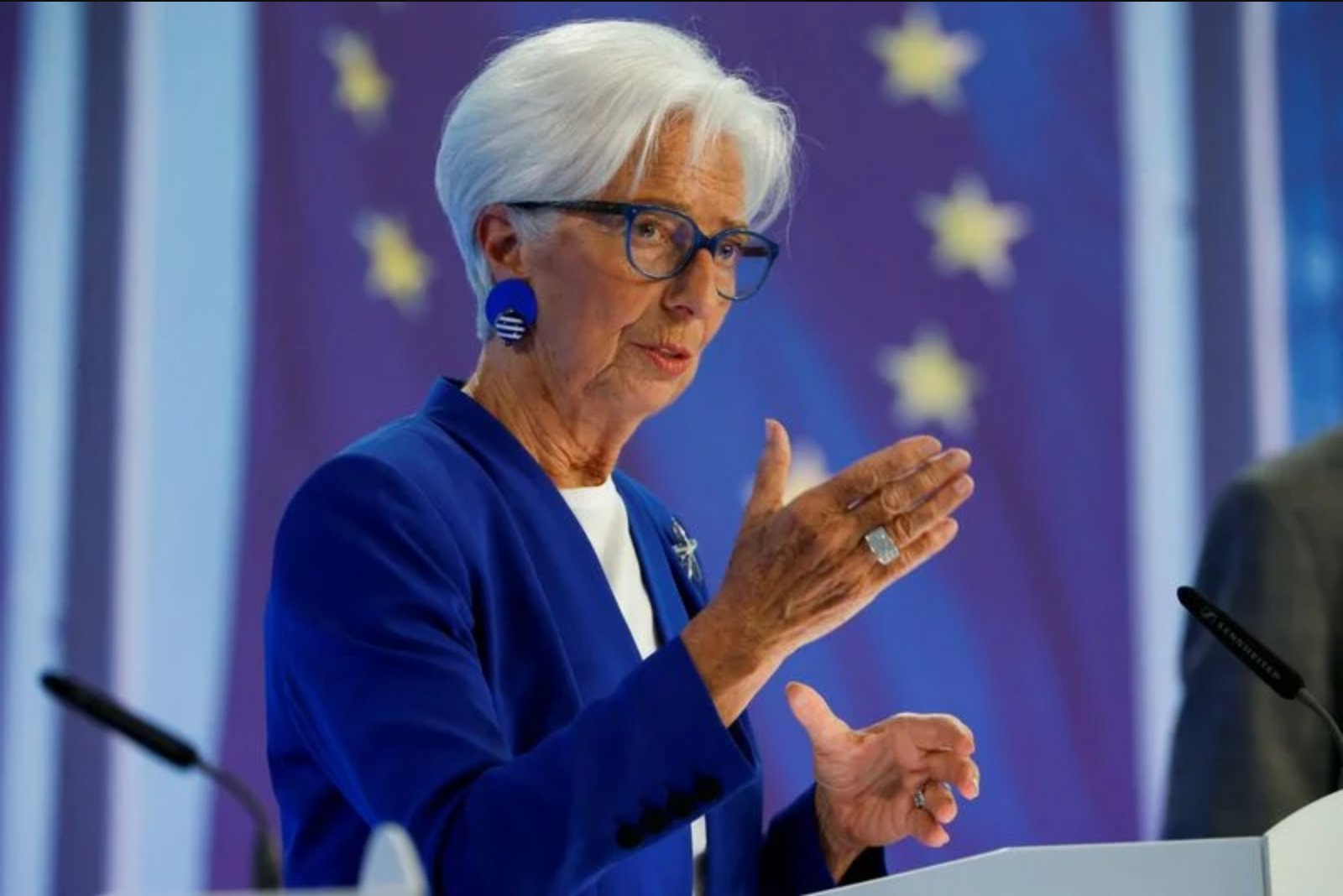
PARIS/FRANKFURT - European Central Bank President Christine Lagarde on Monday described news of a preliminary U.S.-Iran ceasefire and a potential reopening of the Strait of Hormuz as welcome, provided further developments and a memorandum of understanding confirm the talks. The announcement followed overnight statements by U.S. and Iranian officials that they had reached an agreement to end their conflict and reopen the key energy shipping route.
Lagarde told France Culture radio: "If this news is confirmed by developments in the coming days and the signing of a memorandum of understanding ... it is good news. We can only welcome it." She framed the development as potentially beneficial for energy flows, contingent on confirmation in the days ahead.
The preliminary pact prompted an immediate market reaction: oil prices fell and investors trimmed their expectations for future ECB rate increases. Financial markets, which had largely priced in two more ECB hikes over the coming year, adjusted to see just one additional increase now, with only a small chance of another move.
The ECB itself has already tightened policy. Last week the central bank raised interest rates for the first time in nearly three years in an effort to curb inflation that had been aggravated by a surge in energy costs linked to unprecedented supply disruption stemming from the Iran conflict. That move was made ahead of the more recent shifts in energy market dynamics.
Nagel Cautions on Inflation Outlook
Speaking later in Frankfurt, Joachim Nagel, a member of the ECB Governing Council and head of Germany's Bundesbank, noted that markets were reacting as if investors expect a durable resolution to the Iran conflict. Still, he strongly qualified the near-term benefits for euro zone inflation.
"No relief is in sight for the foreseeable future," Nagel said. "On the contrary: even if the Strait of Hormuz were to become navigable again soon, it will take months for the oil supply to return to normal." His remarks underline the lag between any diplomatic breakthrough and the physical recovery of disrupted oil supply.
Nagel argued that inflation in the euro zone would remain elevated even under what he called the ECB's "mild" scenario, where energy prices fall more rapidly than in other projections. He also warned of an additional rise in inflation when temporary government supports designed to limit energy price increases expire.
As an example of those supports, Nagel pointed to measures including a fuel price discount at the pump in Germany. He said such measures had reduced the euro zone inflation rate by 0.4 percentage points in May. He added that the expiration of these measures could reverse some of that dampening effect.
The German central banker reaffirmed that the central bank retains a full range of options for its next policy decision, scheduled for July 22-23 - including holding rates steady or increasing them further.
Context and Market Implications
Market participants reacted to the announcement by paring back bets on aggressive further tightening by the ECB. The correction in expectations reflected the view that a reduction in geopolitical risk and energy price pressure could ease one of the drivers of recent inflationary pressures. Nonetheless, ECB officials emphasized the time needed to translate any diplomatic progress into sustained easing of energy supply and prices.
Both Lagarde and Nagel conveyed cautious tones: Lagarde welcomed the preliminary agreement contingent on confirmation, while Nagel stressed that even with a reopening of the Strait of Hormuz, months would likely be required before oil flows and broader energy markets returned to pre-conflict norms.
The central bank's next policy meeting on July 22-23 remains open-ended, with officials keeping both options - pause or further hikes - on the table as they weigh incoming data and the evolving situation in energy markets.