
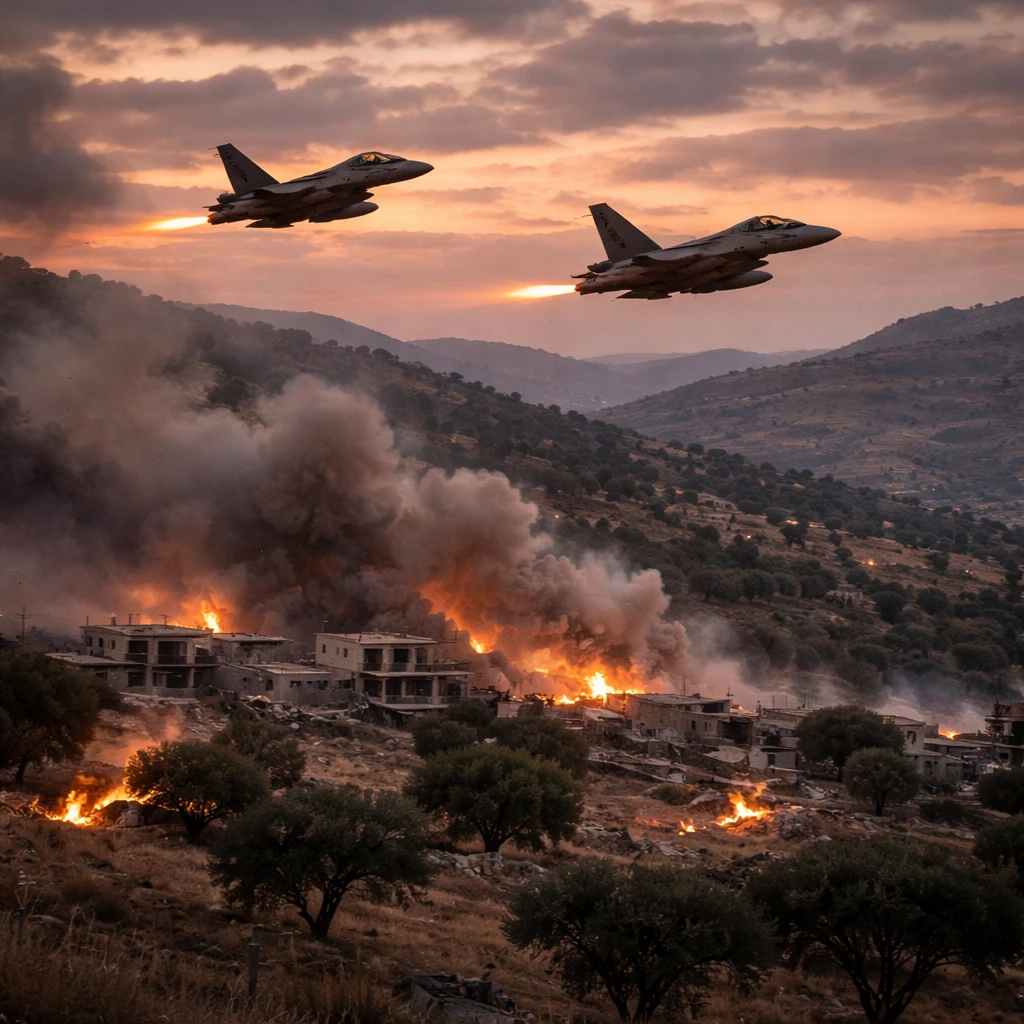
Israeli military aircraft carried out strikes in southern Lebanon on Wednesday, hitting the Nabatieh al-Fawqa area and the outskirts of Kfar Tebnit, Lebanon's state-run National News Agency reported. The Israeli military has not issued an immediate statement confirming the operation.
Lebanese officials attributed the strikes to Israeli jets. In past statements, Israel has said it directs operations at Hezbollah, the Iran-backed armed group operating in Lebanon, but no new public confirmation was provided for Wednesday's actions.
The attacks occur against a backdrop of public criticism from US President Donald Trump. Speaking on Tuesday at the G7 summit in France, Trump told delegates that Israeli Prime Minister Benjamin Netanyahu needed "to be more responsible with respect to Lebanon." He added that Israel had been fighting Hezbollah for "too long and too many people are being killed."
Trump further told the G7 that he maintained a "great relationship" with Netanyahu but said he "didn't like that he did an attack... that was too much."
The recent exchange of strikes between Israel and Hezbollah has taken place since a US-Iran agreement was announced on Sunday. According to Pakistan, which is serving as a mediator in the talks, the deal contains provisions related to Lebanon; however, Pakistan said the full text of the agreement has not been made public.
An Israeli air strike on Beirut on Sunday, described in reports as a response to a cross-border rocket attack by Hezbollah, added further complications to efforts to finalize the agreement. That incident is cited as one of the developments that have made negotiation and implementation of the pact more difficult.
In sum, the recent strikes in southern Lebanon, the public remarks from the US president, and the unresolved details of the US-Iran mediated agreement together underline the fragile and disputed security environment in the region. Officials and mediators have not released additional details about the content of the agreement or immediate plans to de-escalate the exchanges.