
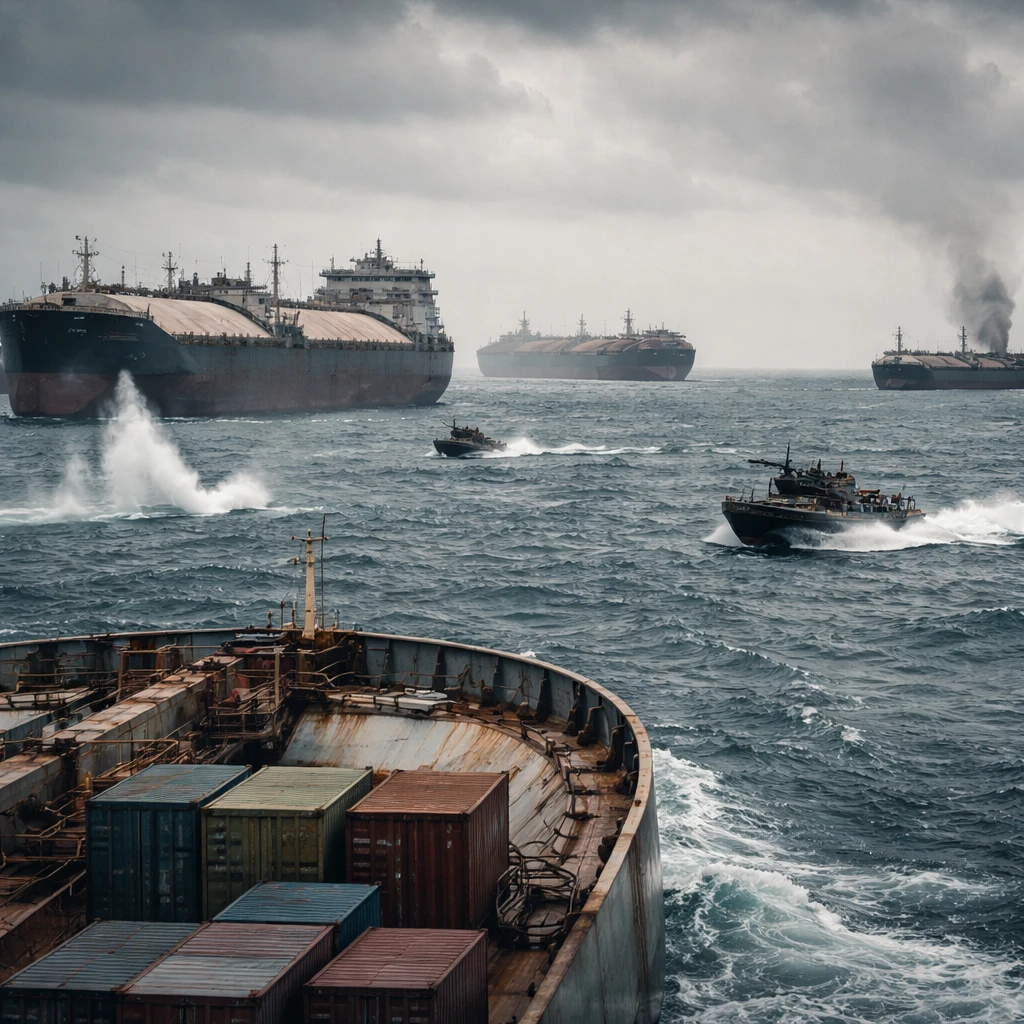
The temporary hope for a return to normal transit through the Strait of Hormuz collapsed quickly after Tehran rescinded its decision to allow unrestricted passage. What began as an announcement of reopening was followed by a rapid reimposition of controls, blocking a wave of vessels that sought to transit the strategic waterway.
On Friday Iranian Foreign Minister Abbas Araghchi had declared the strait to be "completely open" in line with a ceasefire in Lebanon. That statement prompted a number of tankers to attempt passage on Saturday, including vessels carrying liquefied natural gas (LNG) and other commercial cargoes.
But the optimism faded fast. Shipping data and maritime security reports show that Iranian gunboats intercepted and opened fire on several commercial ships, among them at least one container ship and one tanker, doing so without first issuing a radio challenge. The actions effectively halted the planned flow of cargo through the chokepoint.
The shift in Tehran's posture followed a clarification from U.S. President Donald Trump that the American naval blockade of Iranian ports would remain "in full force." Iranian security officials subsequently said they would treat the continuing U.S. blockade as a violation of the truce, a position that voided the temporary reopening of the strait.
The reversal has immediate operational consequences. Several LNG tankers that had loaded in Qatar were forced to turn back or remain idle in the Persian Gulf, interrupting what would have been the first significant LNG transit since the conflict began in late February. The effective closure of the strait continues to create pronounced supply bottlenecks, particularly for emerging Asian markets that depend heavily on oil and gas shipments for energy security.
Market participants and analysts warn that the mixed signals from Washington and Tehran are amplifying volatility. Insurance providers remain cautious given the persistent threats of attack, mines, and interception; the Strait of Hormuz retains its designation as a "high-risk" zone. That elevated risk status maintains substantial uncertainty for global energy markets and the supply of essential fuels.
Sectors affected:
- Energy - LNG and oil shipments face immediate disruption.
- Shipping - Commercial vessel operations and routing are interrupted.
- Insurance - Underwriters remain cautious due to heightened risk of attacks and mines.