
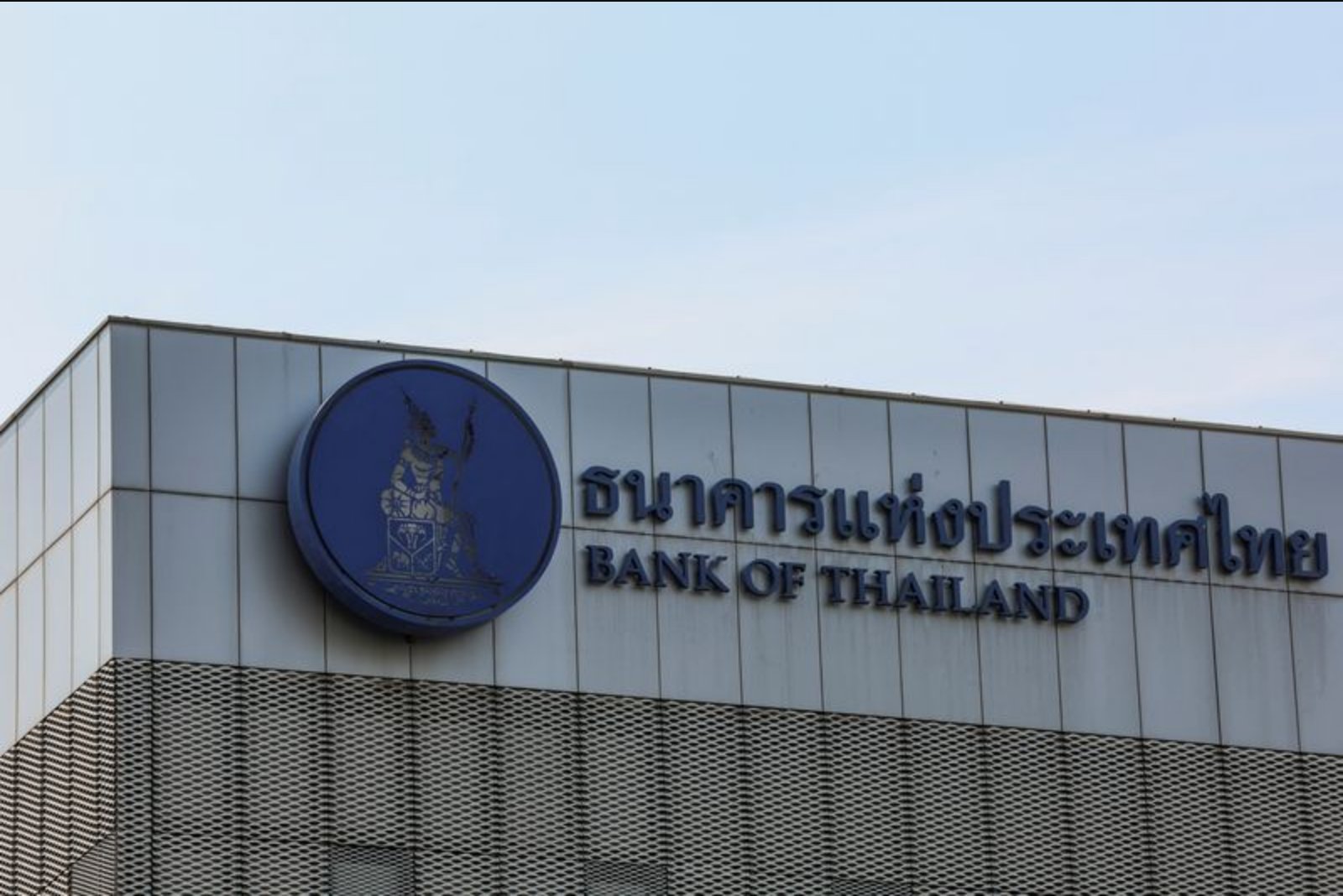
WASHINGTON, April 16 - A senior official at Thailand's central bank told Reuters that the country's economic expansion is weakening and that continued conflict linked to the U.S.-Israeli war with Iran could produce virtually unlimited downside scenarios for growth.
Assistant Governor Chayawadee Chai-anant said Thailand's high dependence on imported energy has left it particularly exposed to the fallout from the regional fighting. She described a broad downward shift across several economic indicators and highlighted tourism and import costs as primary transmission channels.
"It’s going to be the downward trend for a lot of things," Chai-anant said on the sidelines of the IMF-World Bank spring meetings in Washington. She noted that attacks from Iran had prompted the closure of regional airports and that tourism from Gulf countries fell to close to zero in March. Those visitor numbers have not fully recovered, she added, and wealthy travelers from the Gulf normally represent about 7% of total tourism spending in Thailand.
Beyond the Gulf, Thailand has also seen declines in arrivals from Malaysia. Chai-anant attributed that decrease to higher fuel costs that are deterring cross-border car travel, an effect that is easing an important growth source for the tourism sector.
Given these developments, the central bank has lowered its baseline forecast for gross domestic product growth in 2026 to 1.3% on the assumption that the war ends in the second half of this year. That projection is a reduction from the 1.9% outlook issued in December. Chai-anant also referenced a February government projection that had raised its own growth expectations into a 1.5% to 2.5% range. In the bank's baseline scenario, inflation is projected to reach 3.5%.
Chai-anant said Thailand entered the crisis in a relatively strong position, which is helping to absorb some of the shock, but she was clear that the economy remains under severe pressure. "In terms of the worst-case scenarios, there’s no limits to it. It’s that bad," she said, emphasizing the scale of possible downside if hostilities continue.
Policymakers had been expecting a positive current account of roughly $12 billion for the year, Chai-anant said, but that figure would need to be revised downward in light of the recent shocks. She did not rule out the possibility that the current account could turn negative.
On monetary policy, the bank is unlikely to move to raise interest rates unless inflation persists for longer than a year, and even then a hike would not be automatic. The bank's governor has said that increasing rates would do little to address supply-driven inflation, a constraint that shapes the central bank's response options.
Chai-anant also discussed capital flows, noting that sharp outflows from Thai equities and debt in February and March were manageable and had returned to net inflows so far in April.
Looking ahead, she said the IMF-World Bank autumn meetings, which Bangkok will host in October, will offer an opportunity to spotlight countries that have been severely impacted by the conflicts. She expressed confidence that by then the Thai economy would have established a path forward. "We can actually showcase that Asian countries are having very strong fundamentals, and are agile in terms of adaptation," she said.