
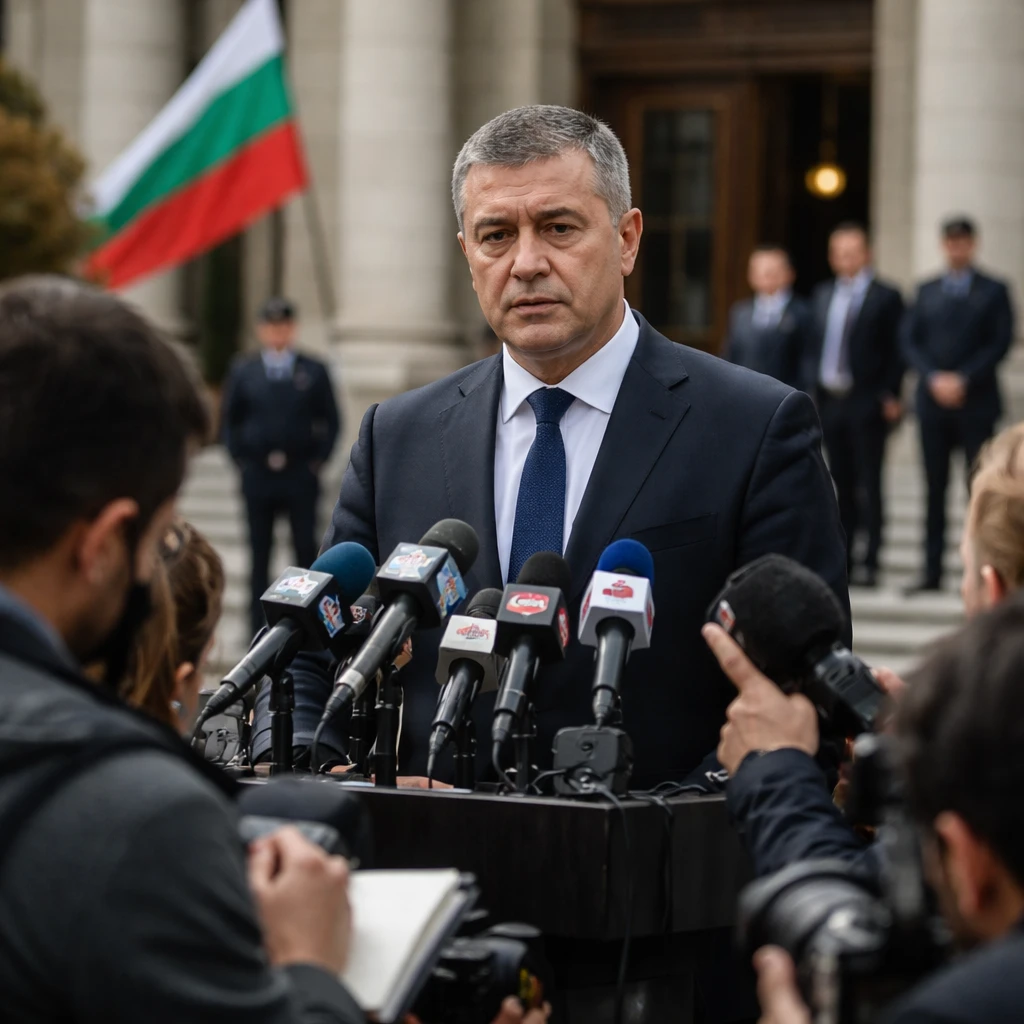
Bulgaria's new administration announced on Tuesday that it will cease providing weapons to Ukraine, marking a departure from the broader European Union approach of supplying military assistance to Kyiv amid its conflict with Russia.
Speaking to reporters in Sofia, Defense Minister Dimitar Stoyanov said the pressing need for Ukraine is additional personnel rather than more weapons. He argued for a just peace settlement that requires direct participation from both parties engaged in the fighting.
The defense minister's comments are consistent with the position of Prime Minister Rumen Radev. Radev has maintained that the war cannot be solved solely through military means. A former air force commander who served as president until January and who assumed the prime ministership last month, Radev has persistently opposed EU military assistance intended for Kyiv.
Radev has also called for removing sanctions imposed on the Kremlin, on the grounds that such measures harm the European economy. At the same time, the prime minister has pledged to deepen Bulgaria's involvement in collective European decision-making processes.
The Bulgarian decision comes after recent appeals by leaders from France, Germany and Britain calling on Russian President Vladimir Putin to agree to an immediate and comprehensive ceasefire to create space for negotiations toward a lasting peace. According to the statements cited by Sofia, Putin has declined Ukrainian President Volodymyr Zelenskyy's request to meet and discuss an end to the large-scale invasion that began more than four years ago.
While acknowledging that the European Union plays an extremely important role in any pathway to peace, Stoyanov suggested the bloc may face limitations as a neutral mediator because of its ongoing support for Ukraine during the conflict. He did not offer further operational details about how Bulgaria's new policy will be implemented.
Summary
Bulgaria's government will stop sending weapons to Ukraine; leadership argues diplomacy and personnel support should take precedence and expresses concerns about the EU's role as a neutral mediator.