
Overview
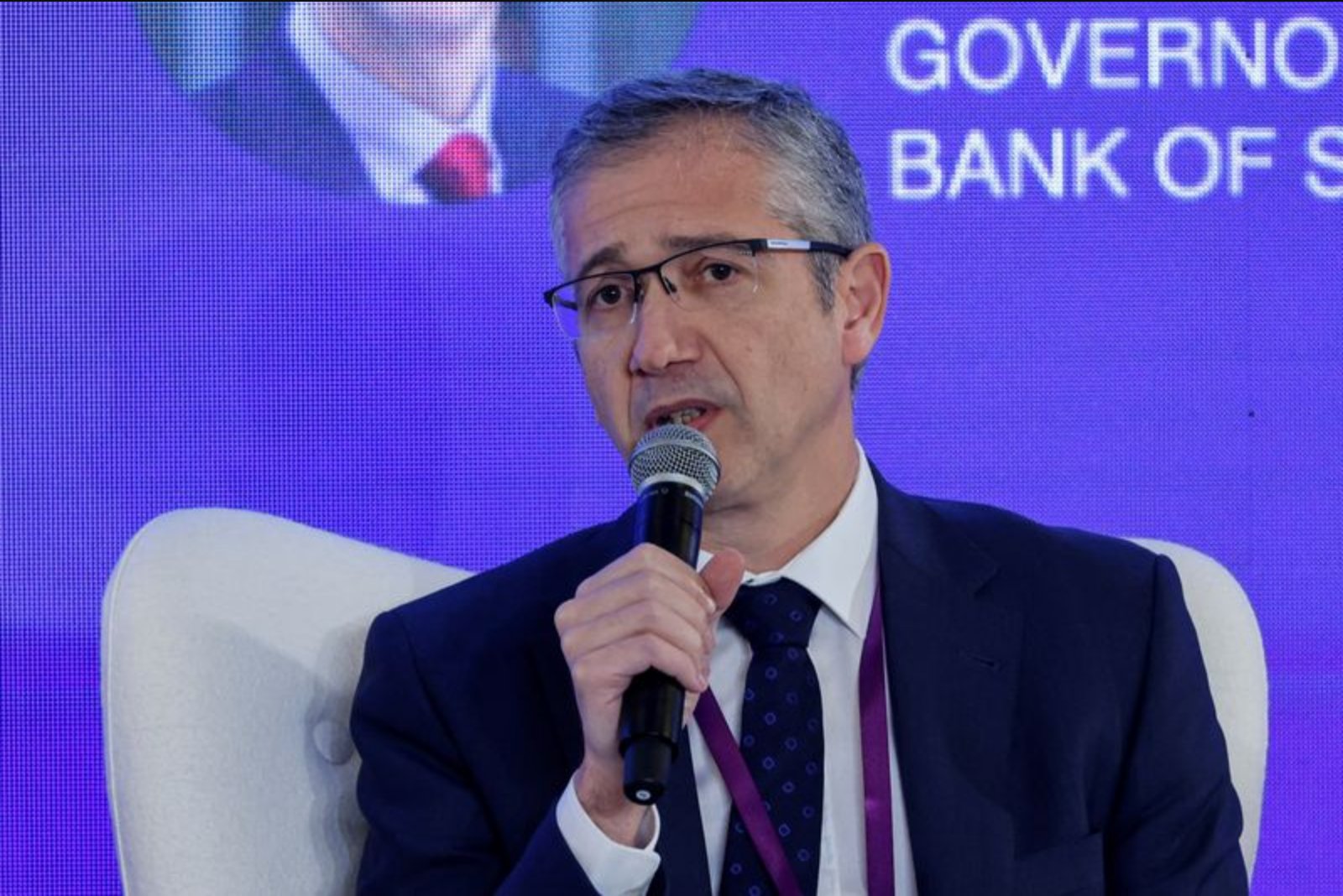
Pablo Hernandez de Cos, general manager of the Bank for International Settlements, used remarks delivered in Japan to press for coordinated international rules for stablecoins, arguing that such cooperation is essential to avoid deep market fragmentation. The BIS executive highlighted several risks tied to the rapid growth and cross-border use of dollar-pegged tokens.
Policy concerns and regulatory divergence
De Cos warned that stablecoins have the potential to undermine monetary and fiscal policy, to contribute to financial market stress and to complicate efforts against illicit finance. He said those risks make it of "critical importance" for jurisdictions to align regulatory approaches. Without a common framework, he cautioned, "divergent regulatory frameworks for stablecoins across jurisdictions could lead to severe market fragmentation or enable harmful regulatory arbitrage," referring to the practice of firms locating activity in places with the least demanding rules.
His comments come amid a global push to design rules for stablecoins. The United States and several other major economies are racing to put regulatory frameworks in place, while jurisdictions such as Abu Dhabi and Singapore already have established regimes. The Bank of England governor, Andrew Bailey, who chairs the Financial Stability Board, has said progress on international standards for stablecoins slowed in the past year.
Classification debate - securities versus money
How regulators classify stablecoins will determine the regulatory burden on issuers. De Cos noted that if stablecoins are classified as securities, issuers would face tougher disclosure and compliance obligations. Conversely, treating stablecoins as money - a position advocated by many in the crypto industry - could encourage their adoption for mainstream payments.
De Cos singled out certain operational characteristics of the two largest stablecoins, USDT issued by Tether and USDC issued by Circle. He said features such as "redemption frictions" that can push token prices away from their 1:1 peg make them resemble securities rather than money, and in that respect currently operate more like exchange-traded funds than like money.
Together, USDT and USDC account for roughly 85% of about $315 billion of stablecoins circulating globally. USDT alone has nearly $190 billion in circulation.
Industry pushback and reactions
Tether responded to De Cos's comparison by rejecting it as "simply incorrect and ignorant," saying users do not buy USDT expecting a return but use it as a digital dollar. Circle, the issuer of USDC, declined to comment on the remarks.
In the United States, the treatment of stablecoins remains contested. The Securities and Exchange Commission recently indicated it would not treat stablecoins as securities under the GENIUS Act, even as political figures have publicly backed crypto assets.
Run risk and possible mitigants
De Cos reiterated that runs on stablecoins could trigger market stress. He added that that risk could be "much reduced" if stablecoin issuers had access to arrangements similar to deposit insurance or to central bank lending facilities. Such backstops, he suggested, would lower the chance that sudden redemptions would spill over into broader markets.
Dollarisation and capital flow concerns
The BIS chief also warned that growing stablecoin use could accelerate the dollarisation of developing economies. He said broader adoption of dollar-pegged tokens could make it easier to evade capital controls and thereby permit both larger inflows in good times and rapid outflows during stress periods.
On the question of paying interest
De Cos weighed in on the debate over whether stablecoins should be permitted to pay interest like bank deposits. He observed that shifts from bank deposits to stablecoins might be muted if stablecoin holdings are unremunerated and the opportunity cost of holding them is high, such as in periods of elevated interest rates. He added that the effectiveness of prohibitions on paying interest would depend on whether such bans can be enforced.
Contextual note
The comments by the BIS general manager underscore a central tension facing policymakers: how to strike a balance between preserving monetary and financial stability and enabling innovation in digital payment instruments. Jurisdictions are moving at different speeds, and the form and scope of regulation will shape how stablecoins evolve as a payments and store-of-value proposition.