
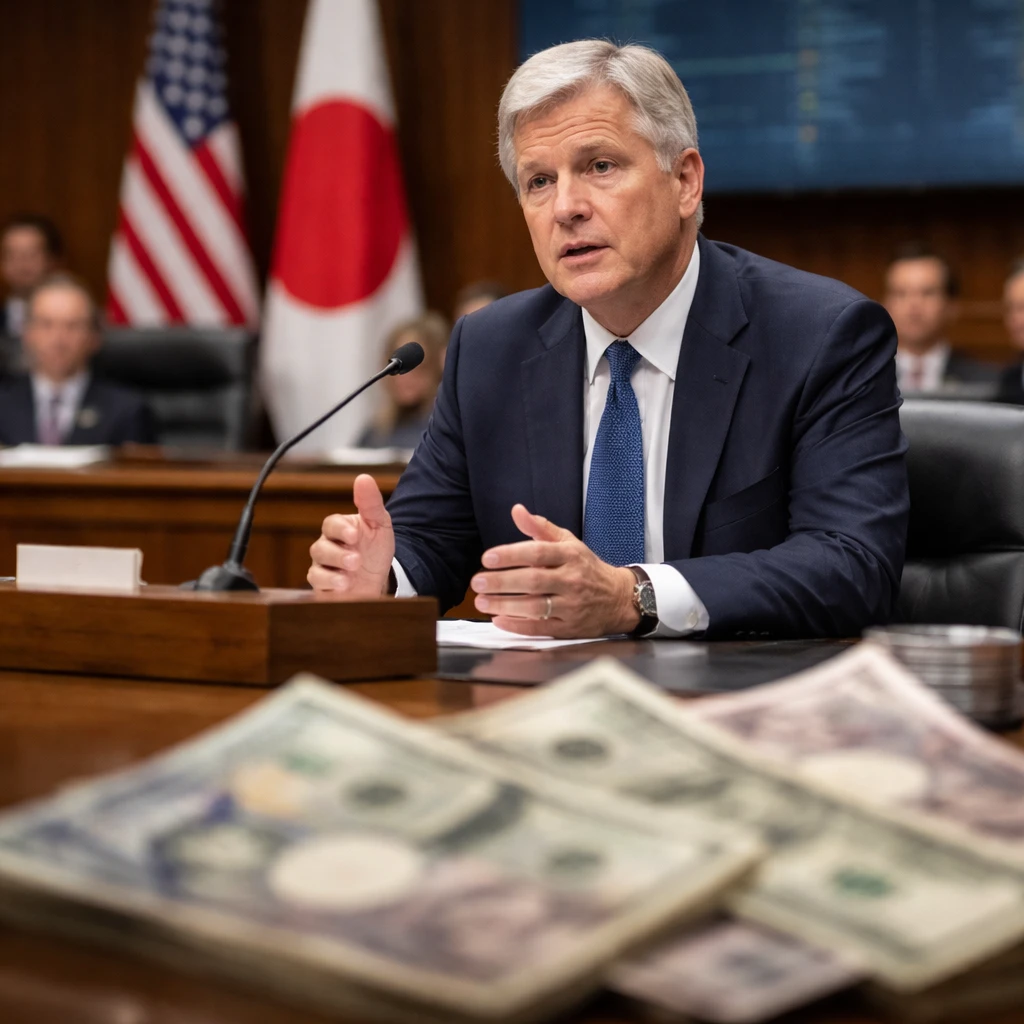
Treasury Secretary Scott Bessent told the House Financial Services Committee on Tuesday that the United States participated with only a nominal amount in the joint intervention intended to support the Japanese yen. He framed the action as aligned with American economic interests and defended the Treasury's role in the coordinated operation.
Bessent argued that a firmer yen helps U.S. exporters and diminishes the need for Japanese authorities to liquidate U.S. assets in order to finance currency-market operations. The Treasury joined Japan on July 31 in buying yen after the currency reached its weakest level versus the dollar in about four decades.
Observers tracking Treasury activity have estimated the department deployed well under $1 billion in the intervention. By contrast, Japan spent a record $96.4 billion from late July to late August on its own efforts. Tokyo's transactions involved selling dollars and likely U.S. Treasuries, and those moves were described as record-scale purchases of yen by Japanese authorities. Japan remains the largest foreign holder of U.S. government securities.
Bessent said the modest U.S. contribution was sufficient to signal support for Japanese policy. He also noted that the Treasury has recorded gains of tens of millions of dollars from the yen operation, while emphasizing that earning a profit was not the objective.
The Treasury Secretary has recently expressed a desire to see the Bank of Japan raise interest rates to provide more durable support to the yen. The Bank of Japan is scheduled to meet later this week to set policy.
Speaking at a Southern Methodist University event in Texas last week, Bessent said he has insight into the likely actions of the Bank of Japan and Japanese policymakers. He added, "And you can bet against me if you want."
In written responses to Democratic Senator Elizabeth Warren last month, Bessent warned that disorderly moves in yen markets can force unwinds and create broader instability. He said such disruptions could destabilize global markets and push up borrowing costs for American households and businesses.
The Treasury's testimony and subsequent commentary outline the department's rationale: a small, coordinated intervention can provide a policy signal and help avoid more disruptive market outcomes, while leaving the bulk of large-scale foreign-exchange operations to the country whose currency is at the center of the move.
The coming Bank of Japan policy decision will be watched closely for signs that Tokyo's central bank may alter its stance in a way that supports the yen without requiring repeated direct intervention.