
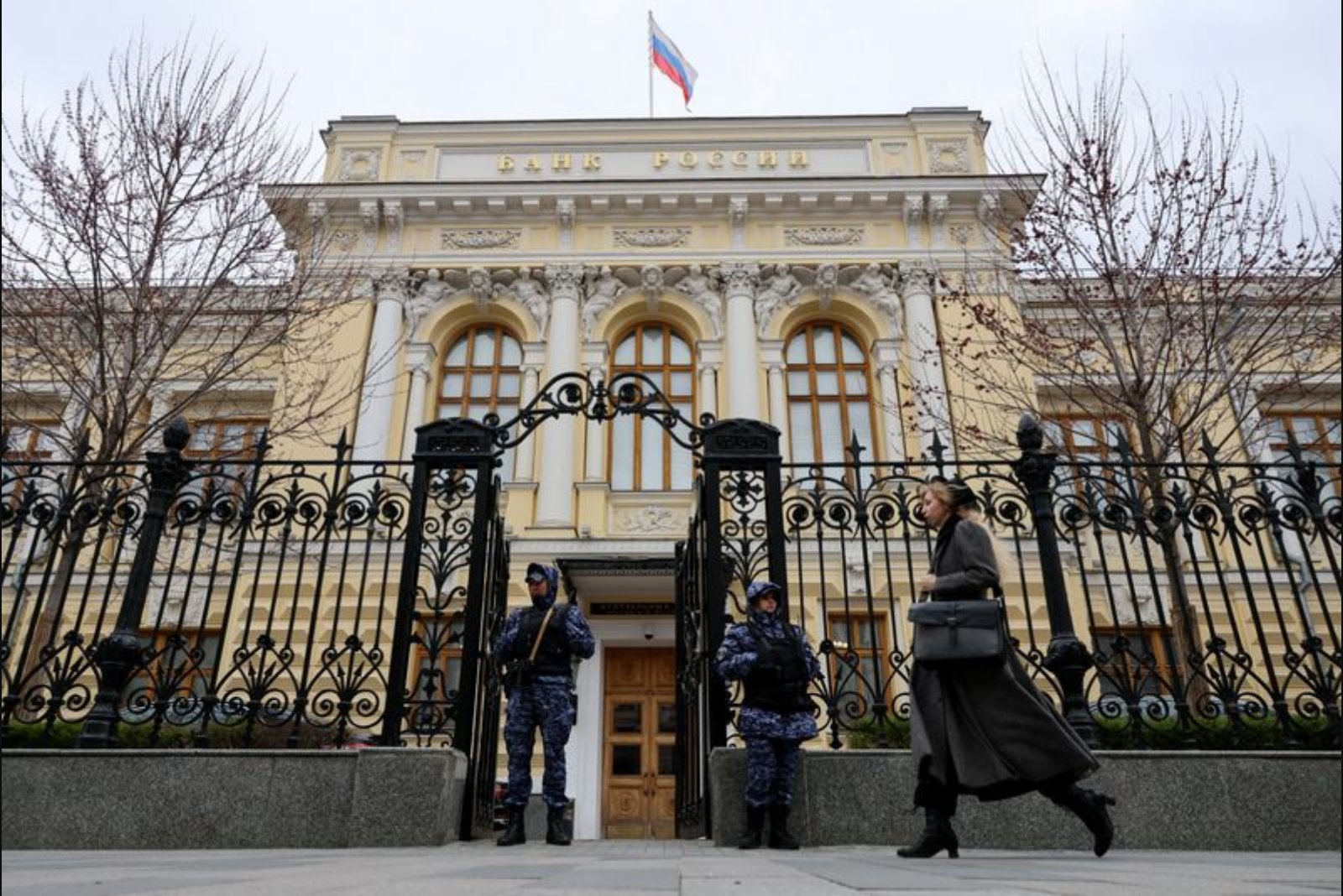
The Bank of Russia reduced its key policy rate by 50 basis points to 14.5% on Friday, a step analysts had anticipated, but smaller than the quicker easing some businesses have been pressing for to support activity after a weak start to the year.
Governor Elvira Nabiullina framed the move against a backdrop of heightened external and domestic uncertainty. She highlighted the Iran war and a blockade of the Strait of Hormuz as developments that have driven up prices for Russia's export commodities, even as the country has had to scale back oil output following Ukrainian drone strikes on ports and refineries.
"If the conflict drags on, the adverse effects for the Russian economy will be strengthening. The implications caused by a global rise in costs might turn out to be more serious than the benefits from larger exports and a stronger rouble," Nabiullina said, adding that "the situation in the Middle East remains a factor of uncertainty."
In a notable revision, the central bank raised its forecast for the average oil price used to estimate budget revenues in 2026 by 45 percent to $65 per barrel, and said this higher oil price will support economic growth later in the year.
The bank pointed to a set of temporary domestic shocks as key reasons for the economy's contraction early in the year. Russia's economy shrank by 1.8 percent in the first two months, the central bank said, attributing much of that weakness to a value-added tax increase at the start of the year that hit many small and medium-sized enterprises, and to unusually heavy snowfalls across the country.
"The abnormal frosts and snowfalls at the beginning of this year led to forced downtime in the first quarter, and therefore, construction companies will make efforts to catch up in the next quarter," Nabiullina said, underscoring the role of weather-related disruption in depressing early activity.
Outlook and policy stance
Despite the early-year contraction, the central bank left its forecast for 2026 economic growth unchanged at between 0.5 percent and 1.5 percent, arguing that the recent weakness was largely driven by one-off factors. Nabiullina said she did not see risks of the economy "overcooling" and indicated that a faster pace of rate cuts would be conditional on inflation moving below the central bank's 4 percent target from the current 5.9 percent and a rise in unemployment.
Her sanguine view on the inflation path was delivered with a rhetorical flourish: "It took humanity 50 years to return to the Moon. We will also return to 4% inflation, I am sure of it, and I am confident that it will happen much faster," she said.
First Deputy Governor Alexei Zabotkin added that broader first-quarter GDP data, due in May, would be "different for the better" than the preliminary figures for January and February.
Domestic political and corporate reactions
President Vladimir Putin reportedly chastised senior officials last week over the economic contraction and pressed for new measures to stimulate growth. Business groups have signalled that a policy rate closer to 12 percent would be more compatible with a resumption of growth.
Several large corporates have already flagged the drag from tight monetary policy. Major companies, including steelmaker Severstal and aluminium producer Rusal, reported either quarterly losses or declines in profit and pointed to the central bank's tight stance as a contributing factor.
Monetary-fiscal interplay and signals on future policy
Nabiullina emphasized productivity growth as the main lever for restoring broader economic momentum and described the central bank's role as a regulator of financial markets to help direct capital toward more productive sectors.
The central bank also warned that any fiscal shift toward accelerated spending and a larger deficit would likely require a tighter monetary stance for longer. "In case of higher expenditures accompanied by growth in the structural budget deficit, tighter monetary policy will be required than that under the baseline scenario," the central bank said in its statement.
As a signalling move, the bank adjusted its estimate for the average key rate over the year to a range of 14 percent to 14.5 percent, up from a prior range of 13.5 percent to 14.5 percent - a tweak that market watchers interpreted as a firmer indication of where policy might sit on average through the year. "They are giving us a more stringent signal on the key rate," Sofya Donets, chief economist at T-Bank, remarked.
Advertising and market product note
The original report included a market-adjacent promotional block discussing investment evaluation tools and stock ideas, naming a specific stock ticker and citing past performance of algorithmically selected ideas. That content offered marketed services and performance examples, separate from the central bank coverage.
Bottom line - The Bank of Russia's half-percentage-point cut to 14.5 percent keeps a cautious tightening bias intact. Policymakers are balancing the upside to revenues from a higher oil-price outlook against downside risks from global cost pressures tied to Middle East conflict and domestic one-off shocks that have weighed on growth so far this year.