
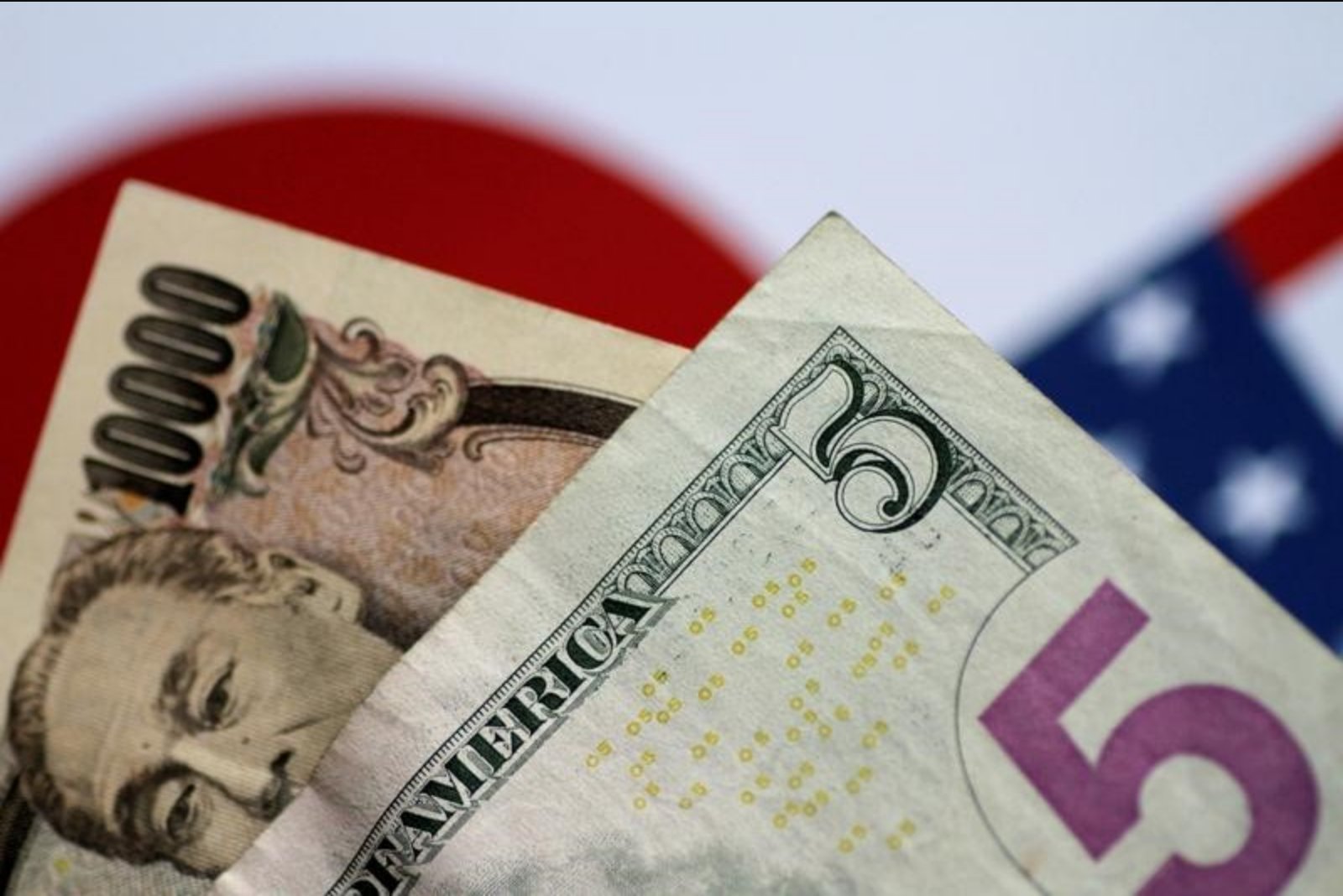
The Japanese yen gained ground on Tuesday after the Bank of Japan opted to keep interest rates on hold but signalled a willingness to tighten policy if inflation risks continue to mount. The dollar held steady in Asian trading as investors braced for the start of a Federal Reserve meeting later in the day.
Broader Asian currencies generally weakened as fresh signs of a prolonged U.S.-Iran impasse damped demand for risk-sensitive currencies. At the same time, oil prices continued to climb, keeping additional pressure on regional markets and heightening caution among investors.
BOJ decision and yen reaction
The USD/JPY exchange rate fell about 0.2%, moving the pair closer to slipping below the 159 yen mark after the Bank of Japan left its policy rate at 0.75%. The central bank’s decision was not unanimous: three of the nine members on the policy board favored an immediate rate increase.
Alongside its hold, the BOJ lowered its economic growth forecasts and materially raised its inflation outlook for the fiscal year. Officials signalled preparedness to lift rates further, citing heightened inflation risks. The bank now expects inflation to rise well above its 2% annual target in 2026, with the recent oil price shock linked to the Middle East conflict highlighted as a significant contributing factor.
Analysts at Capital Economics said the BOJ’s relatively hawkish posture makes a 25 basis point move in June appear likely.
Asia FX and geopolitical pressures
Most Asian currencies came under pressure amid lingering uncertainty over the Iran conflict. Overnight reports indicated that U.S. President Donald Trump was unhappy with an Iranian proposal to reopen the Strait of Hormuz and end hostilities, while disputes over Tehran’s nuclear activities remained unresolved.
Oil prices extended a recent rally on Tuesday as the Strait of Hormuz remained closed, a development that amplified concern across oil-sensitive markets in the region. Higher crude prices and the prospect of a prolonged deadlock in the Middle East contributed to the weakening of several Asian currencies.
With the Fed meeting imminent, the dollar index and futures settled into a steady pattern after recent gains. The Federal Reserve is widely expected to keep interest rates unchanged in the meeting that begins later on Tuesday. The session also carries political context - it will likely be Chair Jerome Powell’s final meeting on the job, with his term ending on May 15.
Separately, markets are watching the potential confirmation of Kevin Warsh as the next Fed chair. Top U.S. lawmakers indicated they will move forward with his nomination after the Justice Department dropped a probe involving Powell.
Selected currency moves
- USD/INR rose 0.3%, pushing further above the 94 rupee level, reflecting sensitivity to oil moves.
- USD/KRW fell about 0.1%.
- AUD/USD was flat as Australian consumer inflation data for the first quarter awaited release on Wednesday.
- USD/CNY rose 0.1% with market attention focused on China’s April purchasing managers index, due on Thursday.
- USD/SGD was flat.
- USD/TWD climbed 0.2%.
Investors will also be monitoring upcoming economic readings in the region, notably Australian inflation figures and Chinese PMI data, which could influence currency flows later in the week.