
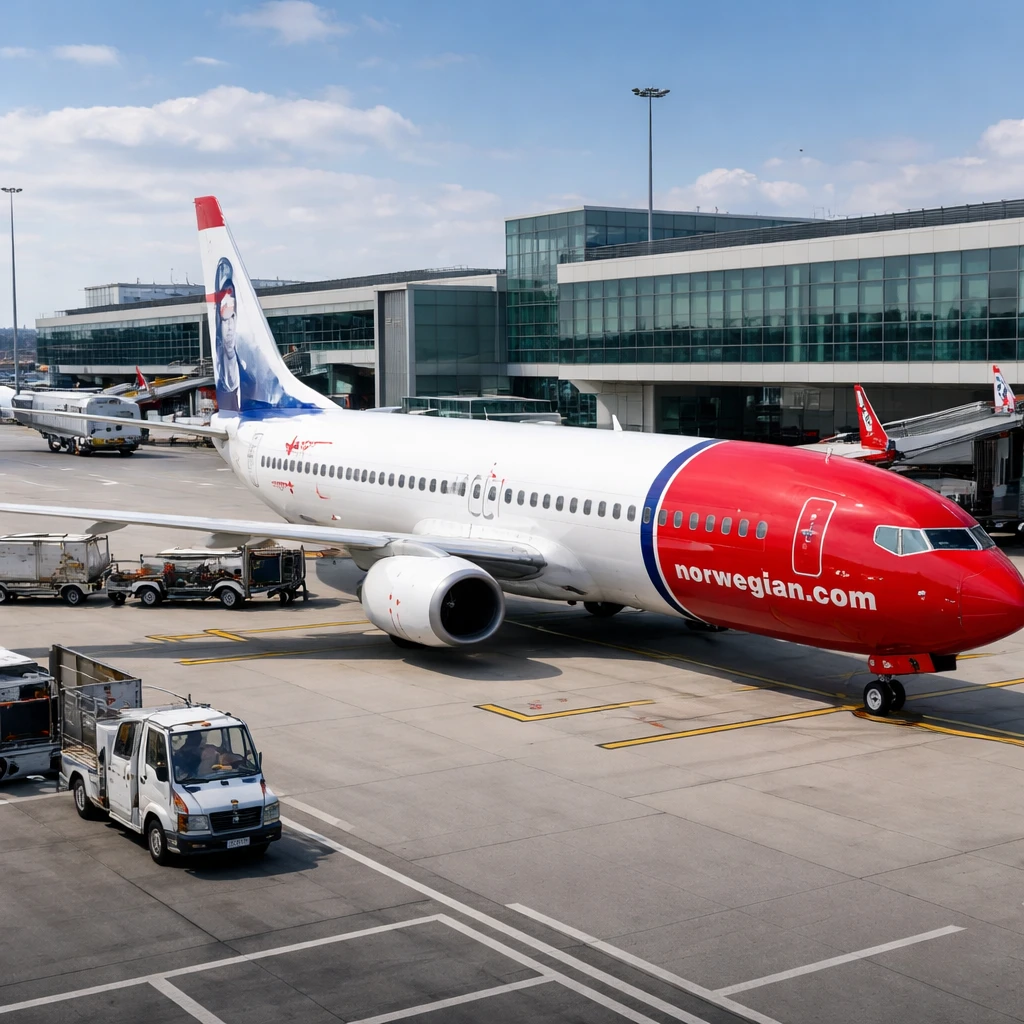
Norwegian Air Shuttle ASA reported improved financial results for the first quarter, posting losses that were substantially smaller than analysts had forecast. The carrier recorded an EBIT loss of NOK 220 million for the quarter, a material improvement versus the consensus estimate for an EBIT loss of NOK 954 million.
On an earnings-before-tax basis, Norwegian reported a loss of NOK 459 million, again coming in ahead of expectations where the consensus stood at a NOK 1,152 million loss. Group operating revenue for the period totaled NOK 6,904 million, narrowly above the NOK 6,884 million analysts had expected.
Traffic efficiency metrics for the quarter were solid. The reported load factor came in at 86.5%, while an alternative measure showed 87.6%, which matched analyst expectations for the metric.
Navigating the outlook, the airline said booking trends across the group have remained robust and encouraging. For the second quarter of 2026 the company expects available seat kilometers - a measure of production capacity - to increase by 5% compared with the same period a year earlier. For full-year 2026 Norwegian projects overall production growth of approximately 3% relative to 2025 levels.
Operationally, the carrier anticipates a fleet of 95 aircraft for the upcoming summer season. At the same time, Norwegian cautioned that aviation fuel costs for the full year 2026 are expected to increase significantly from the prior year given the current market situation, a factor that could affect unit costs and margins.
Contextual takeaways
- Norwegian delivered better-than-expected profitability metrics for the quarter, with both EBIT and pre-tax losses narrower than consensus.
- Top-line performance was in line with expectations, with group operating revenue slightly above forecasts and load factors meeting analyst projections.
- The carrier is forecasting modest production growth in 2026 and is planning for a 95-aircraft fleet for the summer season, while warning of materially higher aviation fuel costs for the year.
The figures supplied by Norwegian offer a clearer near-term picture of operating performance, though the company explicitly highlighted a significant fuel-cost headwind for 2026. Absent additional detail from the company, the magnitude of the cost impact on unit economics and margins for the full year remains tied to how fuel markets evolve and how capacity and pricing are managed.