
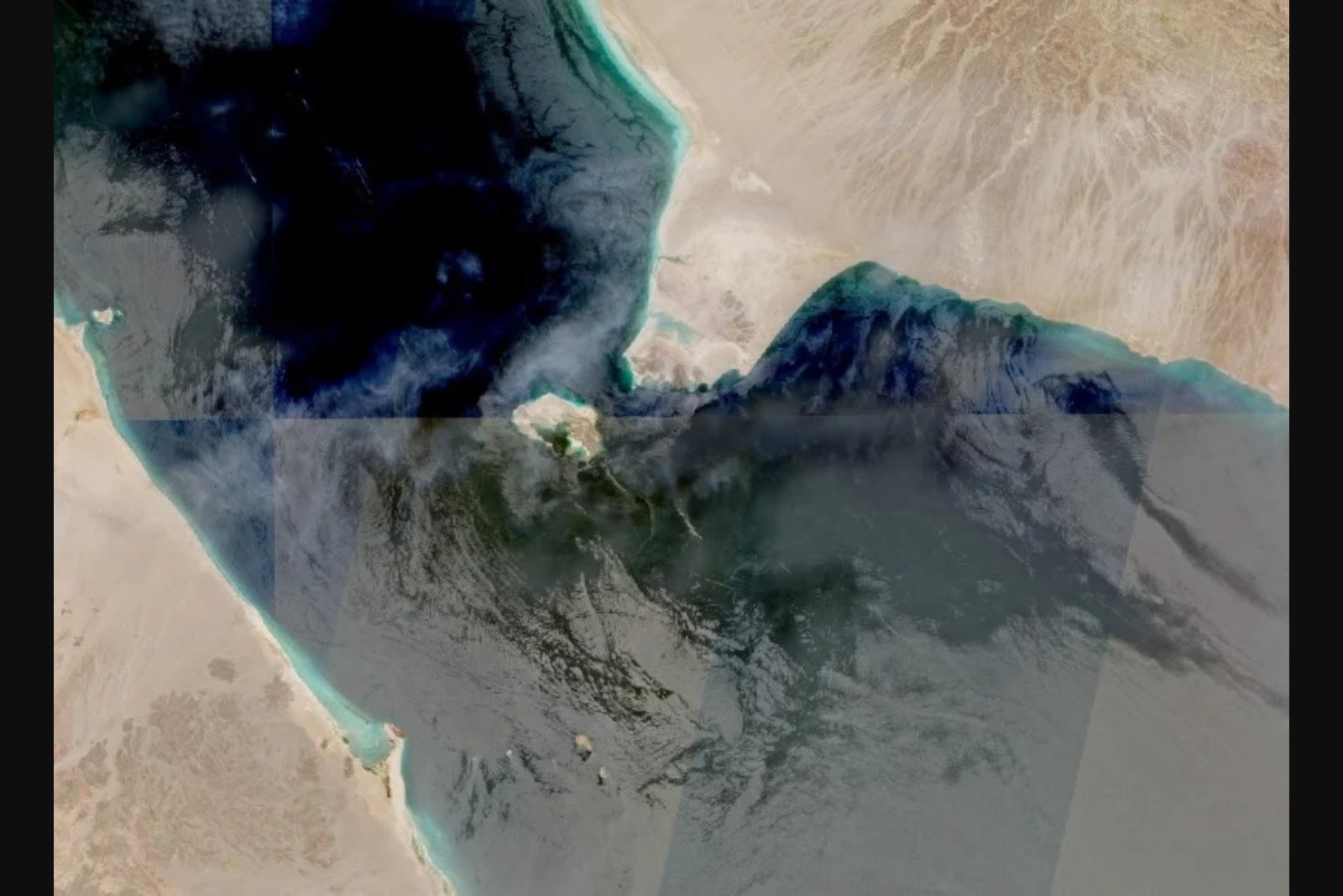
The Iran-backed Houthi forces are attempting to extend their authority along Yemen's entire Red Sea coastline - a campaign that, if successful, would bolster their capacity to influence traffic through the Bab el-Mandeb Strait, one of the globe's most congested and strategically contested maritime chokepoints.
Houthi leaders have already proclaimed a naval blockade against Saudi Arabia, the world's largest oil exporter. Consolidated control of the Bab el-Mandeb would further constrain Gulf producers' access to primary shipping lanes that connect to the Suez Canal and beyond.
Where is Bab el-Mandeb?
Known historically as the 'Gate of Tears' for its challenging navigation, the Bab el-Mandeb lies at the southern terminus of the Red Sea between Yemen on the Arabian Peninsula and Djibouti and Eritrea on the African shore. It occupies the opposite side of the peninsula from the Strait of Hormuz, which has been the focal point in confrontations tied to U.S.-Iran tensions.
The strait narrows to approximately 18 miles (29 km) at its tightest point, funneling maritime traffic into two main channels that are separated by the Yemeni island of Perim (also referred to as Mayyun in Arabic). North of those channels sit the Hanish Islands, located between the coastal cities of Hodeidah and Mocha. Whoever holds these islands and the nearby ports gains visual oversight over vessels approaching from the south.
The Houthis currently control Hodeidah and have utilized the port city as an operational base for attacks on Red Sea shipping. Their campaign has continued southward with the capture of Mocha - a historic port long associated with the global coffee trade - and movements toward Dhubab, a coastal city positioned directly on the strait. Securing Dhubab and Perim island is central to exerting influence over the waterway.
Which shipments transit the strait?
Bab el-Mandeb is a critical artery for seaborne commodity and container flows, notably for cargo moving between Asia and Europe via the Suez Canal. It is also an important conduit for traffic related to the Suez-Mediterranean pipeline on Egypt's Red Sea coast and for commodities destined for Asia, including Russian oil.
Functioning as the southern gateway to the Suez Canal, the strait is effectively mandatory for vessels approaching the canal from the south. When passage through the strait is impaired, ships must take the long detour around the Cape of Good Hope at the southern tip of Africa - a diversion that can add weeks to voyages and materially raise transport costs.
What have Houthi actions already produced?
The Houthis began an extended campaign of attacks in the southern Red Sea and Bab el-Mandeb in late 2023, framing those strikes as solidarity with Palestinians in Gaza amid the Hamas-Israel war. The repercussions were swift: major shipping lines and oil companies - including Hapag-Lloyd, MSC, Maersk, BP and tanker group Frontline - rerouted ships away from the Suez Canal, opting to circumnavigate Africa instead.
The immediate commercial impact included a sharp rise in freight rates and materially longer transit times for many trade routes that normally traverse the Red Sea and Suez Canal.
What would fuller Houthi control imply?
Should the Houthis impose tighter control over the strait, the maneuver could provide their backer, Iran, with a lever in ongoing tensions with the United States. Those tensions have already contributed to a marked reduction in energy flows through the Strait of Hormuz, a dynamic that has, in turn, pressured oil prices higher.
Quantifying the strait's immediate importance, data for June show total petroleum volumes passing through Bab el-Mandeb represented about 7% of global oil output, according to the market data cited in reporting.
The strategic geometry of the Bab el-Mandeb - narrow channels, key islands and adjacent coastal cities - makes control over its approaches a tangible operational advantage for any actor seeking to disrupt or influence global shipping. As the Houthis press further south along Yemen's coastline, the stakes for maritime logistics, freight markets and energy flows remain elevated.