
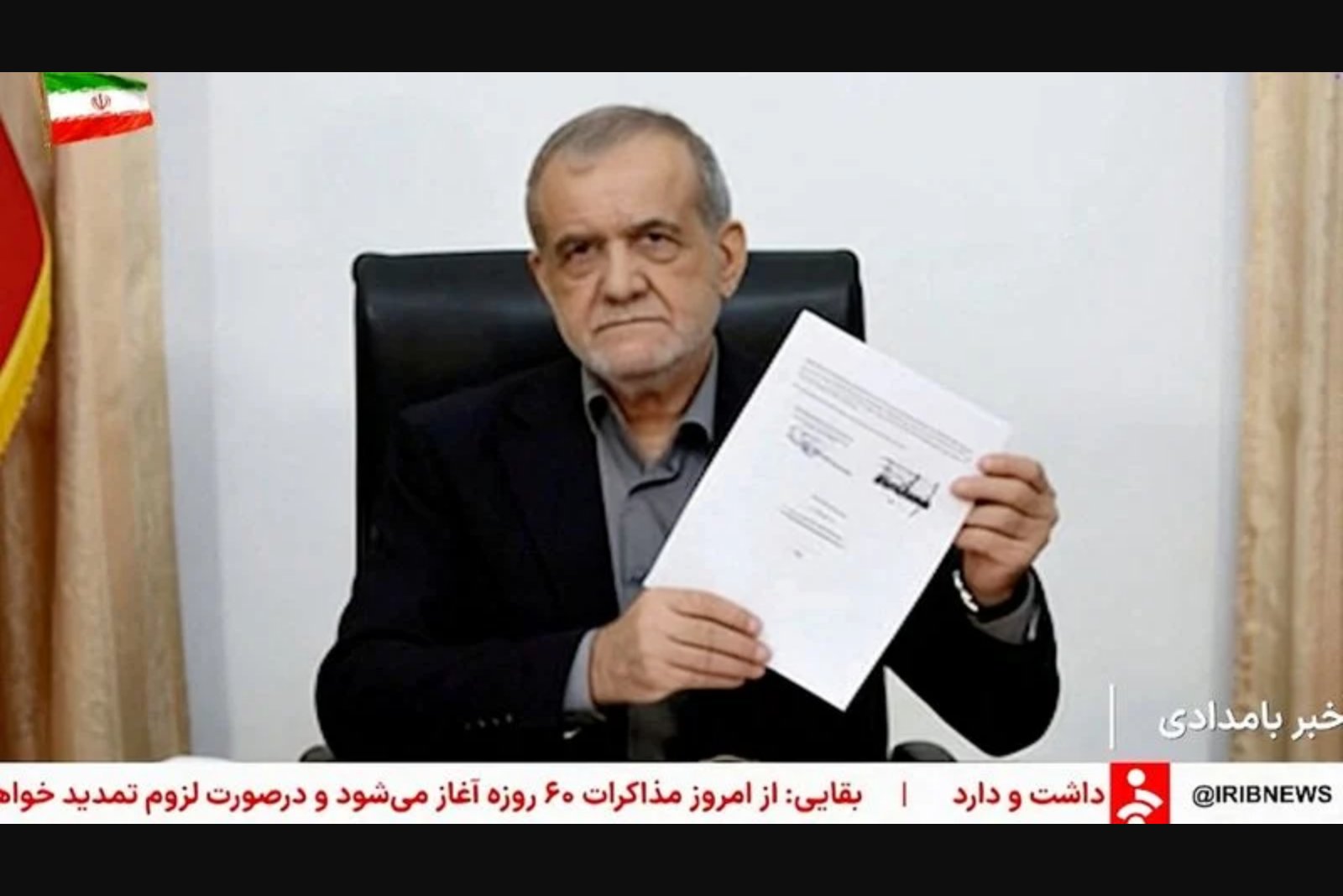
The White House provided a copy of the interim agreement with Iran to the U.S. Congress on Thursday, one day after President Donald Trump signed the interim deal with Tehran to end the war.
The document is titled "Islamabad Memorandum of Understanding between the Islamic Republic of Iran and the United States of America." Its text opens with a declaration that military operations on all fronts - including Lebanon - will end immediately and permanently.
Specific operational commitments are set out in the memorandum. The United States agrees to fully end its naval blockade on Iranian ports within 30 days. In exchange, Iran has pledged to ensure safe passage of commercial vessels through the Strait of Hormuz at no charge for a period of 60 days.
The memorandum also establishes a diplomatic timetable. Washington and Tehran commit to negotiating a final, comprehensive agreement within 60 days. That timeline may be extended if both parties agree to do so.
Signatures appear on the document on behalf of both Iran and the United States. Pakistan is listed as a signatory in the role of witness and mediator.
The terms set out in the document transmitted to Congress match the details previously read out by a U.S. official. The memorandum frames the interim accord as both an immediate cessation of hostilities and a short-term framework for maritime safety and further negotiations.
Below are concise takeaways and contextual points drawn strictly from the memorandum's contents as transmitted to Congress.
Key points
- The memorandum declares an immediate and permanent end to military operations on all fronts, explicitly including Lebanon.
- The United States will end its naval blockade on Iranian ports within 30 days, while Iran will guarantee free safe passage for commercial vessels through the Strait of Hormuz for 60 days.
- Washington and Tehran agree to seek a final agreement within a 60-day window, with the option to extend that period by mutual consent; Pakistan is recorded as witness and mediator.
Risks and uncertainties
- The memorandum establishes a short, 60-day negotiating window for a final deal - the outcome of those talks remains uncertain based on the document alone.
- The provisions are interim in nature; the document sets temporary maritime and military conditions but does not itself constitute a final settlement.
- The memorandum relies on mutual agreement to extend the negotiation period, creating potential uncertainty if either party declines extension.
The transmitted memorandum outlines a discrete set of commitments and a defined, short-term negotiating timetable. It presents a framework intended to halt military actions immediately, to restore maritime movements for commercial shipping through the Strait of Hormuz for an agreed period, and to create an opportunity for both governments to conclude a final agreement within a specified timeframe. The document also records Pakistan's role as witness and mediator to the interim accord.