
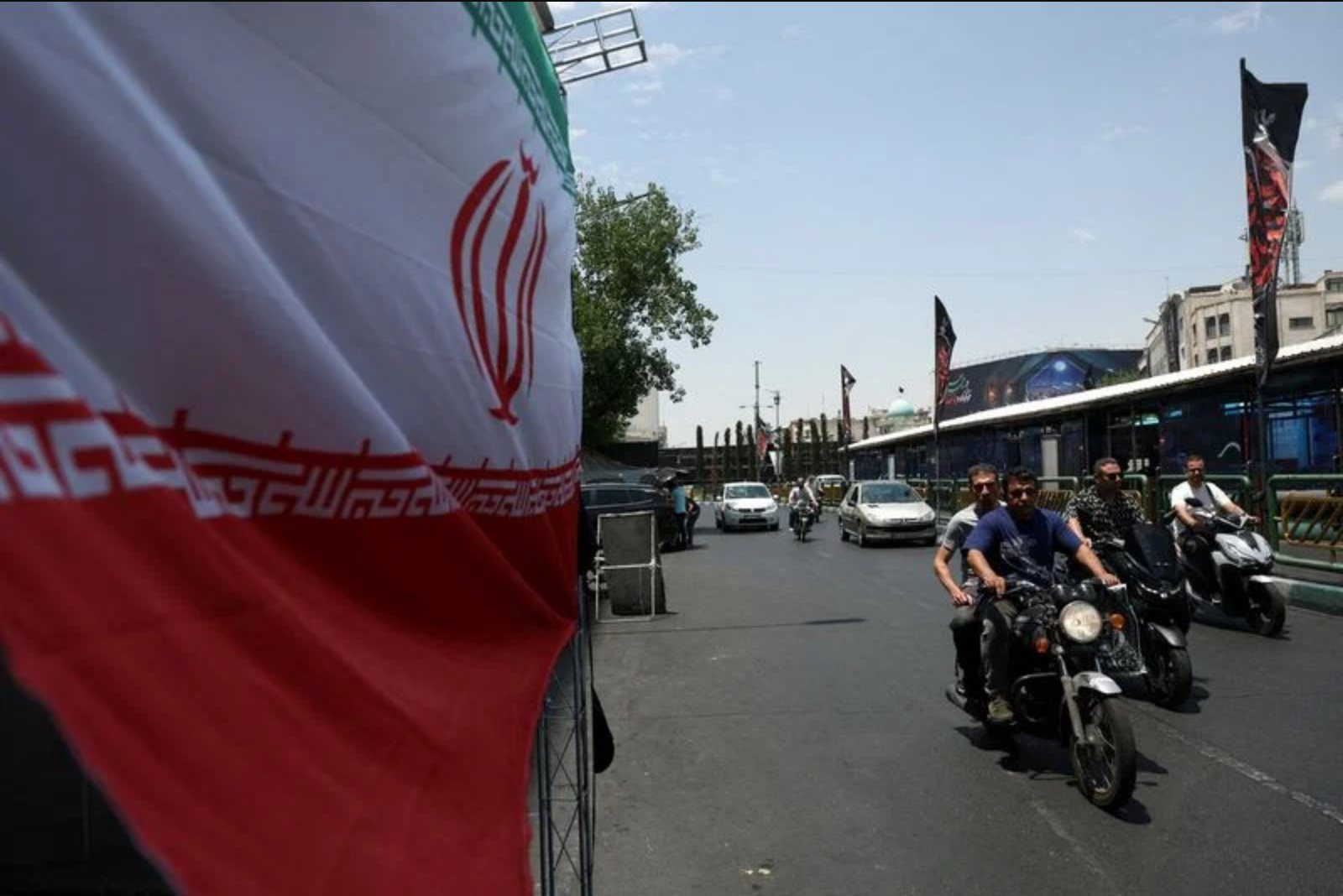
The interim U.S.-Iran agreement signed at Versailles on the margins of the G7 summit marks the first time since Iran's 1979 Islamic Revolution that an American and an Iranian president have formally signed a bilateral deal. The 14-point accord, which supporters have labelled transformational, pauses the three-month conflict with a 60-day extension of the ceasefire, including in Lebanon, to permit negotiations toward a lasting settlement and to address matters such as Iran's nuclear programme.
Proponents view the arrangement as a sweeping bargain between Washington and Tehran. Lebanese commentator Sarkis Naoum encapsulated that perspective, saying the pact represents a grand bargain for both capitals and that the likelihood of success outweighs the risk of failure. In his words, Iran cannot withstand further economic pressure from sanctions, and U.S. President Donald Trump has little incentive to restart hostilities.
Yet for many of Iran's adversaries across the Middle East, the deal is viewed very differently. From Israeli officials to Gulf capitals and factions within Lebanon, there is alarm that the accord risks solidifying Iranian power and legitimacy rather than containing it. Israeli analysts have described the outcome as a strategic setback that reverses earlier aims to weaken Tehran.
Danny Citrinowicz, a senior Iran researcher at Israel's Institute for National Security Studies, characterised the agreement as a strategic "catastrophe." He argued that what had been presented as a joint American-Israeli effort to undermine or remove Iran's clerical leadership has effectively been transformed into formal U.S. recognition that strengthens the same regime those efforts sought to change. Citrinowicz noted that the deal does not meet Israel's central demands: it places no explicit restrictions on Iran's missile forces, it does not curtail Iran's network of regional proxies, and it offers no clearly defined path to dismantle Iran's nuclear facilities.
He also said the ceasefire framework, shaped in part by Iranian insistence, has constrained Israel's operations in Lebanon. Politically and strategically, the analyst argued, the agreement undercuts the narrative advanced by Prime Minister Benjamin Netanyahu and exposes the limits of his leverage with a U.S. president perceived as closely aligned with Israel. Citrinowicz warned that the arrangement gives Iran greater room to operate and risks further isolating Israel.
If the accord holds, Tehran appears positioned to secure a number of advantages outlined in the negotiations: a definitive end to the immediate conflict, phased relief from sanctions, resumption of oil exports and the prospect of substantial reconstruction financing - all combined with a measure of implicit acceptance of its existing political system. By contrast, the United States falls short of the objectives it shared with Israel: removing or weakening the clerical establishment, dismantling Iran's nuclear infrastructure, and significantly curtailing Iran's regional influence. Rather than fundamentally altering Iran's role, the deal restores its standing.
The war began on February 28 when U.S. and Israeli forces launched operations against Iran, including the assassination of the 86-year-old Supreme Leader Ayatollah Ali Khamenei and other senior figures in the opening days. The conflict rapidly escalated, resulting in more than 7,000 deaths, predominantly in Iran and Lebanon, while also contributing to higher energy prices and stoking worries about food shortages in developing countries.
Lebanon emerges as a significant arena affected by the accord. By incorporating Lebanese territory and hostilities into the 60-day ceasefire, the agreement effectively bolsters the position of Tehran-backed Hezbollah and draws Lebanon into the broader U.S.-Iran negotiating framework, at least temporarily sidelining direct Beirut-Israel talks. Lebanese President Joseph Aoun publicly warned that Iran cannot negotiate matters on Lebanon's behalf when it comes to the ceasefire and Israeli withdrawal from southern Lebanese territory.
Meanwhile, sources close to Hezbollah interpret the agreement as advantageous for Lebanon. Those sources argue that elevating the issue to a U.S.-Iran track strengthens Lebanon's prospects by putting pressure on Hezbollah and Israel from their respective external patrons to reach a settlement.
Alarm is particularly acute among Gulf states, which officials in the region view as one of the principal strategic losers of the conflict and its diplomatic resolution. Gulf sources say the deal has shifted strategic thinking in the region by eroding confidence in longstanding security guarantees provided by the United States, entrenching Iran as a persistent regional power and accelerating a policy tilt toward accommodation rather than confrontation.
Not all observers accept a narrative of unambiguous Gulf defeat. Iran expert Alex Vatanka, a senior fellow at the Middle East Institute in Washington, contends that the agreement represents the least harmful outcome after prolonged attempts at coercion failed. He argued that military efforts to remove Iran were unsuccessful and that an expanded war could have produced catastrophic consequences for the Gulf over decades. He emphasised that the hard work is ahead, pointing to implementation of the deal, unresolved nuclear negotiations and the diverse regional reactions as the real tests that will determine the accord's ultimate significance. In his assessment, "It's big, but it's not the end of it. It's just the beginning."
Analysts also single out Israel as a potential spoiler. While many believe it is unlikely that Israel can wholly derail a process in which the United States is a principal actor, they warn that Israel retains the capacity to complicate the path forward, particularly in Lebanon where localized actions could threaten the ceasefire framework.
Voices from Tehran underscored the perception among Iranian officials that the agreement has isolated Israel diplomatically and secured Iranian objectives. One unnamed Iranian official said that Israel had become isolated both regionally and globally after the conflict, while another anonymous source stated that Iran did not abandon its allies, including Hezbollah, and had been prepared to resume hostilities to defend them.
The coming weeks will be critical. The accord's proponents and detractors agree on one point: the deal's ultimate impact will be decided in its implementation and in subsequent negotiations over nuclear issues and regional arrangements. Until those steps are taken, the 60-day window will be a focal period for diplomats, military planners and regional capitals monitoring whether the ceasefire holds and whether the larger political and security questions can be addressed within the framework now established.
Summary
The interim U.S.-Iran agreement, signed by Presidents Donald Trump and Masoud Pezeshkian, pauses a three-month war and extends a ceasefire for 60 days to enable talks on a permanent settlement and Iran's nuclear programme. Supporters call it a historic bargain; opponents in Israel, the Gulf and Lebanon warn it strengthens Iran’s position, limits Israeli options and reshapes regional security calculations. Key uncertainties include deal implementation, unresolved nuclear negotiations and potential regional spoilers.
Key points
- The 14-point accord extends the ceasefire by 60 days and aims to open negotiations on a permanent settlement and Iran's nuclear programme - sectors impacted include defense and diplomatic relations.
- Iran appears to gain politically and economically if the deal endures - potential phased sanctions relief, renewed oil exports and reconstruction financing could affect global energy markets and reconstruction finance sectors.
- Regional reactions vary: Israel views the pact as a strategic setback for its security objectives, while Gulf states fear erosion of U.S. protection and a shift toward accommodation with Iran - implications for defense procurement and regional security partnerships.
Risks and uncertainties
- Implementation risk - the accord's effects depend on how the 60-day ceasefire and subsequent negotiations are executed; this uncertainty affects energy, finance and defense markets.
- Potential for Israeli disruption - while unlikely to fully derail a U.S.-owned process, Israel could act as a spoiler, particularly in Lebanon, which could destabilise local security and energy supply concerns.
- Gulf security recalibration - Gulf states' diminished confidence in U.S. protection could accelerate strategic realignments, with consequences for regional defense spending and diplomatic alignments.