
Market sentiment entered the week with a dose of optimism after indications of a U.S.-Iran ceasefire, but developments around the Strait of Hormuz quickly complicated that narrative. Brent crude futures climbed back above $100 a barrel as a continued U.S. naval blockade of vessels calling at Iranian ports, together with tit-for-tat seizures of tankers, reintroduced acute supply risk into energy markets.
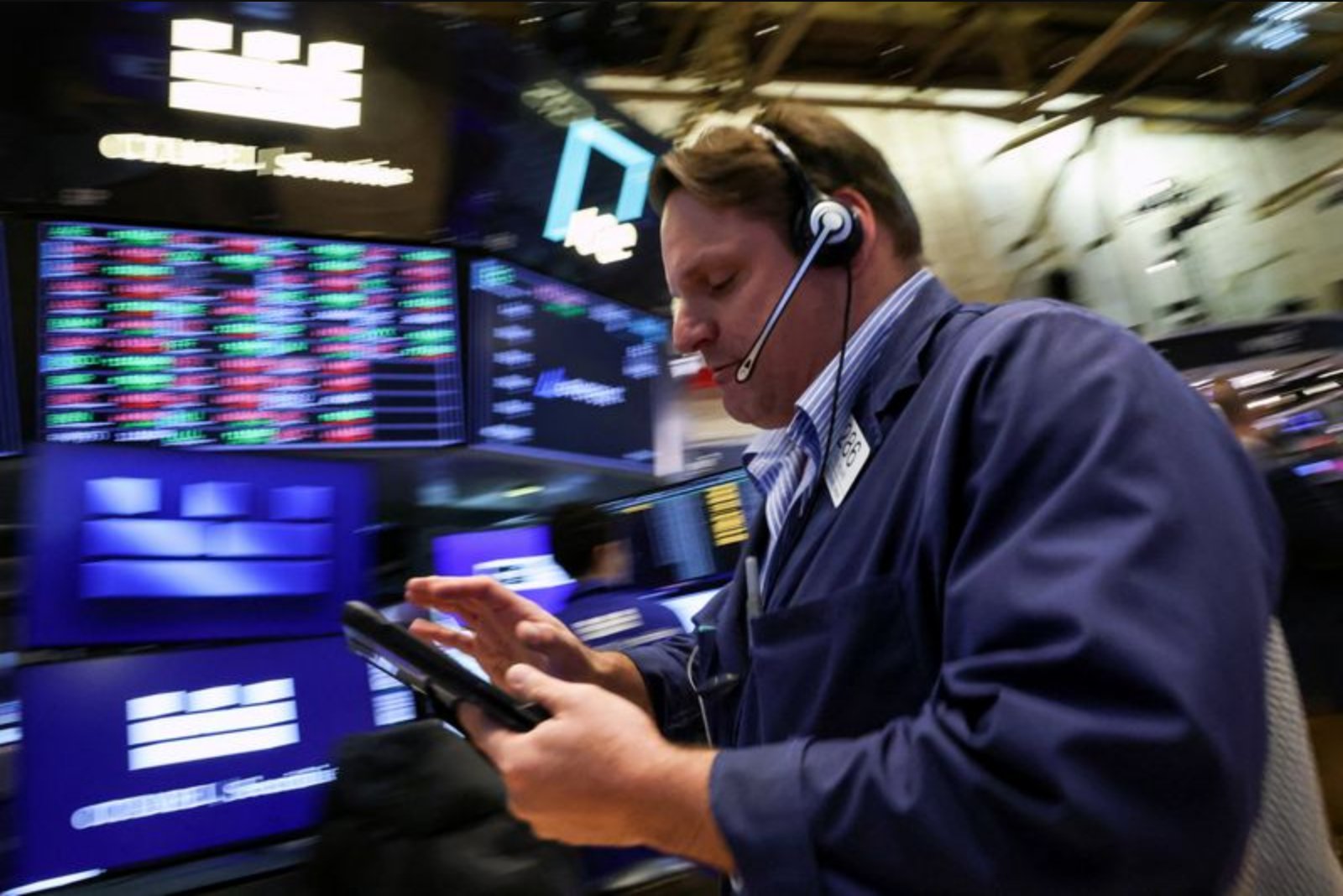
The uptick in oil prices coincided with a modest pause in the global equity rally on Thursday. That pullback, however, followed a stretch in which many major stock markets had already set fresh highs earlier in the week. Despite the interruption, investor positioning suggests many remain uncomfortable standing aside for long, reflecting how expensive it is to forgo exposure when earnings and momentum have supported markets.
At the heart of the renewed energy-market stress is the interplay between a U.S. decision to extend a previously announced two-week ceasefire deadline and the maintenance of a naval blockade in the Strait of Hormuz. The president publicly extended the ceasefire timeframe until negotiations with Tehran conclude, while keeping the blockade in force for ships calling at Iranian ports. The U.S. blockade has included the diversion of at least three Iranian-flagged oil tankers in recent days.
Tehran responded by seizing two vessels on Wednesday, and then released footage on Thursday showing commandos in a speedboat boarding a large cargo ship. The U.S. president dismissed that footage as showing Iran’s "little wise-guy ships." For now it is unclear when talks will resume and whether they will yield a durable agreement. That uncertainty highlights a wider point: the Strait of Hormuz is not only a strategic lever for Tehran but also a material economic vulnerability for Iran, given the route’s importance to the country’s exports and imports.
Given the continuing blockade, the prospect of the strait being fully reopened in the near term appears remote. Even in the event of a negotiated settlement, normal energy flows could take months or possibly years to re-establish. That timeline matters because persistent disruption amplifies demand destruction across the global economy - a trend already visible in parts of Asia where higher fuel costs are reducing consumption.
Yet the dislocations also produce clear beneficiaries. U.S. energy producers, for example, are positioned to capture volumes displaced by disruptions elsewhere, with liquefied natural gas supply in particular being reshaped as producers attempt to fill a Qatar-sized void in the global market. Paradoxically, while the conflict may accelerate investment in renewable technologies, the combined effect of worsening energy security and geopolitical fragmentation could foster a less efficient global energy system. That dynamic could boost demand across all fuel types over time and increase the frequency and severity of energy-price shocks.
The impact of the Iran war is not confined to oil and gas. Aluminium markets have already experienced upheaval, and strains are now extending to copper and nickel supply chains. For commodities closely tied to industrial activity and energy inputs, the conflict’s ripple effects underscore how geopolitical risk can propagate through production networks and logistics.
Despite the energy-price headwinds, the artificial intelligence-led rally in technology stocks and a broadly positive earnings season have underpinned equity markets. Momentum in the so-called AI theme has been an important force sustaining the recent rebound. That said, elevated energy costs create a potential drag on margins for data-heavy tech companies - hyperscalers in particular may see operating assumptions challenged if power and fuel inputs run higher than previously assumed.
Investors’ attention this week turned to corporate reports from several of the largest technology firms. The initial report among the headline names came from Tesla. Although the company delivered a positive surprise on free cash flow, markets were unimpressed by the firm’s decision to increase its 2026 capital expenditure guidance to more than $25 billion. That upward revision to capex denotes heavier spending plans than some investors had been counting on, and raises questions about capital allocation in a higher-energy-price environment. Several of the other major technology companies in the peer group will report results next week.
Rising energy prices also have implications for inflation and, by extension, central bank policy. The Iran conflict is exerting upward pressure on headline inflation measures, which complicates the policy outlook for the U.S. Federal Reserve. This week featured the long-awaited Senate confirmation hearing for Kevin Warsh, the president’s nominee to succeed Jerome Powell as Fed chair. The hearing offered few surprises: Warsh reiterated his preference for gradually shrinking the Fed’s balance sheet, engaged in partisan sparring with Democrats about divestment, and answered questions about central bank independence.
Warsh stated publicly that the president had never pressed him to accept any particular rate decision. Nevertheless, roughly an hour prior to the confirmation hearing, the president told CNBC that he would be "disappointed" if Warsh did not lower rates immediately upon taking office. That juxtaposition underscores the political pressures the next Fed chair may confront. With inflation still above the Fed’s 2% target and with the potential for further upward pressure coming from the Middle East, Warsh would face a difficult balancing act if he seeks both to restore price stability and to satisfy political expectations.
On the consumer side, there are tentative signs households have absorbed recent fuel-price increases without immediate retrenchment. U.S. retail sales in March exceeded expectations, a result in part explained by higher gasoline spending and in part by larger-than-normal tax refunds that provided consumers with extra disposable income. While that cushion helped offset the impact of pump prices on broader consumption patterns, it may not be durable if the energy-price shock persists.
The duration of that consumer buffer depends in large measure on the trajectory of the Middle East confrontation and whether a pause in hostilities can be extended into a longer-term settlement. Absent a clear resolution, energy-driven inflation and its potential knock-on to interest rates remain primary risks to market participants and policy makers alike.
Data-driven resources and further reading
For those seeking a deeper dive into the intersecting trends shaping markets and commodities, several topics and questions are highlighted for further analysis:
- Why stocks may not serve as a reliable hedge against inflation in the current environment.
- Whether China’s currency is less undervalued than some market participants assume.
- The possibility that a new Fed chair could reassess the central bank’s inflation framework.
- Comparative resilience of European consumers versus U.S. consumers to sudden price shocks.
- Potential headwinds facing the U.S. corn crop this year.
- Clean energy milestones recently reached in the United States.
- Lessons from protectionist policy debates, such as those surrounding plant-based milk alternatives.
Weekend reading, listening and viewing picks
Members of the ROI editorial team flagged several items for weekend attention. These include:
- Economist Maurice Obstfeld’s analysis on the drivers of the widening U.S. current account deficit - highlighted by a staff columnist as a corrective to narratives blaming a strong dollar.
- An historical review of defensive stockpiling in critical minerals production, curated by a metals columnist and drawing on a multi-decade U.S. defense logistics analysis.
- A comprehensive study of global electrification trends recommended by the global energy transition desk.
- A synthesis on global imbalances discussed at recent international financial meetings, recommended by a markets columnist.
- A report examining a diesel shortage in Australia and evaluating both short- and long-term solutions in the context of supply disruption stemming from the Iran war.
In audio form, a podcast discussion on algorithmic trading and hedge fund strategies in oil markets was recommended for those who want to understand some of the technical drivers behind recent price volatility. And in video, a policy-focused episode reviewing the implications of the Middle East conflict for inflation and the Fed chair succession was highlighted as useful context for the coming week.
Perspective
The current environment illustrates how a single geopolitical flash point can ripple across commodity markets, corporate balance sheets and central bank decision-making. Energy-price spikes are feeding into earnings assumptions and capital spending plans in the corporate sector while also complicating the inflation outlook that will confront the next Fed chair. For commodity markets, the interruption of flows through strategic chokepoints like the Strait of Hormuz demonstrates the nonlinear ways in which geopolitical risk translates into supply-side stress across multiple metals and fuels.
For investors and industry participants, the immediate challenge is managing exposure while avoiding reflexive risk aversion that could forego gains in other parts of the market. While short-term uncertainty is elevated, long-term structural shifts - including both the decarbonization transition and the search for energy security - will continue to shape project pipelines, capital allocation and the geography of production.
How these dynamics resolve will depend on political negotiations, the durability of the naval blockade, and the speed with which alternative supplies can be sourced and reallocated. Until those variables become clearer, commodity prices and market positioning are likely to remain sensitive to any further escalations or ceasefire developments.
Contact
For further commentary or to provide feedback, readers were invited to reach out to the editorial team. The newsletter remains available by subscription for those who want a daily briefing on market-moving developments.