
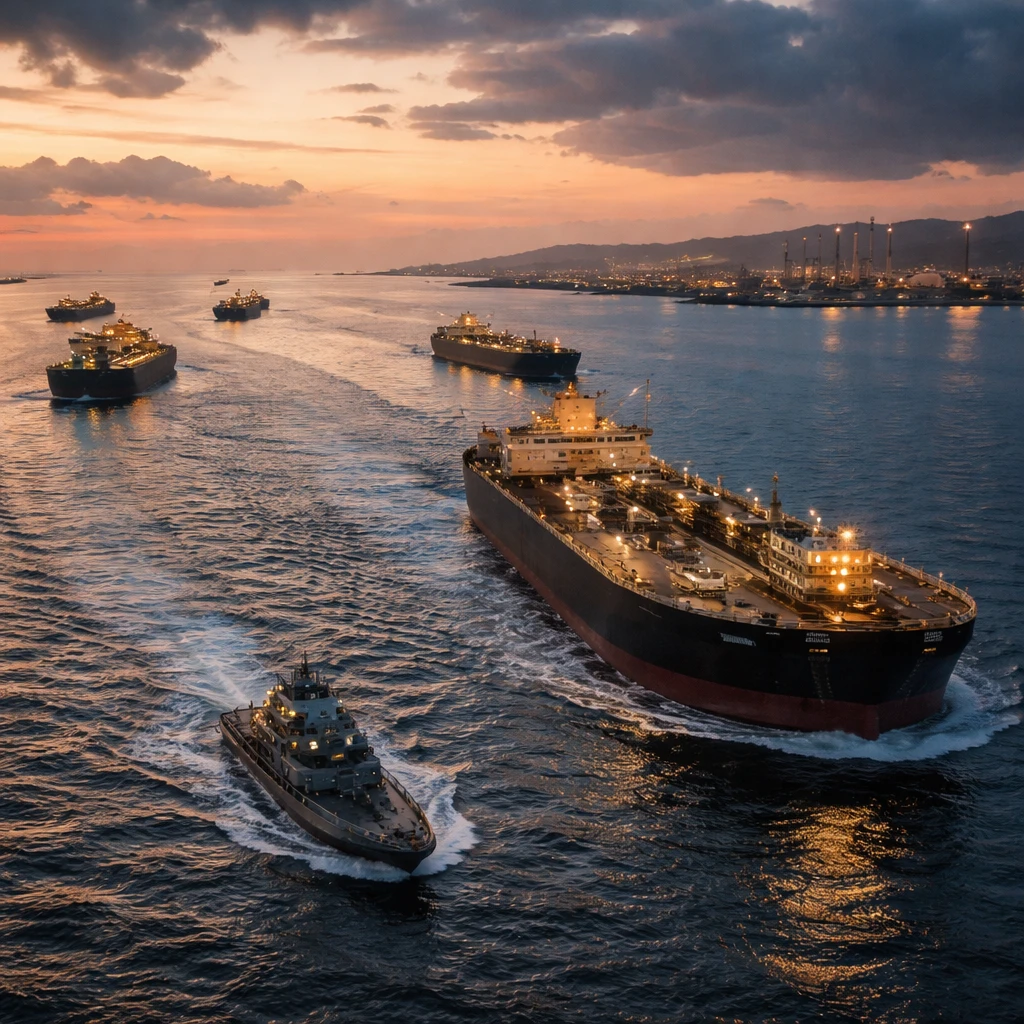
Bank of America analysts have revised up their outlook for Brent crude in the latter half of 2026, arguing that continuing geopolitical tensions are weighing on supply routes and could sustain upward pressure on prices.
In a note published Monday, the bank raised its forecast for the global oil benchmark for the second half of the year to $95 a barrel, up from a prior projection of $83 a barrel.
The analysts estimated that interruptions to oil shipments transiting the Strait of Hormuz could have peaked at roughly 14 million barrels per day, compared with pre-war averages they place between 4 million and 8 million barrels per day. Those reduced flows follow what the note describes as Iran's effective closure of the strait shortly after a joint U.S.-Israel assault on the country in late February.
Prior to the outbreak of the conflict, about one-fifth of the world’s oil and liquefied natural gas moved through the Strait of Hormuz. The bank's note underlines how the near-shutdown of that corridor has forced market participants to adapt and in some cases reroute shipments.
Although confrontations between Washington and Tehran have reportedly slowed in recent weeks, diplomats and market participants have looked to the United Nations General Assembly this week as a potential venue for progress on de-escalation. A media report cited in the note indicated that Iran has offered to reopen the Strait of Hormuz within seven days if U.S. military pressure on Tehran is reduced.
Brent futures eased on Tuesday, slipping below $100 a barrel after several sessions above that level. Prices had been buoyed earlier by concerns the Iran conflict was expanding into a broader regional fight. The note points to clashes between Iran-backed Houthi forces and Saudi-aligned groups in Yemen that have centered on territory controlling the Bab el-Mandeb Strait, another strategic chokepoint for Gulf exports.
With the Strait of Hormuz effectively curtailed, Saudi Arabia has leaned on the Bab el-Mandeb as a critical alternative to move crude to global markets. Compounding that shift, separate attacks have disrupted a major east-west pipeline across Saudi Arabia that transports energy products, creating additional logistical pressure.
Still, the bank's analysts acknowledge signs of resilience. They note reports that Saudi crude shipments through the Strait of Hormuz have risen, with a six-day average up sharply from August levels, according to satellite data cited by Reuters. The analysts say that alternative routes and escorted transits through Hormuz have helped mitigate some supply constraints.
Even so, the note emphasizes that damage to infrastructure and ongoing tensions are likely to constrain flows. If those disruptions continue into next year, Bank of America projects that front-month Brent contracts could spike further.
Summary
Bank of America has increased its Brent crude forecast for H2 2026 to $95 per barrel from $83, driven by sustained disruptions to key shipping routes and geopolitical tensions in and around the Strait of Hormuz. Analysts cite sharply reduced flows through Hormuz, clashes affecting the Bab el-Mandeb Strait, and damage to pipeline infrastructure as central to their revised outlook. While some shipment alternatives and escorted transits have offered relief, the bank warns that continued constraints could push front-month Brent higher if they persist into next year.
Key points
- Bank of America raised its Brent forecast for the second half of 2026 to $95 a barrel from $83, citing geopolitical-driven supply constraints.
- Analysts estimate Strait of Hormuz shipment disruptions may have peaked near 14 million barrels per day versus pre-war averages of 4-8 million barrels per day, reducing a corridor that carried about one-fifth of global oil and LNG.
- Regional clashes and attacks - including confrontations affecting the Bab el-Mandeb Strait and a disrupted east-west Saudi pipeline - are complicating global oil logistics and may keep markets tight.
Risks and uncertainties
- Continuing disruption of flows through the Strait of Hormuz could further tighten global oil supply and push spot Brent higher - affecting oil markets and energy-intensive sectors.
- Escalation or prolonged damage to regional infrastructure, including pipelines and chokepoints like Bab el-Mandeb, increases logistical risk for producers and shippers.
- Political and military developments remain uncertain; while diplomatic efforts at the United Nations General Assembly offer a potential de-escalation path, outcomes are not guaranteed and could influence energy market volatility.