
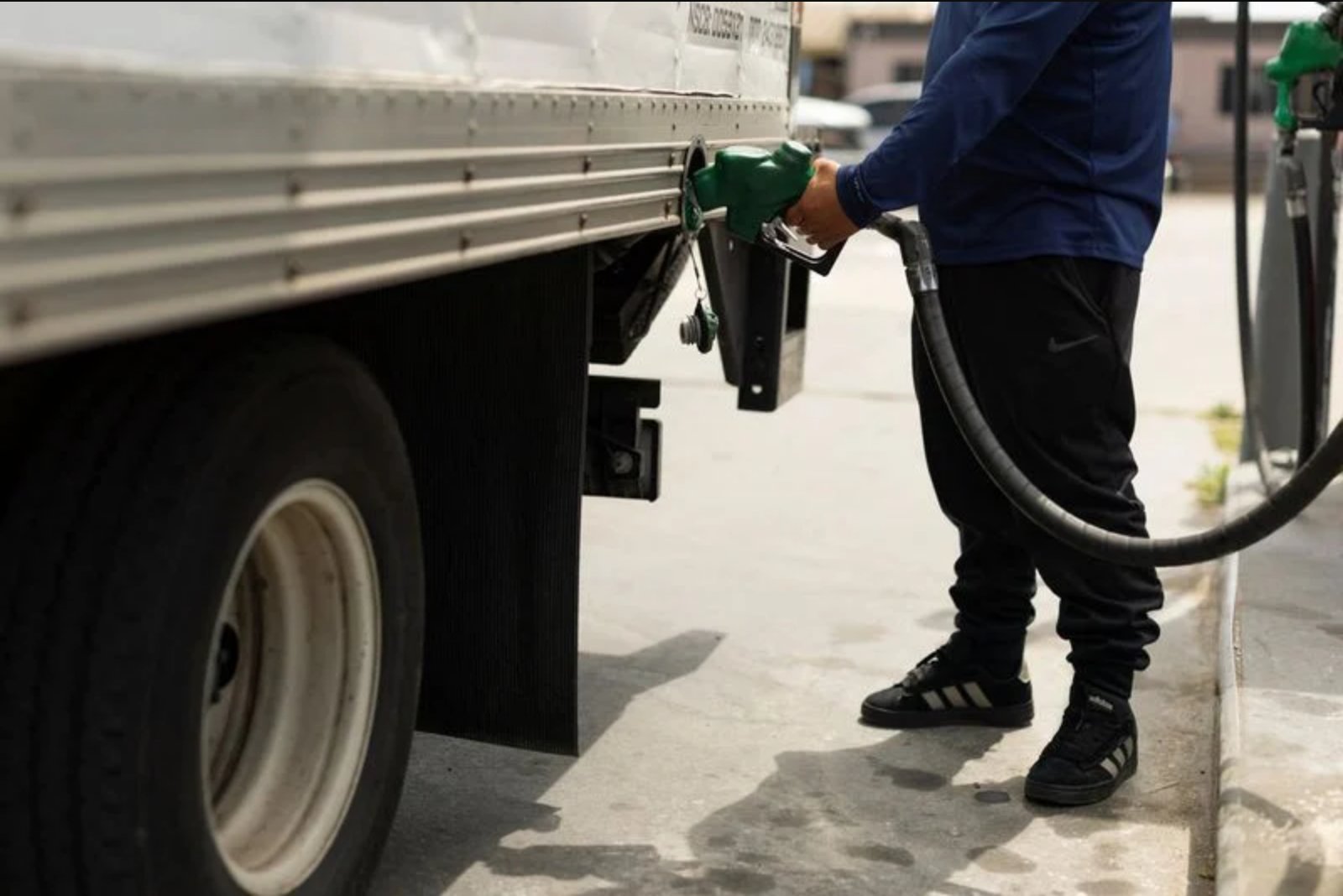
HOUSTON, Sept 22 - President Donald Trump on Tuesday indicated he supports the idea of banning diesel exports from the United States as a means to bring down record-high domestic prices. Analysts and market participants caution that the policy would be counterproductive: rather than easing the global energy shock, a U.S. export ban would intensify supply disruptions abroad, raise prices worldwide and unsettle refinery economics.
Record domestic diesel costs and real-world reliance on the fuel
U.S. motorists and businesses are already facing unprecedented diesel costs. According to AAA, the average U.S. diesel price has climbed to a record $6.5107 a gallon. Diesel plays a central role in the global economy - it powers freight transport, farm machinery and the industrial equipment used to produce and distribute goods. Shortfalls in diesel availability can trigger sharp price jumps and feed broader inflation by increasing transportation and logistics costs across consumer and industrial supply chains. That inflationary pressure is a salient political concern for Republicans and the administration heading into the November midterm elections.
Why diesel is so expensive now
Analysts point to a confluence of supply disruptions that have tightened diesel markets. Strikes on Russian refineries in Ukraine and the broader US-Iran war have interrupted trade along key shipping routes, including the Strait of Hormuz, reducing flows of refined products and crude. As a result, countries dealing with outages and shortages have increasingly looked to U.S. diesel supplies.
The United States has been exporting diesel in growing volumes. Exports hit a record 1.6 million barrels per day (bpd) in August, up from about 1 million bpd in February before the war began, according to Kpler. Top destinations for U.S. diesel include Brazil, Chile, Mexico, Peru, Morocco, France and the United Kingdom.
At the same time, on-road diesel inventories in the United States have declined to 96.97 million barrels, almost 13% below the seasonal average for the prior five years. This inventory drawdown is occurring even as U.S. refiners are operating near full capacity, at roughly 97% of utilization.
Market and industry reaction to a potential ban
Major trade groups and energy economists have been vocal in opposing export restrictions. The American Petroleum Institute (API) warned that a ban would compound the existing refining squeeze and unsettle markets both domestically and abroad. In a statement, the API said: "Restricting US diesel exports would wreak havoc on fuel markets at home and abroad, destabilize refinery operations and deepen a global refining crisis already putting upward pressure on US prices. Gulf Coast refineries produce more diesel than the region consumes, while geography and infrastructure constraints prevent that surplus from simply being redirected to every US market that needs it."
Analysts argue the mechanics of an export ban would shift prices in opposing directions: world diesel prices would climb as consumers outside the United States lose access to U.S. supplies, while U.S. wholesale prices could fall, squeezing refining margins. Energy economist Philip Verleger warned of a dramatic global price response, saying: "Initially, a diesel ban would send global prices skyrocketing... A ban could raise world prices by as much as 100%, given the fuel’s low price elasticity of demand." His assessment highlights how little demand for diesel declines when prices increase, so cutting supply can produce outsized price moves.
Market participants also expect refiners to alter operations if exports are curtailed. Kenneth Medlock III, a fellow in Energy and Resource Economics at the Baker Institute for Public Policy, explained that an export ban would reduce the physical market accessible to refiners and prompt run cuts. "Banning exports of diesel would drive refiners to cut runs because the physical market they can access would be cut, and no market participant in any market sells product at a loss. While an export ban might have a very short-term impact that lowers price, it would not be long-lived..." Medlock said. Lower refinery throughput would in turn reduce production of gasoline and other refined products, which could lift prices for those fuels as well.
Political and geopolitical ramifications
Some Republican Senate candidates in competitive races have urged the administration to adopt an export ban to provide relief to U.S. consumers. But industry analysts caution that the policy is as much a political signal as a practical remedy. "It is more of political soundings than actual reality," said Jim Mitchell, director of oil trading analytics at consultancy Wood Mackenzie.
Even if an export ban produced modest domestic price relief, it would not resolve tightness in regions that are structurally short on diesel. Europe, for example, relies heavily on supplies from the U.S. Gulf Coast, and would remain structurally short despite a U.S. export restriction. Mitchell noted that such a move "would seem pretty damaging to some key U.S. allies."
Verleger drew a historical parallel to underline the potential diplomatic fallout: "A ban on US diesel exports, even if temporary, would have the same long-term effect as President (Richard) Nixon’s soybean embargo: the world would no longer view the United States as a dependable source." In 1973, Nixon imposed a temporary soybean embargo that angered importers including Japan and, some analysts say, led to greater dependence on Brazil for the commodity. That comparison underscores the risk that export curbs can accelerate supplier diversification by importers.
Conclusion
While an export ban might be politically attractive in the short term, market participants and industry groups argue it would exacerbate global diesel scarcity, drive up world prices and destabilize refining economics in ways that could ultimately feed back into other fuel markets. Any transient reduction in U.S. prices could be offset by lower refinery runs and higher prices for a range of products, and the move risks straining relationships with key importing countries that currently rely on U.S. diesel supplies.