
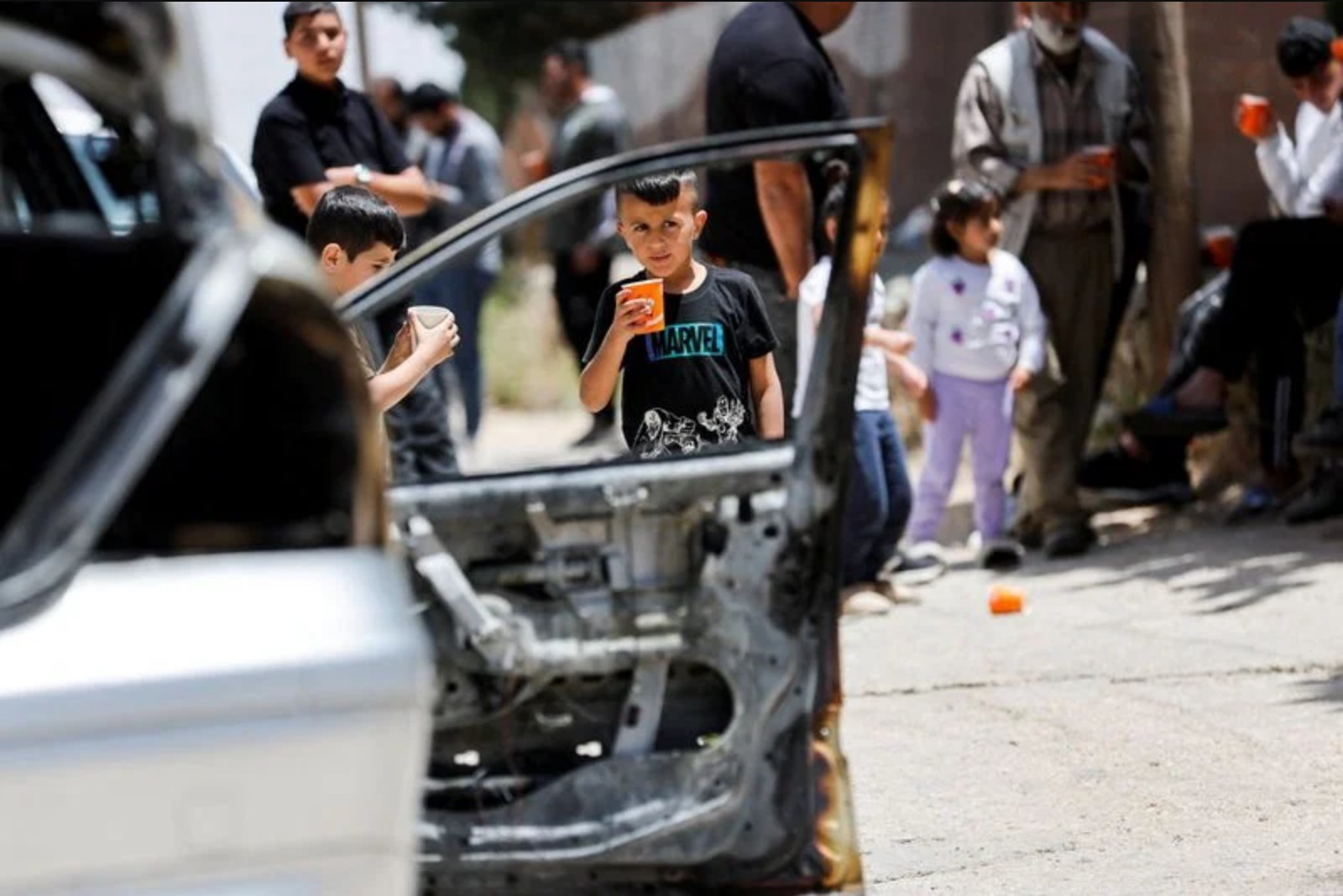
U.N. Secretary-General Antonio Guterres on Wednesday raised the prospect that Israeli settler groups could be added to the United Nations' blacklist for parties accused of committing grave violations against children, as the world body recorded an unprecedented number of such violations in 2025.
The U.N.'s annual Children and Armed Conflict report documented 38,558 "grave violations" worldwide in 2025, affecting 24,174 children. The latter number is the highest recorded since the mandate of the U.N. monitoring mechanism began in 1996. The report further states that 14,224 children were killed or maimed last year, and that the number of children killed rose by 34% from 2024 to reach 6,266.
Within the Occupied Palestinian Territory the U.N. said it had verified the killing of 2,668 Palestinian children in Gaza and 57 in the West Bank. The Gaza conflict began on October 7, 2023, when Hamas-led fighters attacked southern Israel, killing about 1,200 people, according to Israeli figures. Israel subsequently launched a large-scale military campaign, which the report says has since killed tens of thousands of Palestinians.
Geographic distribution and principal perpetrators
A senior U.N. official briefing reporters on the report identified the countries and territories with the highest levels of violations in 2025 as the Occupied Palestinian Territory and Israel, Democratic Republic of the Congo, Nigeria, Myanmar, and Somalia.
The report notes that Israel already appears in the so-called list of shame annexes for alleged violations. For the first time in this annual publication, settler groups are specifically highlighted as potential candidates for future listing if the high number of violations attributed to them is repeated in 2026.
Guterres said in the report: "I am appalled by the magnitude of grave violations against children in the Occupied Palestinian Territory and Israel, notably by the widespread use of explosive weapons in populated areas." He added: "I am deeply alarmed at the staggering rise in attacks carried out by Israeli settlers resulting in grave violations against Palestinian children." He said Israeli settler groups should be listed if the high number of violations is repeated in 2026.
The report attributes 9,465 grave violations to Israeli forces and 326 to Israeli settlers. It defines grave violations to include the killing and maiming of children, rape and other forms of sexual violence, and attacks on schools and hospitals.
Palestinian armed groups and ongoing designations
Palestinian armed groups continue to appear on the U.N. blacklist. The report keeps Hamas' armed wing and affiliated factions listed for killing and maiming children and for abductions, and it attributes 2,806 violations to Palestinian armed groups overall.
Detention and treatment of children
Guterres also expressed concern about the number of children detained by Israel and reported instances of severe physical violence and poor conditions in detention. He warned that such reports "may constitute inhuman or degrading treatment or punishment."
The report notes that being placed on the U.N. blacklist does not automatically trigger sanctions. Instead, listing carries reputational consequences and requires the negotiation of action plans designed to secure delisting.
Response and diplomatic context
Israel's U.N. mission did not immediately respond to a request for comment on the report. The release of the latest report follows a separate U.N. move in recent weeks that added Israel to a different U.N. blacklist of countries and parties suspected of committing sexual violence in conflict. That earlier listing prompted Israel's foreign ministry to say it would sever all ties with the U.N. Secretary-General.
As presented in the report, the high and, in some cases, rising incidence of grave violations against children, the specific attribution of tens of thousands of violations to named parties, and the possible expansion of the U.N. blacklist to include settler groups together underscore the U.N.'s continued focus on accountability and prevention in conflict settings. The report's findings place particular emphasis on the human cost borne by children in the listed countries and territories, and on the need for remedial measures where violations are verified.