
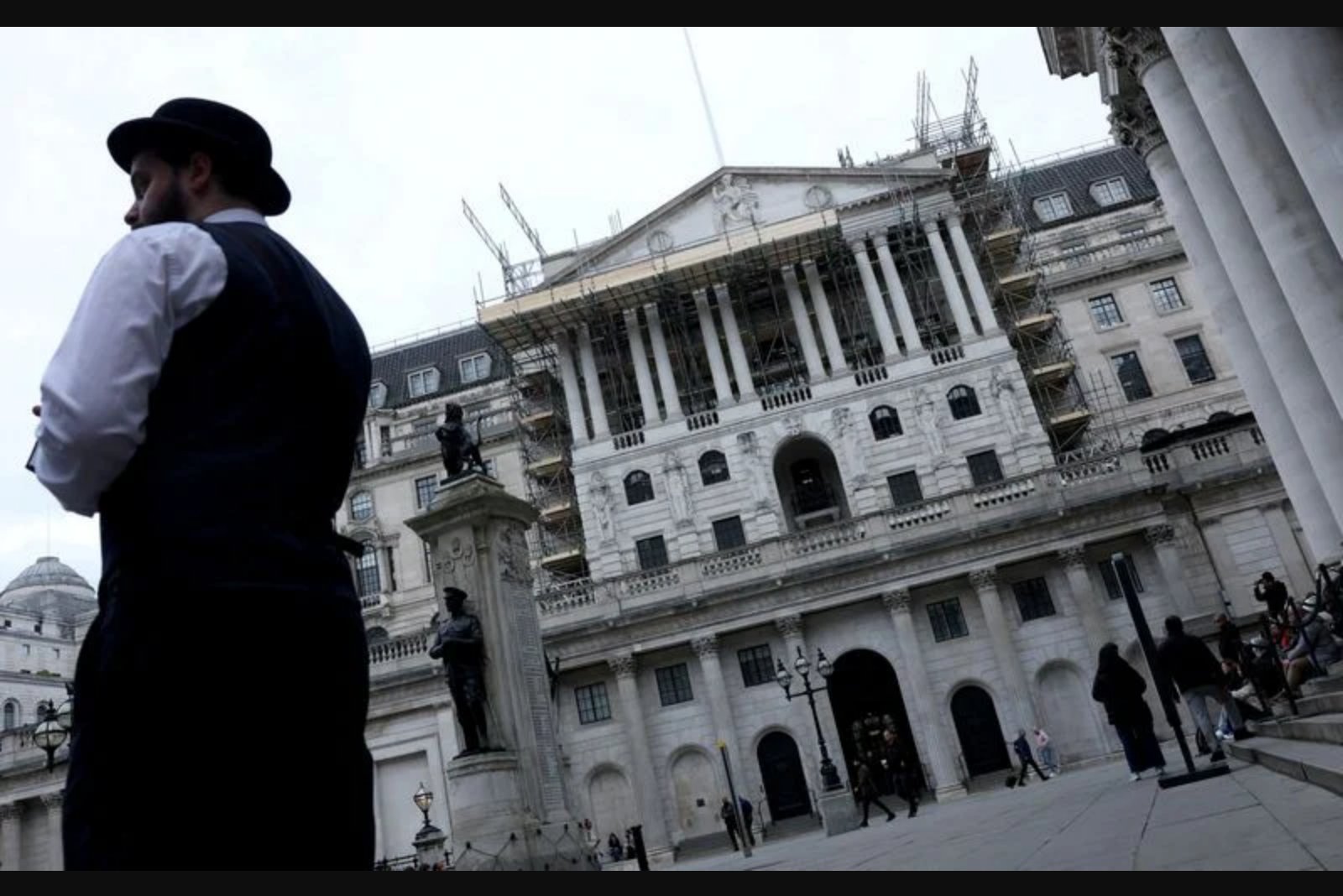
The Bank of England is positioned to maintain its benchmark interest rate at 3.75% later this week, adopting a cautious stance as it evaluates the inflationary implications of a tentative ceasefire agreement concerning the conflict involving Iran. Governor Andrew Bailey has indicated that the central bank is in a more comfortable position than its counterpart, the European Central Bank, which recently raised interest rates for the first time since 2023. Bailey emphasized that the Bank of England has the time to assess the developing situation before making its next move.
Despite this measured approach, market participants and analysts are closely monitoring the internal dynamics of the nine-member Monetary Policy Committee. External member Megan Greene is widely anticipated to join Chief Economist Huw Pill in advocating for a quarter-point increase in interest rates. Greene has previously argued that action to combat price pressures must be taken sooner rather than later to maintain public trust in the central bank's ability to control inflation. Her concerns stem from data released shortly before the meeting, which indicated that household inflation expectations had climbed to a record high. Gordon Shannon, a partner at TwentyFour Asset Management, noted that even if market participants were convinced that oil prices would continue to fall, policymakers worried about second-round effects might still prefer to act preemptively to prevent those effects from embedding themselves into the broader economy.
The case for a potential rate hike appears to be weakened by recent economic data. On Wednesday, figures revealed that UK inflation unexpectedly remained at a 13-month low of 2.8% in May. This moderation was driven by a decline in food prices, which successfully offset upward pressures from rising airfares and petrol costs. However, the broader economic backdrop remains fragile. Britain’s economy contracted by 0.1% in April, and upcoming labor market data, expected to be released at 0600 GMT, is forecast to show continued weakness in employment conditions.
Market pricing and analyst expectations suggest that most economists do not anticipate a rate increase this year. Prior to the escalation involving Iran, financial markets had priced in two interest rate cuts over the coming months. The geopolitical conflict shifted those expectations, with some pricing suggesting up to four hikes, though the consensus now remains divided. In a comparative context, the Federal Reserve, following its first meeting chaired by Kevin Warsh, indicated that nine of its officials anticipate at least one rate hike by the end of 2026. Furthermore, the Fed recently removed language from its policy statement that had previously signaled a potential reduction in borrowing costs.
The political implications of inflation remain significant in the United Kingdom. The cost of living has emerged as a primary driver of public dissatisfaction with mainstream politicians. This sentiment has weighed heavily on Prime Minister Keir Starmer, whose popularity has declined substantially since securing a sweeping election victory two years ago. The political landscape faces further uncertainty with a by-election in Greater Manchester on Thursday, where Mayor Andy Burnham is a contender to win a parliamentary seat, potentially triggering a leadership challenge for the Prime Minister.
Inflation in the UK has struggled to return to the Bank of England's 2% target since the end of the pandemic, a period marked by significant shocks such as the surge in natural gas prices following Russia's invasion of Ukraine in 2022. The central bank's April forecasts suggested two potential scenarios for the coming months. Under its milder projections, where energy prices decline and businesses do not fully pass on higher costs, inflation was expected to reach between 3.6% and 3.7% in the fourth quarter of the year. However, a more pessimistic scenario, involving a prolonged conflict driving energy prices higher and businesses absorbing costs less effectively, projected that inflation could exceed 6% early next year.
While the darker scenario is considered less likely by many, the Bank of England has faced criticism for being caught off guard by the persistence of inflation in the past. Economists expect the central bank to maintain a vigilant posture, emphasizing its readiness to adjust policy swiftly if second-round inflationary effects materialize. HSBC economist Chris Hare observed that while the Monetary Policy Committee as a whole will not want to rule out future rate increases, a resolution of tensions, such as the opening of the Strait of Hormuz, combined with contained broader price pressures, could allow the Bank of England to avoid raising rates entirely.