
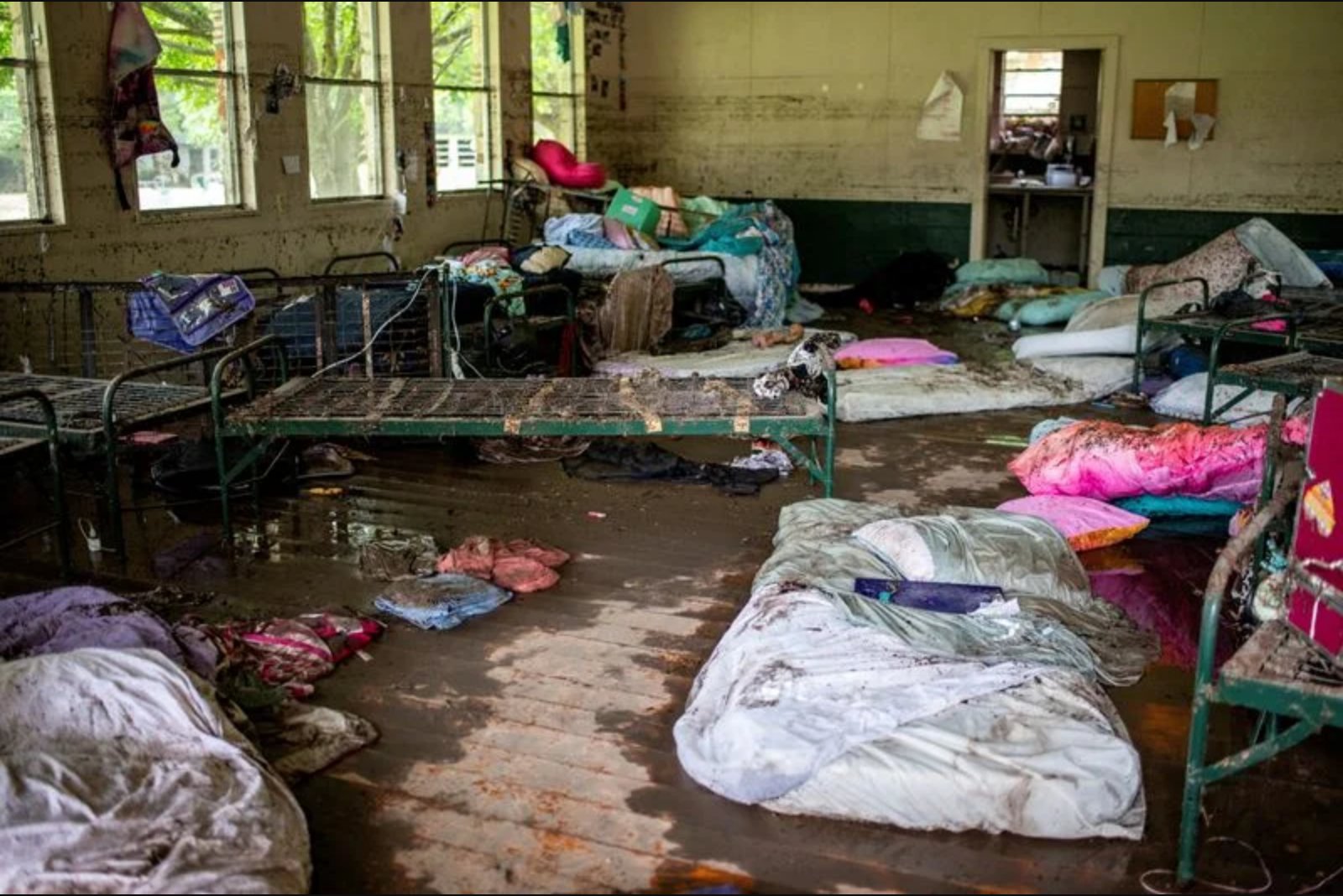
A legislative investigation has concluded that Camp Mystic, the century-old Christian summer camp for girls on the Guadalupe River in Kerr County, Texas, lacked written evacuation procedures and failed to properly train staff for flood emergencies on the night of a July 4, 2025 flash flood that killed 27 people.
The 115-page report, prepared by two investigators commissioned by the legislature with cooperation from the Eastland family, found that the camp did not meet statutory requirements for written evacuation plans and counselor training. The report states that adherence to those requirements would have provided time for campers to leave their cabins and walk to nearby higher ground safely after flash-flood warnings were issued by the weather service.
Instead, teenage counselors and the children in their care followed instructions to shelter in place. Cabins filled with water in the middle of the night, and the flood swept away 25 girls, all between 8 and 10 years old, two 18-year-old counselors and the camp's owner, Dick Eastland. The report notes that Camp Mystic later failed safety inspections required for reopening this summer and did not respond to a request for comment.
Investigators documented that at the time of the disaster there were at least 39 adults present at the camp. The report says those adults could have been designated and trained to assist with an orderly flood evacuation if proper plans and training had been in place. The investigators also faulted camp leadership for communications failures: cellphones were banned inside cabins, the public address system was not used to direct an evacuation, and counselors were not equipped with walkie-talkies.
The report recounts the timeline for the night. After dire flash-flood warnings were issued by the weather service, only Dick Eastland and a night watchman remained awake. Shortly before 2:00 a.m., Eastland woke his adult son, Edward Eastland, to secure boats; Edward would survive. The report says that Eastland and the night watchman did not believe the campers' cabins were at risk until about 2:30 a.m., when two teenage counselors from riverside cabins ran through the storm to the main office to report water entering the cabins and to ask for help.
Investigators emphasize that a Flash Flood Warning had been issued at 1:14 a.m. and that "from the 1:14 a.m. Flash Flood Warning until this time, if all campers had been instructed to evacuate their cabins by foot, there still was ample time and opportunity for them all to move the very short distances to reach higher and safer ground," the report states. Even by 3:00 a.m., the report notes, only an inch of water covered a nearby road.
The report chronicles attempts to move campers by vehicle as waters rose. It describes Eastland and his son using sports utility vehicles to evacuate a few cabins at a time, which investigators characterized as inefficient. By the time Eastland reached the Bubble Inn cabin on a third round of evacuations, conditions had deteriorated. The report says that "water gushing around him, Eastman managed to get all 14 girls and both counselors into his vehicle just before it was swept into the Guadalupe River." Other girls were killed in nearby cabins as water rose to ceilings; some attempted to escape by swimming under the surface through windows or doors.
The bodies of two of the young victims have still not been found, the report states. The document concludes that had written evacuation plans been in place and counselors trained as required by state law, the sequence of events that led to the large number of fatalities could likely have been avoided or its toll reduced.
Report context and investigators
The report was prepared by two investigators working at the direction of the Texas Legislature and notes cooperation from the Eastland family in its preparation. It reviews timeline details, communications decisions, staffing and available adult resources on site, and the interplay of warnings issued by the weather service and on-the-ground actions at the camp.
The report highlights specific operational shortcomings: absence of written evacuation procedures, inadequate counselor training, a ban on cellphones in cabins without compensating communications systems, failure to use the camp's public address system during the emergency, and lack of issued two-way radios for counselors. It ties these failures directly to missed evacuation opportunities between the 1:14 a.m. Flash Flood Warning and the first reports of water entering riverside cabins around 2:30 a.m.
Investigators do not offer speculative conclusions beyond the evidence presented in the report. They document the timeline, the people involved, the number and ages of victims, the state of communications and on-site staffing, the sequence of evacuation attempts, and the status of safety inspections for the camp's planned reopening.