
Summary
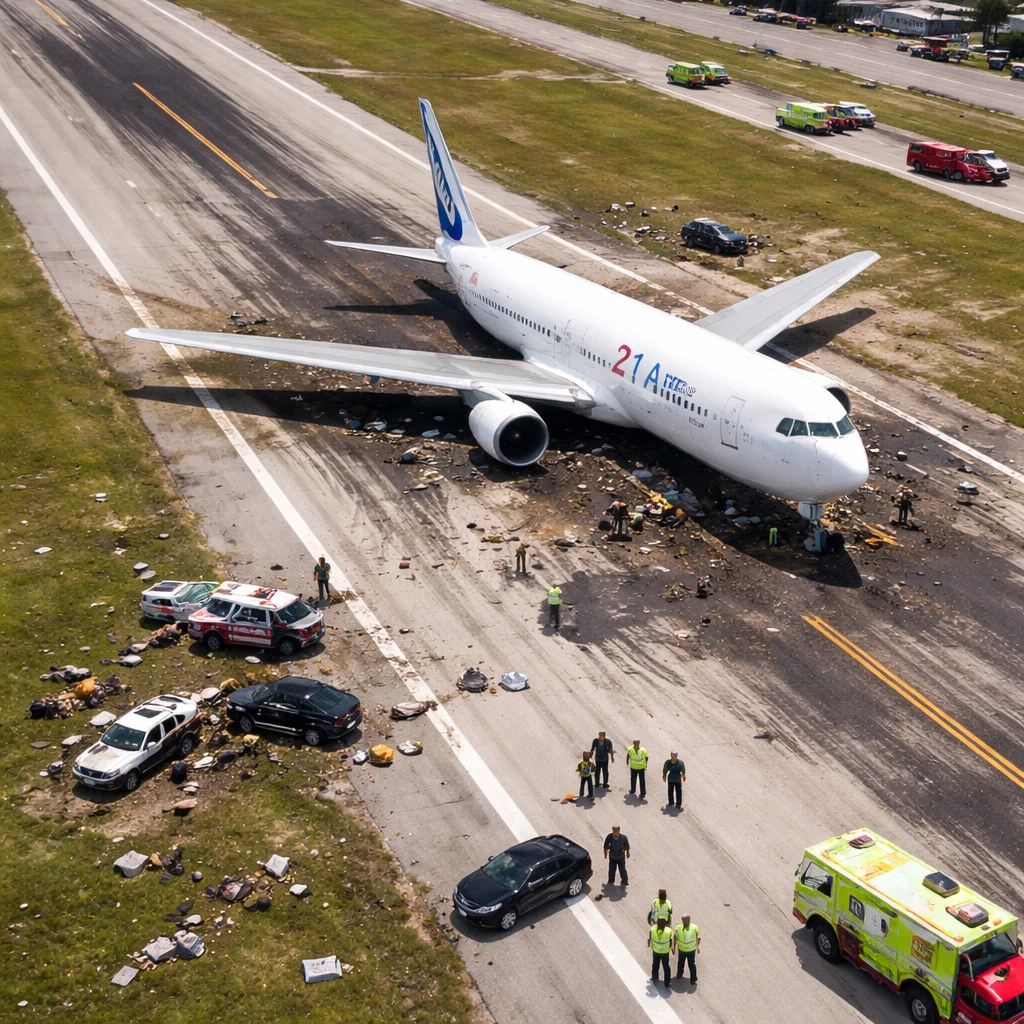
Federal investigators say data from the flight data recorder of the Boeing 767 that overran a Miami runway and crashed into two vehicles indicates the pilots considered aborting the landing after parts of the aircraft had touched down. The aircraft - a 32-year-old Boeing 767 operated by Miami-based 21 Air on behalf of Amazon Prime Air - ran off the runway by some 1,300 feet (396 m), killing five people on the ground and injuring five others.
What investigators found
The National Transportation Safety Board reported that recorded flight parameters show the nose landing gear and the right main landing gear touched down 30 seconds before the end of the recording. The left main landing gear touched down 19 seconds before the end of the recording. A few seconds after that sequence of gear contacts, the recorded data indicate the brakes were released and the throttles were advanced to values consistent with go-around thrust.
The NTSB also said the flight data did not show any indication that speed brakes or thrust reversers were deployed during the recorded interval.
Investigative steps
NTSB Chair Jennifer Homendy said investigators planned to interview both pilots on Wednesday. The agency has recovered and is analyzing the flight data recorder as part of its ongoing examination of the accident.
Context and market note
The aircraft involved was operated by Miami-based 21 Air as an Amazon Prime Air cargo flight. A market snapshot included with the report showed Amazon.com Inc. (AMZN) with a closing quote of 256.97, down 1.54 (-0.60%) at 15:59:59 USD, and an after-hours value of 257.56, up 0.59 (+0.23%) at 22:03:42. No additional market analysis is provided in the recorded data.
Key points
- Flight data suggest the crew may have initiated a go-around after partial touchdown - aviation sector and air cargo operations are directly implicated.
- The Boeing 767 overran the runway by approximately 1,300 feet (396 m) and struck two vehicles, resulting in five ground fatalities and five injuries - public safety and ground-transportation implications.
- NTSB will interview both pilots as part of its ongoing investigation; the flight data recorder is central to reconstructing the sequence of events - regulators and accident investigators are engaged.
Risks and uncertainties
- Investigators have not completed interviews or the full analysis, so the precise chain of events and causal factors remain uncertain - this affects conclusions about operational or mechanical causes.
- The flight data show no recorded deployment of speed brakes or thrust reversers, which introduces uncertainty about the aircraft's deceleration systems and their usage during the landing attempt.
- Ongoing interviews with the pilots are scheduled but have not yet occurred; their testimonies may alter the understanding of crew actions and decision-making during the final seconds of the flight.
Note
This report reflects information released by the NTSB and the factual material included with the recovered flight data recorder. Investigations are continuing.