
Peru's economic output expanded 3.73% in April 2026 year-on-year, slightly surpassing the median 3.6% forecast from a Bloomberg survey of nine economists, according to data released by the national statistics institute, INEI. On a sequential basis, GDP increased 0.59% compared with March, a month marked by one of the country’s most serious natural gas emergencies on record.
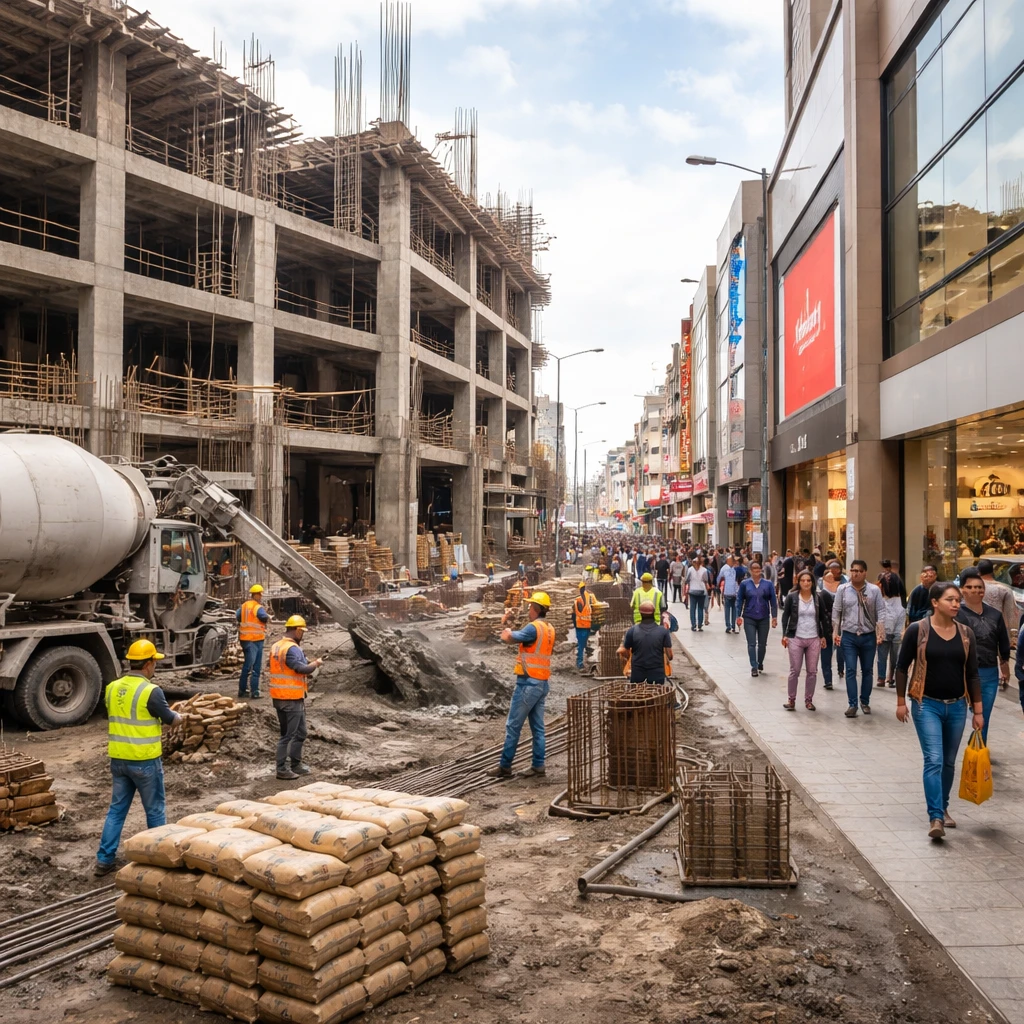
Construction drove the April advance. The construction sector posted a 12.88% increase year-on-year, underpinned by a 13.92% rise in domestic cement consumption and an 11.22% improvement in the physical progress of public works. The expansion reflected momentum in private infrastructure spending across mining, telecommunications, commercial and services segments, along with investments in road infrastructure and basic services carried out by local and regional governments.
Trade and retail strengthened, contributing materially to the headline result. The overall trade sector expanded 7.31% year-on-year. Within that, wholesale trade rose 5.73%, supported by higher sales of metals, construction materials, machinery and household goods. Retail trade increased 5.80%, with gains concentrated in department stores, hardware outlets and supermarkets. Automotive trade recorded a particularly large rise of 25.22%, boosted by promotional events such as the Great Expomotor Sale and Superbike Meet 2026 that stimulated sales of light and heavy vehicles.
Manufacturing and services showed positive, if more modest, growth. Manufacturing production climbed 2.17% overall, composed of 4.28% growth in primary manufacturing and 1.38% in non-primary manufacturing. The accommodation and restaurants sector expanded 4.48%, business services rose 3.27%, and government services increased 4.08% in April.
Downside contributions came from mining, hydrocarbons and agriculture. The mining and hydrocarbons sector contracted 3.24% year-on-year. Within that category, hydrocarbons plunged 24.75%, reflecting lower extraction volumes of crude oil, natural gas and natural gas liquids. Agricultural activity fell 1.64% overall; the agricultural subsector weakened by 3.33% as volumes of olives, peppers, paprika, coffee and potatoes declined due to reduced planted areas and adverse climatic factors.
While April’s data show an economy with mixed sectoral performance, the pronounced strength in construction and trade contrasted with notable weakness in hydrocarbons and agriculture. The month-on-month increase following a severe gas supply incident in March suggests some recovery in activity, but sectoral divergences remained clear in the INEI figures for April.
Data snapshot:
- Overall GDP: +3.73% year-on-year; +0.59% month-on-month
- Construction: +12.88% year-on-year; cement consumption +13.92%; public works physical progress +11.22%
- Trade: +7.31% year-on-year; wholesale +5.73%; retail +5.80%; automotive +25.22%
- Manufacturing: +2.17% year-on-year (primary +4.28%; non-primary +1.38%)
- Accommodation & restaurants: +4.48%; Business services: +3.27%; Government services: +4.08%
- Mining & hydrocarbons: -3.24% (hydrocarbons: -24.75%)
- Agriculture: -1.64% (agricultural subsector: -3.33%)