
Stock Markets June 15, 2026 01:16 PM

Morgan Stanley Says Ferrari’s F1 Victory Boosts Brand More Than the Balance Sheet

Analyst house calls Barcelona win 'largely symbolic' while noting on-track success underpins Ferrari’s premium positioning

By Priya Menon
Share
Twitter Reddit Facebook LinkedIn
RACE

After the Spanish Grand Prix at Barcelona-Catalunya, Morgan Stanley assessed the implications of Ferrari’s return to the top step, calling the result mainly symbolic but beneficial to the marque’s image. The bank estimates F1-related revenues near €560 million in 2025 and believes racing activities were close to breakeven but still loss making, while underscoring that Ferrari does not split out Formula 1 revenue and costs separately in its financial reporting.

Morgan Stanley Says Ferrari’s F1 Victory Boosts Brand More Than the Balance Sheet
RACE
Summarize with
ChatGPT Perplexity Claude Grok Gemini

Key Points

  • Ferrari’s recent Grand Prix win at Barcelona-Catalunya is described by Morgan Stanley as largely symbolic but supportive of the brand’s premium image - sectors impacted include automotive and luxury consumer markets.
  • Morgan Stanley estimates F1-related revenue at approximately €560 million in 2025, split into sponsorship (€275 million), prize money (€225 million), and licensing and other revenues (€60 million) - this affects investor assessment of sports-related commercial income within the consumer discretionary sector.
  • Ferrari’s motorsport activities are not reported separately; racing income is included in the Sponsorship, Commercial & Brand line (which generated €820 million in 2025) - this has implications for financial transparency in the automotive and media/sponsorship markets.

Morgan Stanley weighed in on Ferrari’s recent showing in Formula 1 following the outcome at the Spanish Grand Prix in Barcelona-Catalunya. The bank characterized the result as largely symbolic yet meaningful for Ferrari’s brand positioning, noting the victory represented the team’s first Grand Prix win in roughly two years.

The win strengthened Ferrari’s hold on second place in the F1 constructors standings and narrowed the points gap with the leader, Mercedes. While Morgan Stanley cautioned that success on the track does not automatically equate to direct commercial gains, the firm said the on-track result supports Ferrari’s broader brand image.

Morgan Stanley emphasized that Ferrari’s engagement in Formula 1 plays a central role in the company’s identity in a way that is uncommon among major carmakers. According to the firm, track success reinforces attributes at the heart of the Ferrari proposition - exclusivity, performance, engineering excellence and racing heritage - even if those qualities are not a one-to-one driver of revenue growth.

The bank pointed out that Ferrari has not captured a Formula 1 Drivers’ Championship since 2007 or a Constructors’ Championship since 2008, yet the company has nonetheless grown into one of the most valuable and profitable automotive brands globally during that span. Morgan Stanley views the team’s improved on-track form this year as an encouraging development after Ferrari failed to finish in the top three in 2025 for the first time in five years.

Ferrari’s motorsport program comprises Formula 1 alongside endurance racing such as Le Mans. The company does not disclose a separate profit and loss for F1; instead, motorsport-related income is aggregated within the “Sponsorship, Commercial & Brand” reporting line, which generated €820 million in 2025.

Drawing on its analysis, Morgan Stanley estimated that F1-related revenue amounted to about €560 million in 2025. The bank broke that total down into roughly €275 million of sponsorship, approximately €225 million of prize money, and around €60 million of licensing and other revenues. Morgan Stanley further suggested that F1 activities were close to breakeven in 2025 but remained loss making overall.

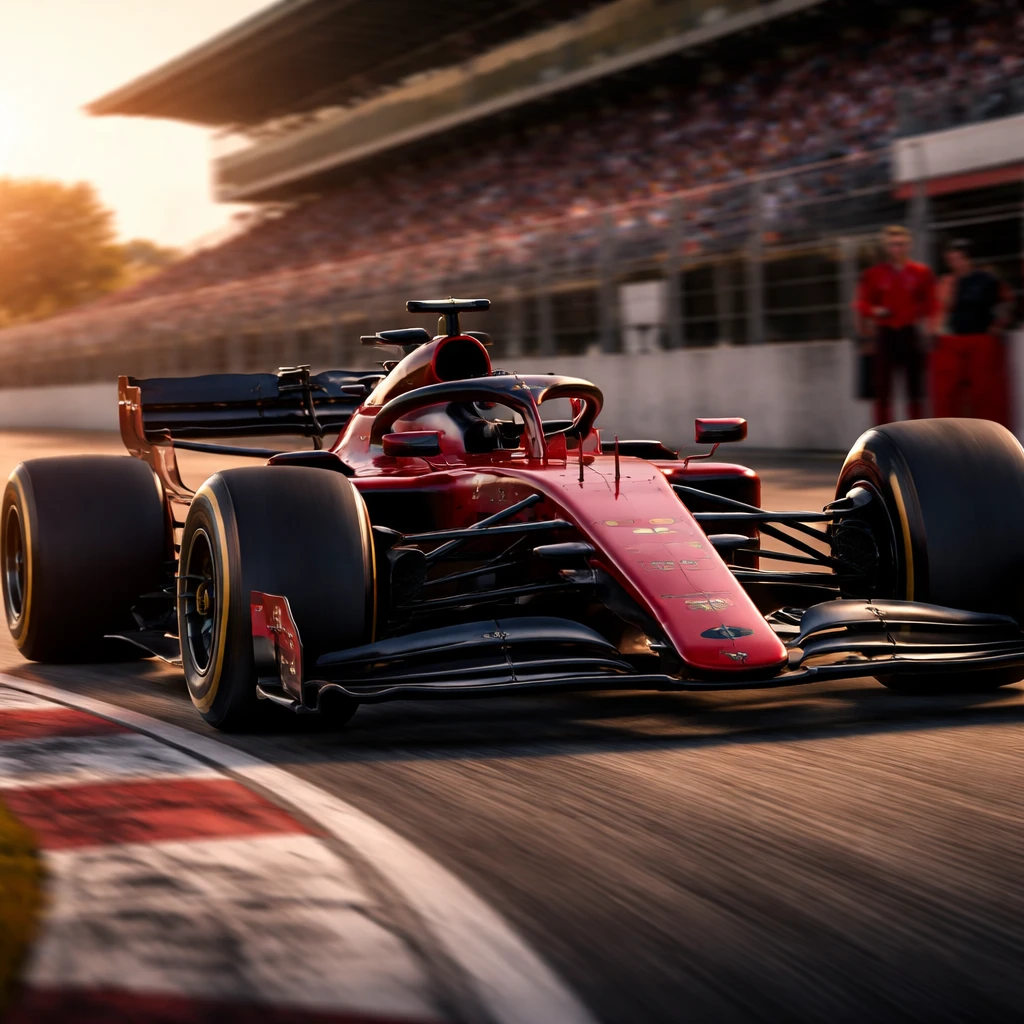
Technical changes introduced for the 2026 season have materially altered the competitive landscape, the firm noted. Those changes include revised aerodynamic rules, the introduction of active aerodynamics and a stronger emphasis on electrical power deployment and energy management. Ferrari’s new SF-26 was developed around a design philosophy that integrates advanced aerodynamic solutions, enhanced energy recovery systems and a refined balance between mechanical grip and aerodynamic performance.

In Morgan Stanley’s view, therefore, the Barcelona result is valuable for brand reinforcement even as the direct financial return from F1 remains limited and aggregated within broader sponsorship and commercial reporting.

Risks

  • F1 performance does not directly translate into commercial success - this creates uncertainty for investors expecting immediate revenue uplift from on-track results, impacting automotive and consumer discretionary sectors.
  • Morgan Stanley believes F1 activities were close to breakeven in 2025 but still loss making - the ongoing cost structure of racing programs could weigh on profitability for the related reporting line within the automotive sector.
  • Significant technical rule changes for the 2026 season introduce competitive uncertainty - the effect of revised aerodynamic rules, active aerodynamics and altered energy management priorities may affect racing performance and related brand outcomes for Ferrari and its competitors, with knock-on implications for motorsport and engineering-focused suppliers.

More from Stock Markets

Options Activity in Mondelez Surges to 10,725 Contracts by Mid-Afternoon Jun 15, 2026 Jefferies Names GE Vernova Its Top U.S. Power & Utilities Pick for 2026 Jun 15, 2026 Market Movers: SpaceX, Micron and a mix of tech winners amid news-driven swings Jun 15, 2026 Building Permits Lead a Packed Economic Calendar Ahead of Tuesday’s Sessions Jun 15, 2026 Wiley, La-Z-Boy and Vince Among Companies Reporting Quarterly Results on Tuesday Jun 15, 2026