
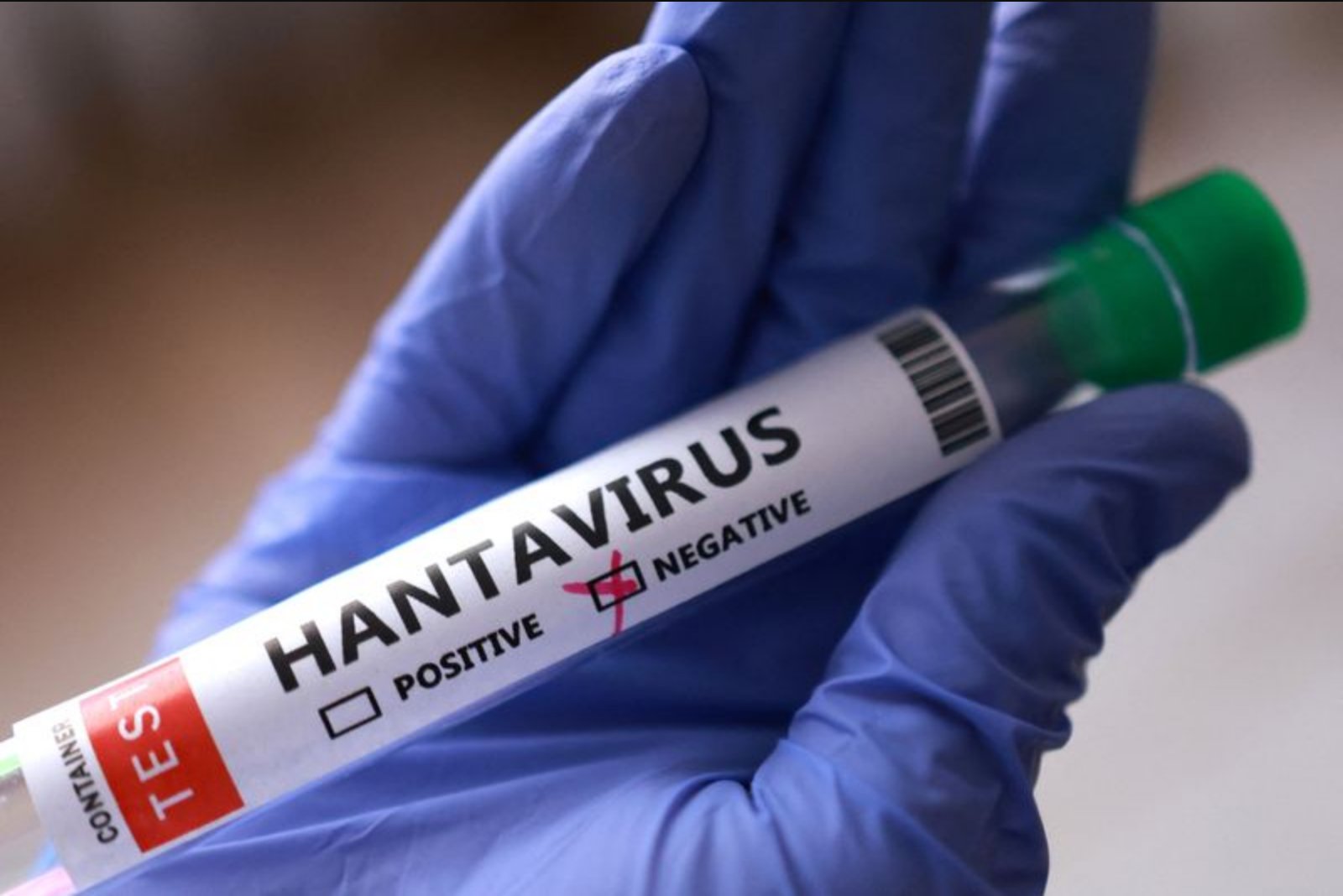
The U.S. Centers for Disease Control and Prevention (CDC) said on Wednesday that the likelihood of hantavirus affecting the general public remains very low even as the agency has mobilized more than 100 staff members to respond to the outbreak.
"To the American public, please know we are here to protect your health. Based on current information, the risk to the general population remains low," said Dr. David Fitter, the incident manager for the CDC's hantavirus response, during a media call.
CDC teams have been conducting on-site public health assessments in Nebraska, where 16 of the 18 passengers from the cruise ship connected to the outbreak were flown to and quarantined on Monday, Dr. Brendan Jackson, the CDC team lead in Nebraska, said.
The group had been aboard the MV Hondius, described as a luxury expedition cruise ship that has been linked to cases involving the Andes virus. The Andes virus is the only hantavirus species reported to be capable of limited person-to-person transmission. Hantaviruses more commonly spread through exposure to wild rodents.
Officials had previously said one passenger tested positive for hantavirus and was placed in a Nebraska biocontainment unit. Dr. Fitter said the initial test results for that passenger were inconclusive. The individual is being retested, and the CDC expects the new results to be available in one or two days, he added.
Agency officials emphasized their ongoing presence and surveillance while characterizing the immediate risk to the wider population as low. The CDC's deployment of more than 100 staff to the response reflects active monitoring and investigation rather than an assessment of broad public danger, according to the agency's remarks.
Key details:
- CDC has more than 100 staff working on the hantavirus response.
- 16 of 18 passengers from the MV Hondius were flown to Nebraska and quarantined on Monday.
- Andes virus is the only hantavirus known to have limited person-to-person spread; hantaviruses typically transmit from wild rodents.
- An initial positive test for one passenger was inconclusive and is being retested, with results expected in one to two days.
Context for sectors: Public health authorities and the healthcare sector are directly engaged in the response and monitoring. The travel and cruise sectors are involved due to the quarantine of passengers from the expedition vessel.
Risks and uncertainties noted by officials:
- Uncertain laboratory result for one passenger - the initial test was inconclusive and a definitive result is pending, which affects clinical management and containment decisions; this primarily impacts healthcare and public health operations.
- Potential for limited person-to-person transmission associated with the Andes virus - officials noted this capability for the specific hantavirus strain, which raises particular concerns for contact tracing and monitoring within affected groups; this affects public health preparedness and the travel sector linked to the outbreak.
- Ongoing assessments in Nebraska - public health evaluations are still under way, leaving operational details and outcomes subject to change based on forthcoming test results and on-site findings; this uncertainty affects local healthcare facilities and quarantine logistics.
CDC officials reiterated their role in protecting health and said they are actively managing the situation through personnel deployment, on-site assessments, and laboratory follow-up. The agency asked the public to note that, based on current information, the risk to the general population remains low.