
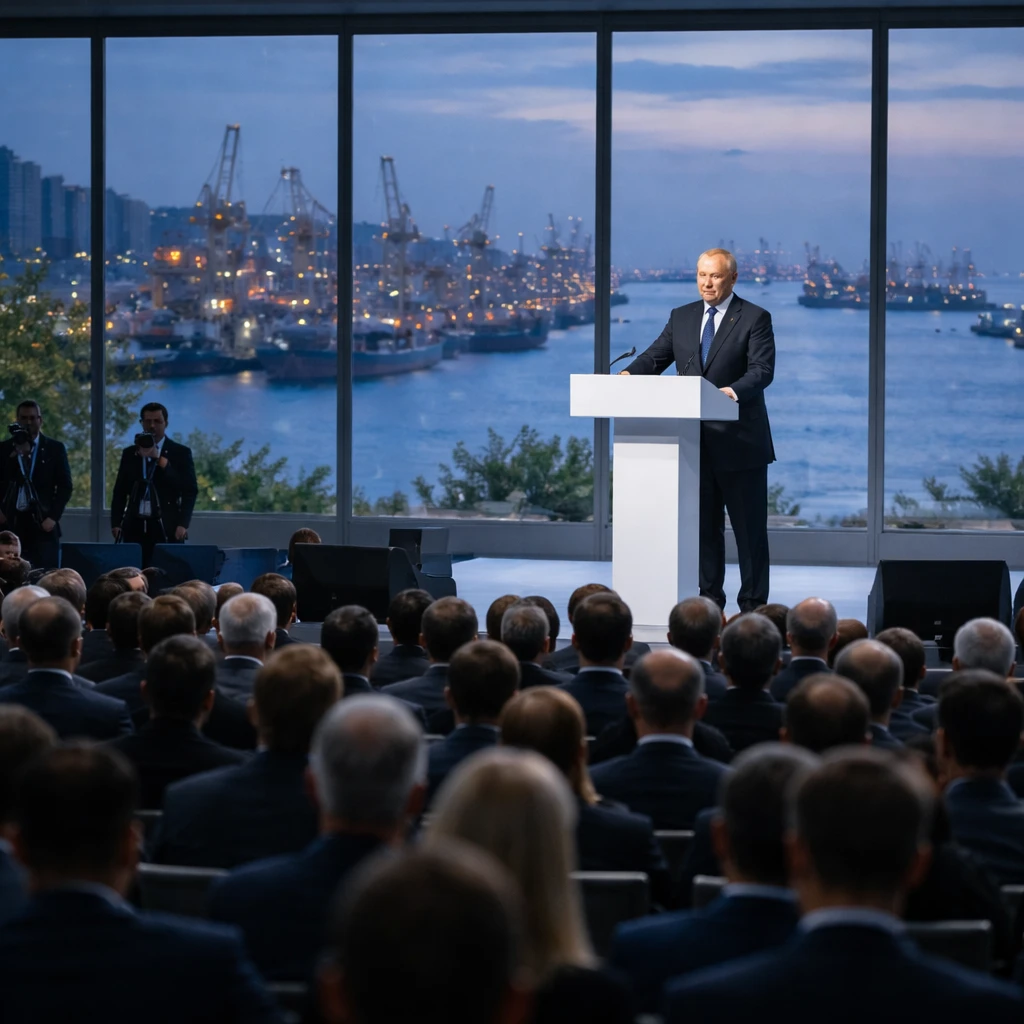
VLADIVOSTOK, Russia, Sept 3 - Russian President Vladimir Putin said on Thursday that an agreement to end the war in Ukraine remains possible, while officials in Kyiv said they expect a "new dynamic" in peace efforts as political and diplomatic engagement resumes in multiple capitals.
Addressing delegates at an economic forum in Russia's far east, Putin said several nations, including the U.S. and China, were prepared to back a peace settlement. "Ultimately, however, the problem must be resolved by the countries involved in the conflict - Russia and Ukraine," he said. "We are grateful to everyone attempting to contribute to a settlement. Is there a chance? In my view, yes, there is."
In Kyiv, Ukrainian Foreign Minister Andrii Sybiha told reporters that he expected "a new dynamic in the peace efforts, with the return of this active phase of political and diplomatic engagement in many capitals around the world." Sybiha did not provide further detail and told reporters to "follow the news."
Observers noted that upbeat statements on the prospects for a negotiated end to the conflict are uncommon after more than four years of war, Europe’s deadliest since World War Two. The two sides last met for U.S.-mediated talks in February. Since that time, and amid a backdrop in which the article says the U.S. has been distracted by the Iran war, both Russia and Ukraine have stepped up long-range air attacks into each other's territory. Attacks at sea have also intensified, with strikes by both sides on ports and commercial shipping that have contributed to higher global grain prices.
Markets reacted to the statements. Chicago wheat futures fell by more than 2% following Putin's comments on the prospects for talks.
Despite his acknowledgement of a possible path to peace, Putin also pointed to recent actions by Ukraine as complicating dialogue. Asked about those developments, he described Ukrainian attacks on civilian merchant vessels and what he called "reported threats of attacks on civilian aircraft" as "acts of state terrorism," and said such actions "complicates the prospects for bilateral peace talks."
Ukrainian President Volodymyr Zelenskiy had warned airlines and insurance companies earlier in the week that Ukrainian drones have made Russian skies dangerous, though he said Ukraine would strike only Russian military facilities and not target civilian aircraft. On Wednesday, Ukraine urged the U.N.'s aviation agency to ask member states to ban operations in Russian airspace. Ukraine itself has been cut off from international civil aviation as its own airspace has been considered unsafe since Russia's 2022 invasion.
Putin also addressed the state of communications between the two sides. He said contacts were ongoing but mostly channelled through intelligence services. "It is difficult for me to say right now to what extent these contacts are leading to a peace agreement, given the statements we have heard recently from Ukraine's top leadership," he said. "However, contacts do exist and are continuing on an ongoing basis - again, primarily through intelligence channels."
Alongside Sybiha in Kyiv, Indian Foreign Minister S. Jaishankar commented on potential third-party support, saying: "If India can be of any help, in any manner, we are there." The statement followed Indian Prime Minister Narendra Modi's recent direct remark to Putin that the war in Ukraine needed to end "for humanity's sake," and that New Delhi would support efforts to stop the fighting.
Summary
Putin said a peace deal is possible and noted international willingness to assist, while Kyiv signalled renewed diplomatic activity. Both sides pointed to recent military actions that complicate negotiations. Global markets, notably wheat futures, responded to the comments.
Key Points
- Putin acknowledged a chance for a negotiated settlement and credited other countries, including the U.S. and China, with readiness to support a peace deal.
- Ukraine's foreign minister said he expects a "new dynamic" in peace efforts as political and diplomatic engagement picks up in multiple capitals.
- Recent military actions - long-range air strikes, attacks on ports and commercial shipping, and drone activity - have complicated the prospects for bilateral talks and affected markets, with Chicago wheat futures falling by more than 2%.
Risks and Uncertainties
- Ongoing military actions by both sides, including attacks on merchant shipping and reported threats to civilian aircraft, present a direct obstacle to resumed bilateral negotiations and pose risks to maritime and aviation sectors.
- Escalation at sea and in long-range strikes risks further disruption to commodity flows and supply chains, particularly in grains, which has already contributed to higher global grain prices and market volatility.
- Contacts between Russia and Ukraine are reported as primarily occurring via intelligence channels, leaving uncertainty about the pace, transparency, and political weight of any negotiation process.
Tags: Ukraine, Russia, Peace, Grain, Aviation