
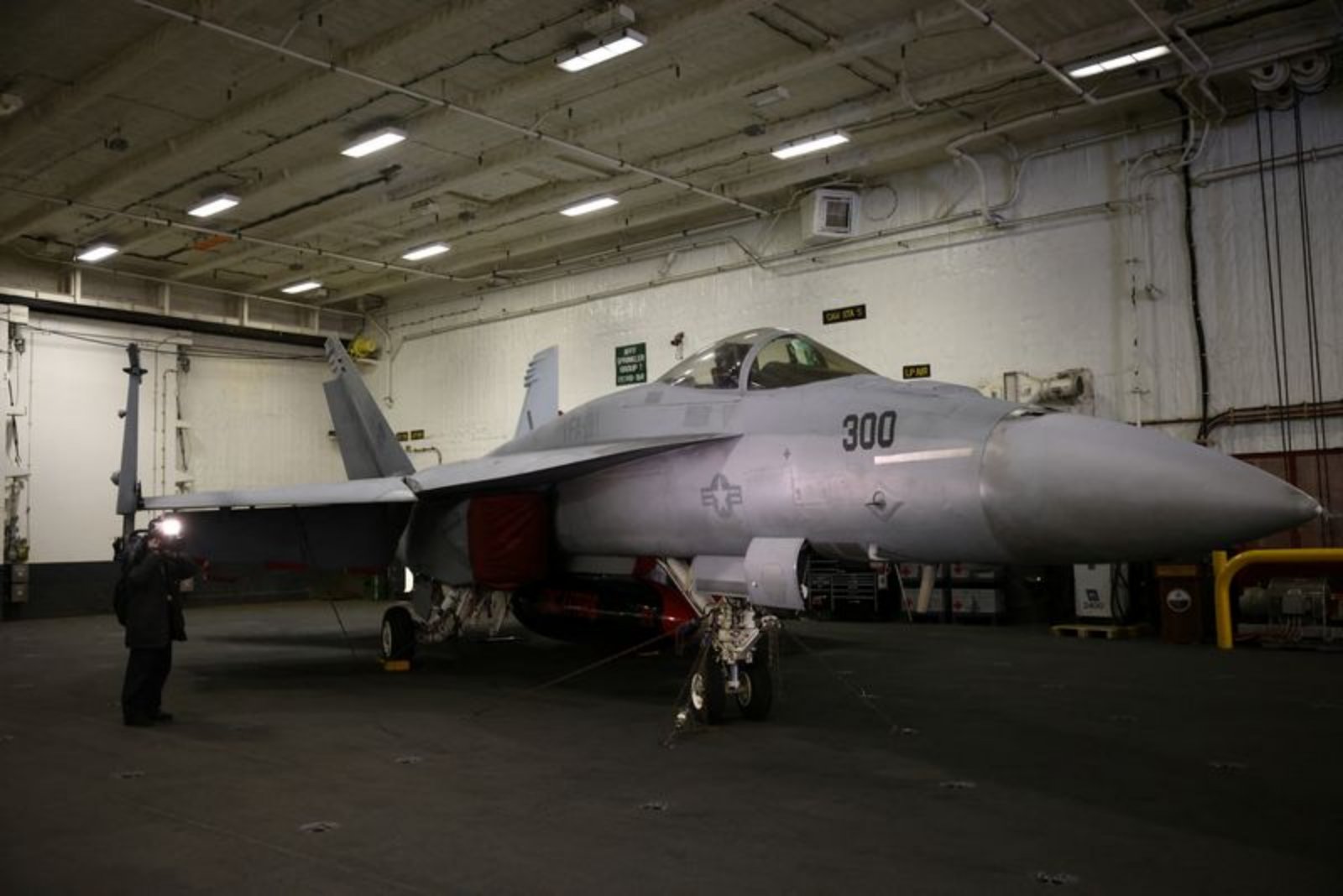
WASHINGTON, April 24 - Castelion, a small defense firm based in California, has been awarded a $105 million contract from the U.S. Navy to prepare its Blackbeard hypersonic missile for operational use aboard the service's carrier-based F/A-18 aircraft. The award funds the integration of the weapon system onto the F/A-18 platform, flight tests and the comprehensive safety and airworthiness certification that the Navy requires before permitting storage, loading and carriage from an aircraft carrier at sea.
The integration and certification work represent the final major technical and regulatory hurdle prior to a Navy decision on whether to purchase Blackbeard in quantity for the carrier air wing. Castelion says it expects to clear that hurdle and have weapons ready for fielding next year.
Blackbeard is designed to be an air-launched hypersonic weapon capable of speeds in excess of five times the speed of sound. Unlike land-based ballistic missiles, the system can be carried aboard an aircraft carrier and launched from an F/A-18 - an aircraft that takes off from a carrier deck - which places the weapon in striking range of targets that shore-launched systems could not easily reach, including missile sites and naval vessels at sea. Castelion and the Navy frame the capability as relevant to scenarios in which the United States would need long-range, rapid-strike options to deter or respond to aggression.
The company emphasizes affordability alongside schedule when describing Blackbeard's design and production approach. "The most sacred targets in our engineering process are schedule and affordability. That forces more creative solutions - instead of waiting 52 weeks for a space-rated computer, we use automotive-grade components backed by tens of billions in commercial investment annually, and they work," said Sean Pitt, Castelion's co-founder and chief operating officer.
Under the contract, funding will be applied to both hardware and software integration efforts, flight testing of the weapon launched from the F/A-18, and the full suite of system safety and airworthiness certification processes the Navy requires prior to authorizing weapons for storage, loading and carriage from carrier decks. Those certifications are necessary steps before operational deployment.
To support expected production orders should the Navy decide to procure Blackbeard in volume, Castelion is privately funding a manufacturing expansion. Project Ranger, as the company calls the effort, is a manufacturing campus the firm is building entirely with internal funds at a cost the company places at $250 million. Castelion already operates facilities in Texas, California and Washington, and projects that the New Mexico campus will be capable of producing thousands of Blackbeard missiles annually once fully operational. The company expects that production capacity to be in place by the end of next year.
Pentagon budget documents referenced by Castelion indicate the Navy plans to buy 4,500 air-launched hypersonic missiles for F/A-18E/Fs over the next five years, with an average unit cost of about $384,000. That per-unit figure is noted as relatively low for weapons in the hypersonic class. The company's contract award was recorded in the government's awards database on Friday.
Sectors impacted
- Defense contractors and aerospace manufacturers involved in weapons integration and carrier aviation.
- Supply chain and components sectors supplying high-speed propulsion, avionics and mass-production electronics.
- Capital markets tracking defense procurement and small-cap defense technology firms scaling manufacturing capacity.
Contextual note
The company and Navy are advancing integration and certification work that must be completed before the weapon can be stored, loaded and carried from carriers at sea. Castelion is simultaneously investing private capital into factory capacity to meet potential future orders.