
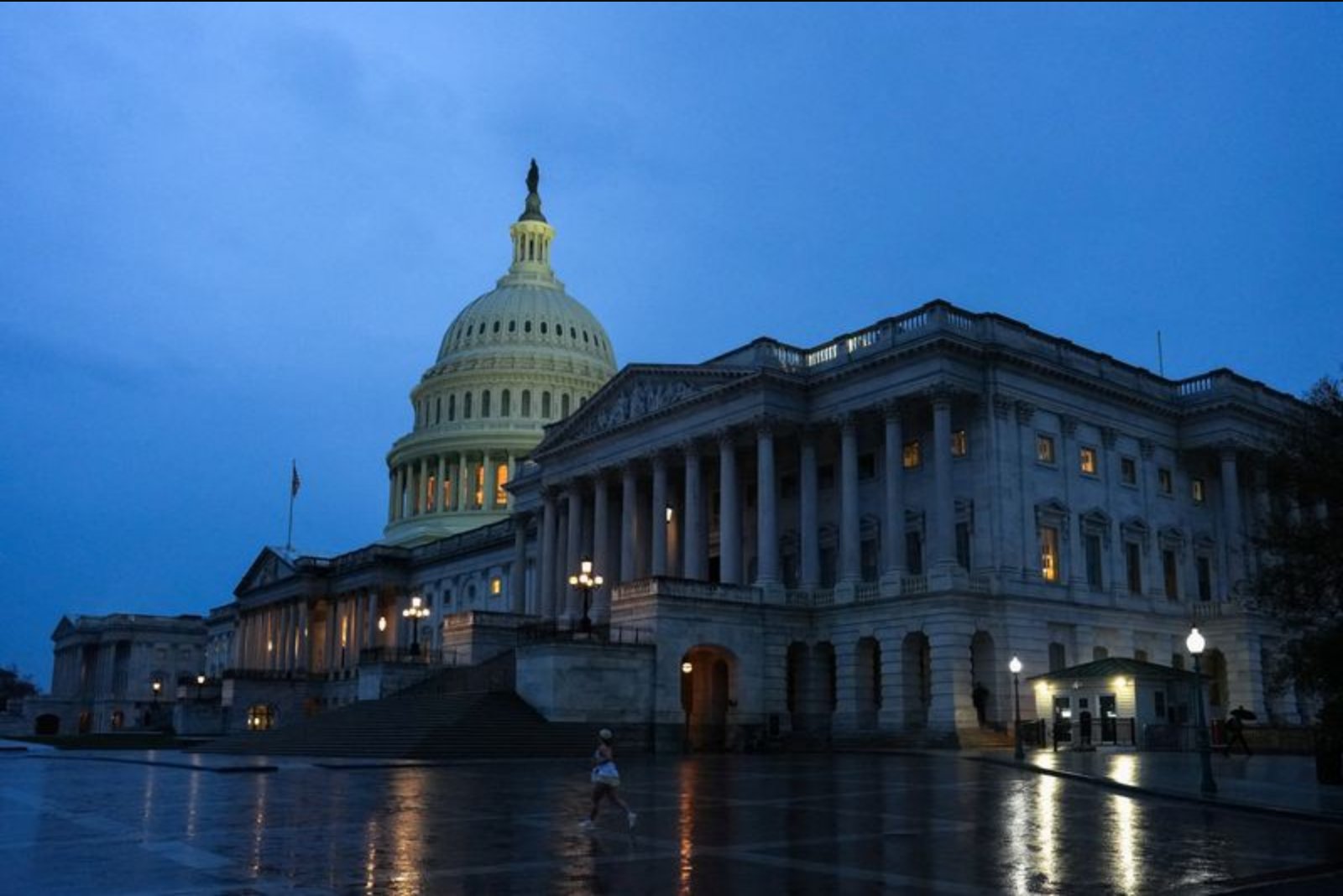
Senate Democrats are pressing for a vote on legislation designed to curb the president's ability to conduct military operations against Cuba without first obtaining authorization from Congress. Senate aides told reporters on Friday that the chamber could vote as early as next week on the Cuba War Powers Resolution, which was filed last month by Senators Tim Kaine, Adam Schiff and Ruben Gallego.
Under the chamber's rules, Republican leaders in the Senate must permit the resolution to be considered, and aides said they expected a vote before May 1, though the exact timing had not been finalized.
When the resolution was introduced, Senator Adam Schiff warned that the president's rhetoric toward Havana had made clear his next potential target. "The president's saber rattling toward Cuba makes clear where his sights are next," Schiff said in a statement at the time the legislation was filed.
The push comes amid a pattern of U.S. military actions tied to the Trump administration that Democrats contend were launched without seeking congressional authorization. According to the account of recent events referenced by proponents of the resolution, U.S. forces have struck boats off the coast of Venezuela, conducted an operation in Caracas to seize Venezuelan President Nicolas Maduro, and, together with Israel, engaged Iran in hostilities since February 28 - actions that, Democrats say, proceeded without Congress approving the use of force.
President Trump has said publicly that "Cuba is next," while pointing to U.S. operations in Venezuela and Iran as examples of his administration's actions. He has not outlined specific plans for Cuba, but has repeatedly expressed the view that the Cuban government is close to collapse.
Democrats have repeatedly tried to compel the administration to halt military operations and secure congressional authorization before initiating them, but those efforts have not succeeded. Both the House and the Senate have seen measures brought forward to limit the president's military options, and Republican lawmakers, who hold narrow majorities in both chambers, have largely voted to block those resolutions. There has been no indication that the Republican position is changing.
The constitutional framework names Congress as the body that can declare war, but that constraint has not always been interpreted to prohibit short-term operations or actions intended to counter immediate threats. The White House maintains that the president, as commander-in-chief, has the authority to order limited military operations to protect the United States.
Republican critics in Congress accuse Democrats of introducing the War Powers Resolution primarily as a vehicle to attack the president politically rather than to address a distinct legal or policy gap.