
Hook & thesis
Oracle ripped higher on AI-related headlines over the last week, but even after a fast 25% two-session pop the stock still trades like growth won't translate into real profits for years. That skepticism is reflected in a still-conservative market multiple despite clear demand signals for AI infrastructure and a newly publicized 2.8 GW fuel-cell partnership to power its data centers.
My view: the market is underpricing the optionality of Oracle's AI-infrastructure pivot while also appropriately pricing real near-term risks (negative free cash flow and heavy leverage). That creates a tactical long opportunity with disciplined risk controls: buy a breakout around $165.00, use a hard stop at $150.00, and look for $235.00 within roughly 180 trading days if operating cash flow and RPO conversion show up on the June earnings print and subsequent quarters.
What Oracle actually does and why the market should care
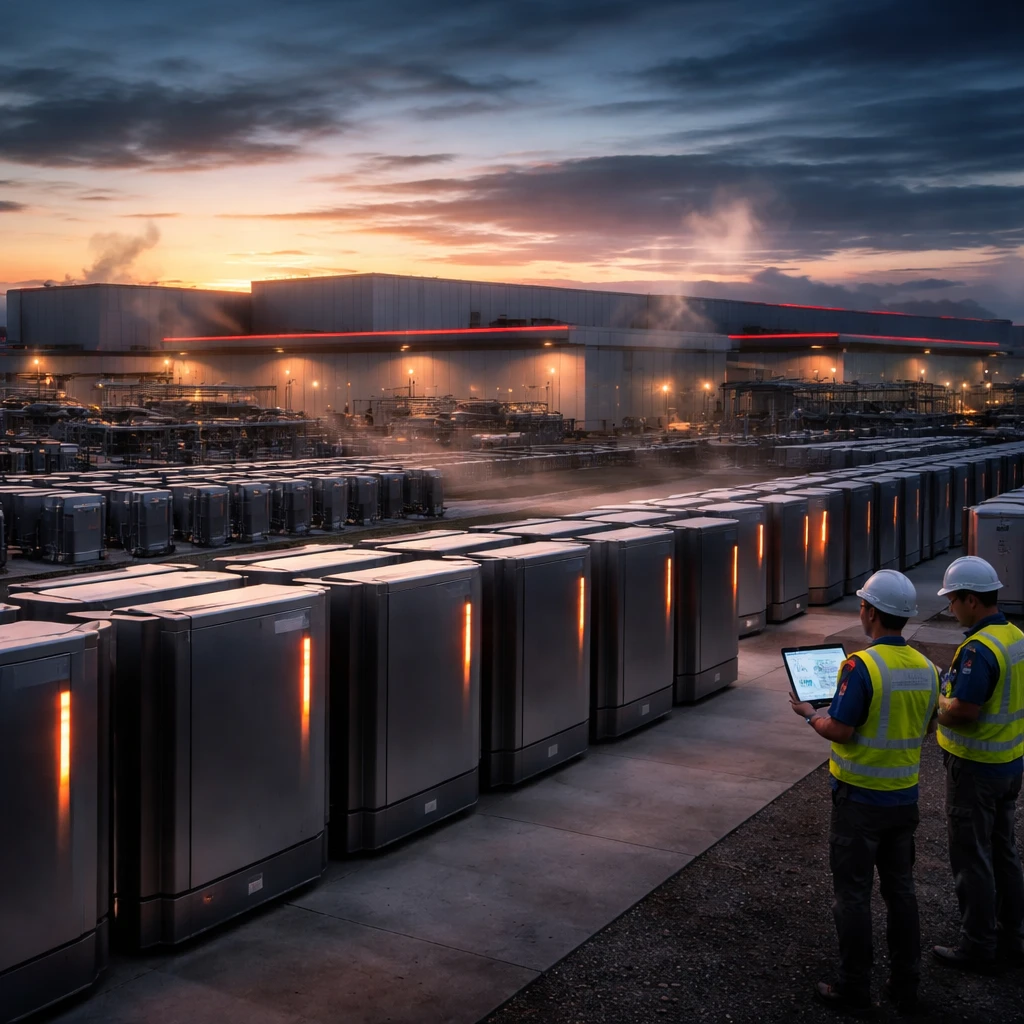
Oracle sells enterprise software and infrastructure across three segments: Cloud and License, Hardware, and Services. The company is positioning itself as an AI-infrastructure provider by combining software, engineered systems and now on-site power solutions. That move matters because AI workloads are expensive not only for compute but also for power and facilities - and Oracle's Bloom Energy partnership (expanded to supply up to 2.8 gigawatts) directly addresses that bottleneck.
Why investors should care: Oracle sits at the intersection of legacy enterprise apps and the rising need for AI-optimized infrastructure. If demand for AI workloads translates to higher cloud consumption, hardware refresh cycles and multi-year contracts, Oracle's massive backlog of performance obligations becomes a lever for multi-year revenue visibility.
Key numbers to frame the argument
| Metric | Value |
|---|---|
| Current price | $163.80 |
| Market cap | $468.99B |
| Enterprise value | $564.95B |
| P/E (ttm) | ~29 |
| EV/EBITDA | ~19.4 |
| Free cash flow (most recent) | -$24.736B |
| Debt to equity | 3.5 |
| EPS (ttm) | $5.63 |
| Reported RPO backlog (press cites) | $553B remaining |
Those numbers tell a mixed story. On one hand you have strong earnings power (EPS $5.63), a very large market cap ($469B) and a massive backlog of contracted work. On the other hand, enterprise valuation multiples like EV/EBITDA near 19.4 and the company's negative free cash flow (-$24.7B) mean the market is not fully trusting conversion of sales into distributable cash. High leverage - debt-to-equity of 3.5 - is another constraint; investors are rightly waiting for cleaner cash flow and clearer capital-allocation discipline from the new CFO.
Valuation framing
At $163-$165 the market values Oracle at roughly $469B market cap and $565B enterprise value. With an EV/EBITDA near 19.4 and P/E approaching 29, Oracle trades at multiples that imply decent growth expectations but also no forgiveness for mistakes. Historically, Oracle commanded higher multiples when growth looked repeatable; today the stock sits far below its 52-week high of $345.72, reflecting both the delayed Cloud migration narrative and skepticism about large-scale data center spending.
Bottom line on valuation: the market has partially repriced in AI upside (you can see that in recent sessions), but it's still assigning a large haircut — effectively treating Oracle like "dead money" until free cash flow and RPO-to-revenue conversion visibly accelerate. That haircut is what creates a tactical trade: upside if execution surprises to the upside, controlled downside if it does not.
Catalysts to drive the trade (2-5)
- 06/10/2026 earnings report - this is the next big catalyst. Management commentary on RPO conversion, capex cadence for AI data centers, and free cash flow trajectory will move the stock materially.
- Execution on the Bloom Energy power deal - progress announcements or early deployments that reduce data center power risk will improve the AI-infrastructure narrative.
- Capital allocation signals from the new CFO - any credible plan to reduce debt or demonstrate buyback/distribution discipline will re-rate the equity multiple.
- Quarterly revenue/margin inflection driven by AI workloads - consistent sequential growth in cloud consumption or hardware refreshes would prove the pivot.
Trade plan
Action: Initiate a long at an entry of $165.00. Set a stop-loss at $150.00. Target price $235.00. Position sizing should reflect the medium-risk profile; I would allocate a starter position no larger than 2-3% of portfolio value and add only if the stock closes above $175 on materially higher volume.
Horizon: long term (180 trading days). Rationale: the key fundamentals that will move this trade (RPO conversion into cash, clearer capex cadence, and early AI-deployment wins) will likely unfold over several quarters. The June earnings report can set direction, but measurable operating cash-flow improvement will take time.
Why these levels? $150 is below recent intraday support and would indicate the headline-driven rally failed. $235 is a sensible upside target if the market starts baking in mid-single-digit revenue growth acceleration plus multiple expansion toward historical technology peers once cash flow normalizes.
Counterarguments and balanced risks
No trade is one-way. The most credible counterargument: Oracle's AI pivot is real in headlines but marginal in dollars - cloud hyperscalers and native cloud vendors still capture the majority of new AI workloads. If Oracle's AI traction is limited to niche or on-prem use cases, revenue growth will disappoint and the current rally will roll over.
Risks (at least four)
- Negative free cash flow - Oracle reported -$24.736B in FCF. Continued negative cash flow undermines debt reduction and buyback plans and keeps valuation capped.
- High leverage - debt-to-equity of 3.5 increases vulnerability if macro weakens or capex requirements spike for AI infrastructure.
- Execution risk on AI infrastructure - converting RPO into realized revenue and cash requires execution across sales, supply chain and datacenter buildouts; any hiccup delays re-rating.
- Legal and governance overhangs - an active fiduciary-investigation headline could distract management and sap investor confidence.
- Competition from cloud hyperscalers - AWS, Azure and Google remain default choices for many large AI customers; Oracle risks being out-competed on total cost, flexibility and ecosystem.
What would change my mind
I will be wrong if one of the following happens: management provides clear, accelerating operating cash flow improvement, reduces net debt meaningfully, and shows sustained sequential growth in AI-driven cloud revenue. Conversely, if FCF remains deeply negative for another two quarters, debt increases materially, or the company shrinks guidance, I would exit the long and consider a short opportunity instead.
Conclusion
Oracle's rapid move higher on AI and the Bloom Energy deal shows how quickly sentiment can flip. The market still treats the company like dead money in many respects: high leverage, negative FCF and a cautious multiple. That creates a tradeable set-up where headline-driven upside is possible but not guaranteed.
My tactical stance: long at $165.00 with a $150.00 stop and a $235.00 target over 180 trading days. Be disciplined: size this as a medium-risk position, watch June earnings for the first real evidence of conversion from backlog to cash, and tighten stops if sentiment cools but fundamentals deteriorate.
Trade idea summary: Buy $165.00, stop $150.00, target $235.00, long term (180 trading days). Medium risk — upside if execution on AI infrastructure and RPO conversion shows in cash flow; downside if negative FCF and debt remain unresolved.