
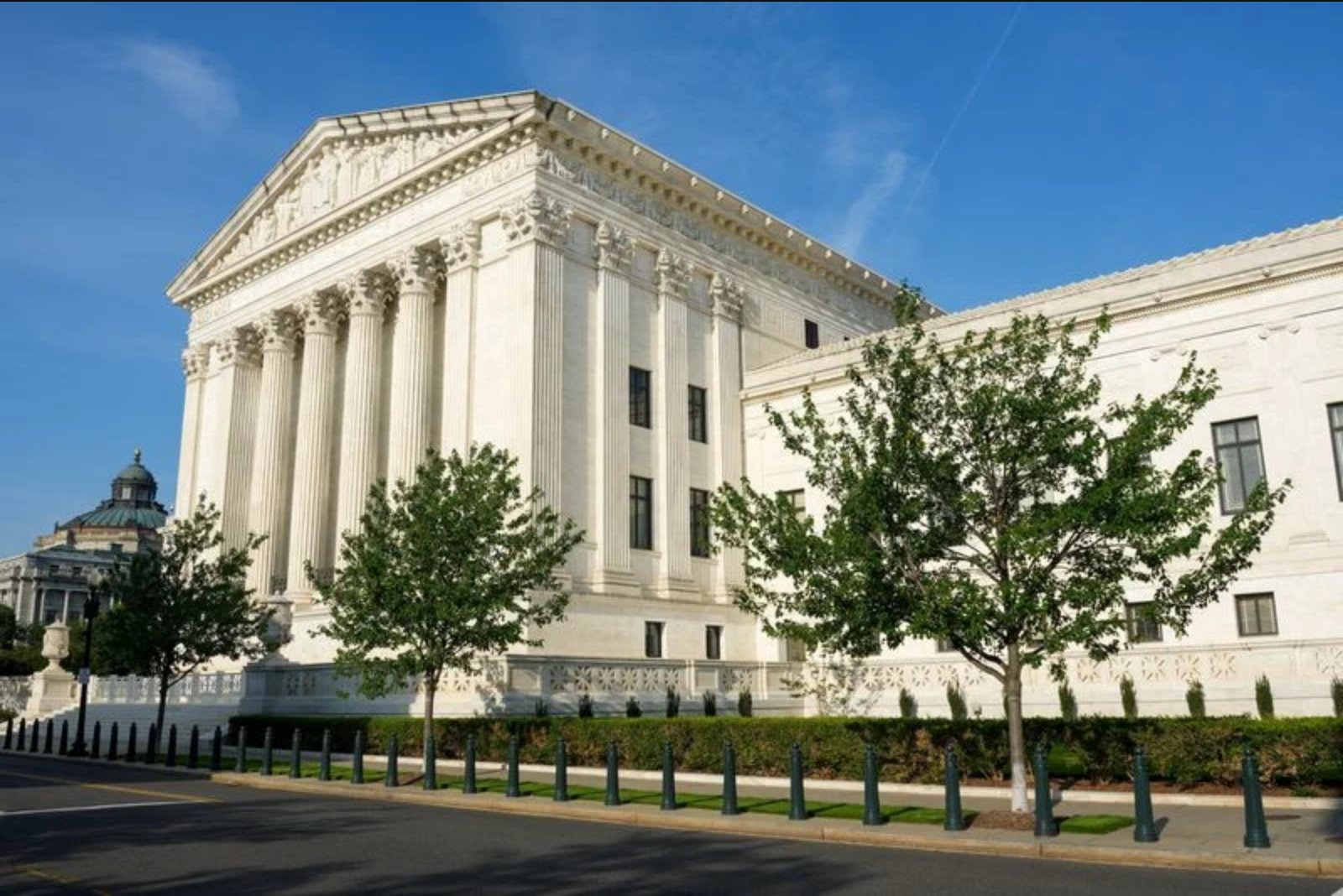
The Supreme Court's current term, which began in October and extends roughly through the end of June, has been packed with disputes that reach deeply into the structure of American law and governance. The docket includes high-stakes litigation on voting protections, the limits of presidential power, tariff authority, the contours of birthright citizenship, the rights of immigrants, regulatory reach and multiple civil rights issues ranging from transgender sports participation to the application of free-speech protections in professional settings.
Overview of major themes
The justices addressed questions that affect both government institutions and private parties, with cases bearing on congressional statutes, constitutional guarantees and long-standing judicial precedents. The court has issued rulings, overturned lower-court decisions and signaled positions in argument that together create shifts in legal doctrine across a wide range of topics. Several cases may have ripple effects in elections, corporate litigation, regulatory compliance and the operations of independent agencies.
Voting Rights Act - Narrowing of Section 2
On April 29 the court issued a ruling that significantly diminished the reach of Section 2 of the Voting Rights Act. The decision removed a key pathway for minority voters to challenge electoral maps as racially discriminatory under the statute enacted to prevent dilution of minority voting power. In practical terms, the court blocked an electoral map that had provided Louisiana with a second congressional district in which Black voters were in the majority.
The ruling constrains the ability of Black and Latino voters to rely on Section 2 when contesting redistricting plans, a development that the decision's critics say opens the door for state legislatures - particularly in Republican-controlled Southern states - to reconfigure majority-Black and majority-Latino districts. Those districts have been significant political battlegrounds because Black and Latino voters tend to favor Democratic candidates. The court's action followed a 2013 decision that had already limited another portion of the Voting Rights Act, and together these rulings have curtailed some of the statute's protections against racially discriminatory voting practices.
Birthright citizenship - Court questions executive directive
The justices indicated skepticism on April 1 about the legal foundation for an executive directive from President Trump that aimed to restrict birthright citizenship. During arguments, the justices pressed the administration's lawyer on both the legal validity of the order and the real-world consequences of applying it. A lower court had enjoined the policy, which instructed U.S. agencies not to recognize citizenship for children born in the United States when neither parent is an American citizen or a lawful permanent resident.
That lower-court decision concluded that the policy conflicted with the Fourteenth Amendment of the Constitution and with a federal statute that codifies birthright citizenship. The Supreme Court signaled that it would resolve the dispute by the end of June.
Tariffs under emergency economic authority - Presidential reach limited
On February 20 the court curtailed a significant exercise of presidential authority related to tariffs. In a 6-3 decision, justices upheld a lower-court conclusion that the president's use of a law passed in 1977 for national emergencies went beyond the scope of authority Congress had conferred. The court identified the International Emergency Economic Powers Act as the statute the administration relied upon and concluded that it did not supply the power claimed to impose broad tariffs.
The opinion emphasized the constitutional allocation of taxing and tariff authority to Congress, not the president. The ruling has been framed as having major implications for international trade, because tariffs were a central tool in a large-scale trade policy pursued after the start of the president's second term, a program that affected trading relationships, financial markets and global economic uncertainty.
Attempted firing of a Federal Reserve governor - Independence of the central bank at issue
Arguments on January 21 revealed the justices were unlikely to allow an immediate firing of Federal Reserve Governor Lisa Cook as she pursues a legal challenge. The case probes a statutory provision in the Federal Reserve Act that provides for the removal of governors "for cause" but does not define that standard nor set a precise removal procedure. The administration cited mortgage fraud allegations as the basis for seeking the dismissal, allegations the governor denies.
Cook has characterized the impeachment effort as a pretext linked to policy disagreements, saying the dispute concerns monetary policy rather than the criminal accusations. The court's questioning suggested caution about removing a sitting governor while legal proceedings are pending and underscored the broader question of protecting the Fed from political interference. The court is expected to issue a ruling by the end of June.
Temporary Protected Status for immigrants - Review of administrative decisions
On April 29 the court heard arguments about the Trump administration's decisions to terminate Temporary Protected Status for hundreds of thousands of people from Haiti and for thousands from Syria. The administration sought review of federal court orders that had blocked its actions to end TPS designations previously extended to more than 350,000 Haitian nationals and about 6,100 Syrians.
During the arguments, several conservative justices appeared receptive to the administration's position that courts should be reluctant to second-guess the executive branch's determinations in this area. Other justices queried whether the challengers were correct in asserting that the administration failed to comply with statutory procedures governing TPS decisions. The court's decision was anticipated by the end of June.
Firing of an FTC member - Presidential authority and agency tenure protections
The court entertained an appeal concerning the president's removal of a Federal Trade Commission member, a case that has potential consequences for the longstanding balance between executive power and tenure protections for independent agencies. In December, justices heard arguments over the administration's removal of Democratic FTC member Rebecca Slaughter before her term had expired.
Conservative justices flagged arguments suggesting they would uphold the legality of the president's action and in doing so weaken a judicially recognized precedent that had insulated certain agency officials from removal except under limited conditions. The administration maintained that statutory protections for agency heads improperly constrained constitutional presidential authority. While the high court permitted the president to remove the FTC member while the matter proceeded through litigation, a final ruling was expected by the end of June.
Transgender athletes - State bans and national standards
On January 13 the court considered appeals from Idaho and West Virginia of lower-court rulings that had struck down state laws barring transgender students from participating on female sports teams. The conservative justices signaled they were inclined to uphold the state bans and expressed concern about imposing a uniform national rule on a subject where medical and scientific evidence, as well as public policies, vary sharply across jurisdictions.
At argument, some justices remarked on the disputed nature of whether treatments such as puberty blockers or gender-affirming hormones remove physiological advantages that might be associated with male sex in athletic competition. The cases sit against the backdrop of a wave of similar laws in 25 other states. The court was expected to deliver its decision by the end of June.
LGBT "conversion therapy" and free speech
On March 31 the court struck down a Colorado statute that prohibited licensed counselors from providing so-called "conversion