
Sunrun (NASDAQ:RUN) stock jumped 16% Wednesday after the company, together with Renew Home and Tesla (NASDAQ:TSLA), unveiled a framework to deliver in excess of 16 gigawatts of flexible energy capacity aimed at hyperscalers and electric utilities.
According to a press release issued Tuesday, the three firms plan to aggregate millions of already-installed demand-side and energy-exporting devices across the United States into turnkey offerings for offtaking parties. The framework, the companies said, does not require additional hardware, software, interconnection, water, or land use.
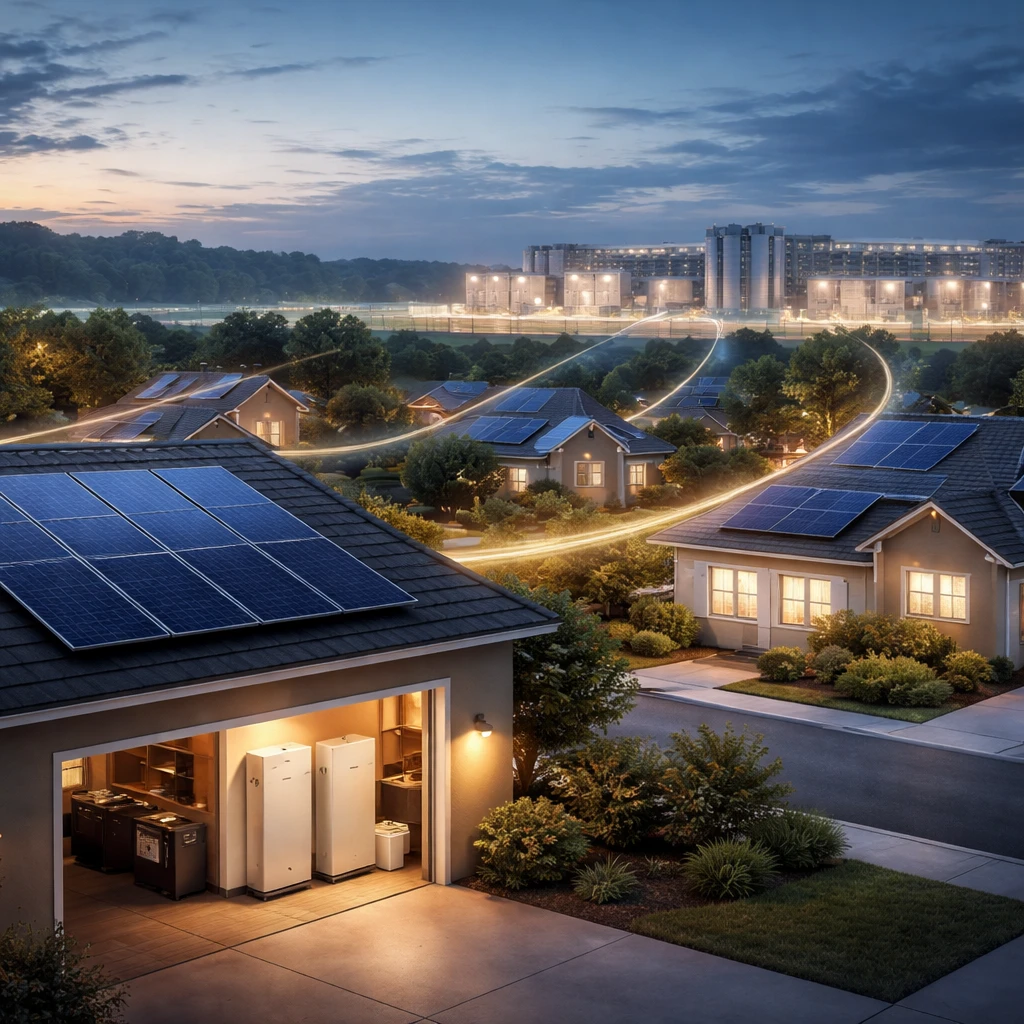
The planned aggregated resource would draw dispatchable capacity from hundreds of thousands of home battery systems operated by Sunrun and Tesla, combined with flexible peak capacity provided by more than 8 million smart thermostats and other devices managed by Renew Home. The companies characterized that combined fleet as constituting the largest distributed power plant in the country.
In Virginia, the three partners said there is already more than 300 megawatts of capacity available for immediate deployment. The release states that this Virginia capacity is expected to rise to at least 500 megawatts by 2030.
Executives framed the framework as a response to accelerating electricity demand tied to data centers and growth in artificial intelligence workloads, and as a mechanism to help reduce household energy costs. They emphasized that the capacity can be activated in months rather than years and could relieve pressure on transmission and distribution by freeing up transmission capacity and easing congestion on local distribution infrastructure.
As part of their commitments, the companies said they will make capacity available to PJM’s proposed Reliability Backstop Process. If PJM accepts the offering, the regional operator could immediately unlock in excess of a gigawatt of capacity from the aggregated resource, with additional capacity phased in over future years for purposes including peak shaving, locational grid relief, and fast-responding ancillary services.
Implications
- Residential distributed energy assets - home batteries and smart thermostats - are being positioned as rapid-response grid resources for commercial and utility-scale demand.
- Data center operators and hyperscalers are expressly targeted as offtakers for local, flexible capacity to manage rising electricity needs driven by AI and compute growth.
- The framework seeks to deploy capacity faster than traditional generation or transmission projects by leveraging existing behind-the-meter assets and device fleets.
Operational and market notes
- The companies said available capacity will be allocated on a first-come, first-served basis to interested hyperscalers and other buyers.
- Virginia is cited as an initial market with immediate capacity, and further build-out to 500 megawatts in the state is projected by 2030.