
Stock Markets March 23, 2026 11:38 AM

Sikorsky Delivers UH-60MX Black Hawk Outfitted with MATRIX Autonomy Suite to U.S. Army

First full-authority fly-by-wire, optionally piloted UH-60 delivered as Army advances open-architecture autonomy testing

By Derek Hwang
Share
Twitter Reddit Facebook LinkedIn
LMT

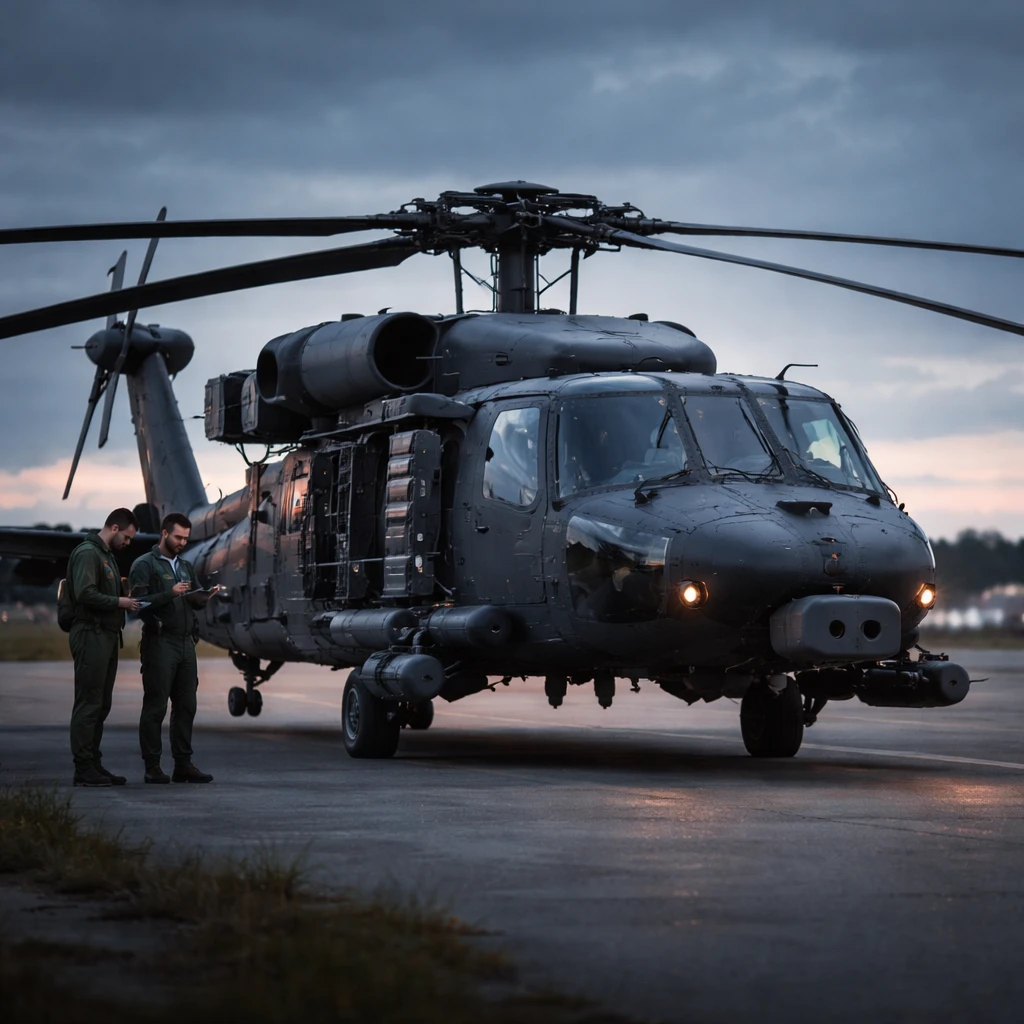
Sikorsky, a Lockheed Martin company, has delivered an experimental UH-60MX Black Hawk to the U.S. Army with the company’s MATRIX autonomy suite and fly-by-wire controls installed. The handover follows flight testing and represents the first full-authority fly-by-wire and optionally piloted UH-60 in the Army fleet. The aircraft will be used by Army testers to evaluate autonomy capabilities, including automated landing-zone detection and obstacle avoidance in degraded visual environments.

Sikorsky Delivers UH-60MX Black Hawk Outfitted with MATRIX Autonomy Suite to U.S. Army
LMT
Summarize with
ChatGPT Perplexity Claude Grok Gemini

Key Points

  • Sikorsky delivered an experimental UH-60MX Black Hawk integrated with the MATRIX autonomy suite to the U.S. Army after successful flight testing.
  • This UH-60MX is the first full-authority fly-by-wire and optionally piloted UH-60 in the Army fleet; MATRIX has been installed on the 60A, 60L and 60M variants.
  • The aircraft will be used by the Army Combat Capabilities Development Command to test autonomy features that enable transitions between manned, optionally piloted and fully autonomous modes; sectors impacted include defense contractors and military aviation.

Sikorsky, operating as a Lockheed Martin company, announced the delivery of an experimental UH-60MX Black Hawk to the U.S. Army with the aircraft fully integrated with the MATRIX autonomy suite. The delivery comes after successful flight testing and represents a milestone in the Army’s efforts to field open-architecture, mission-supported autonomy and optionally piloted operations.

The UH-60MX is configured to mirror Sikorsky’s UH-60A fly-by-wire Optionally Piloted Black Hawk, a variant that has accumulated hundreds of flight hours in testing. That earlier Optionally Piloted UH-60A was also publicly demonstrated when it was commanded by Secretary of War Pete Hegseth in November 2025. Sikorsky reports that the MATRIX autonomy kit has been installed across the Army’s three Black Hawk variants - the 60A, 60L and 60M - and that the MX delivery is the first instance of a full-authority fly-by-wire, optionally piloted UH-60 being placed into the Army’s fleet.

Installation of the fly-by-wire flight controls on the MX airframe and the subsequent integration of the MATRIX autonomy system were completed in 2025 through a collaborative effort between the Army and Sikorsky. The Army Combat Capabilities Development Command will operate the MX aircraft to conduct testing and evaluation of autonomy capabilities. The system is designed to allow platforms to switch between manned, optionally piloted and fully autonomous modes, supporting flexibility in mission profiles.

The MATRIX autonomy suite brings a range of automated functions intended for operations in challenging visual conditions. Key capabilities include automated landing-zone detection and obstacle-avoidance designed for use in degraded visual environments. The system supplies real-time terrain and obstacle awareness to assist both pilots and autonomous control systems in avoiding hazards and potential threats.

Sikorsky emphasizes that MATRIX uses an open architecture approach. That design is intended to reduce maintenance hours and, consequently, to lower lifecycle costs associated with the platform. The UH-60MX is slated to support the Army as it develops techniques, tactics and procedures for employing optionally piloted and fully autonomous systems across relevant missions.

Finally, the MATRIX autonomy suite is identified as the core component of DARPA’s ALIAS program, aligning the technology with broader autonomy research efforts. The delivery of the UH-60MX marks a step in moving those capabilities from testing to operational evaluation within the Army testing community.


Risks

  • Testing and evaluation remain ongoing - operational effectiveness and broader fleet adoption depend on outcomes from Army-run trials, affecting defense procurement timelines and budgets.
  • Integration and maintenance implications - while open architecture is intended to reduce maintenance hours and lifecycle costs, actual savings will depend on field performance and sustainment practices, impacting defense logistics and contractor support services.
  • Technology transition uncertainty - development of tactics, techniques and procedures for optionally piloted and autonomous systems is required before wider deployment, creating uncertainty for operational planning in military aviation.

More from Stock Markets

Moody's Lowers Alexandria Real Estate's Credit Ratings Amid Soft Life-Science Market Jun 16, 2026 L3Harris Selects JPMorgan and Morgan Stanley to Lead IPO of Axyv Missile Unit Jun 16, 2026 Gold Miners Rise as Bullion Gains on Eased Fed Hike Expectations Jun 16, 2026 Portobello Pauses Sale of Legálitas Amid Buyer Concerns Over AI Disruption Jun 16, 2026 Thyssenkrupp Shares Slip After Supervisory Board Clears tk accelis Listing Jun 16, 2026