
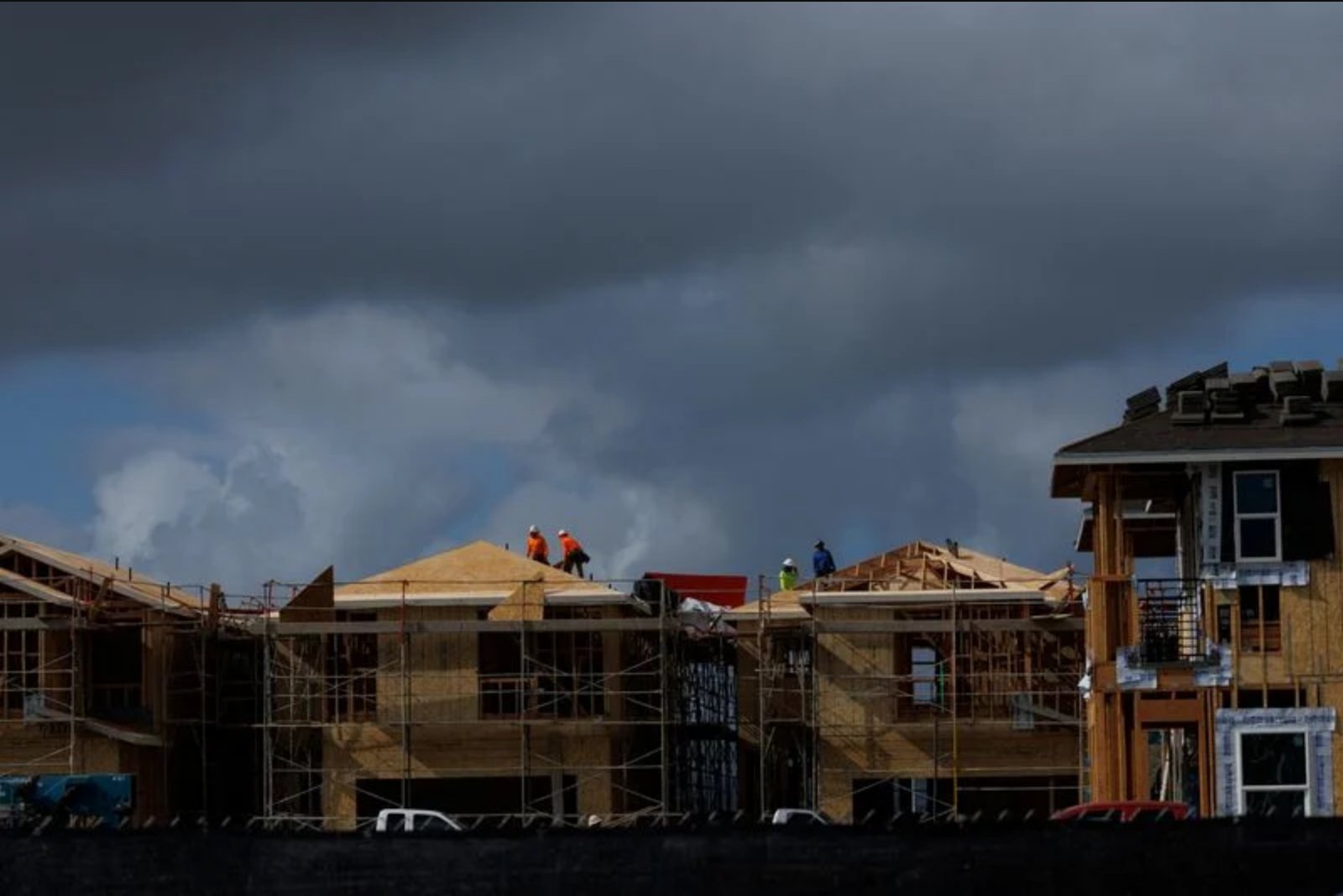
The pace of new single-family residential construction in the United States eased in May to an eight-month low, reflecting mounting pressure from higher mortgage rates and elevated costs for building materials. The decline in single-family starts, combined with a sharp fall in multi-family construction, pushed overall housing starts to the weakest level seen in six years, according to government data.
The Commerce Department’s Census Bureau reported that single-family housing starts - which make up the majority of homebuilding - fell 1.9% to a seasonally adjusted annual rate of 882,000 units. That reading was the lowest since last September and represented a 6.7% decrease from the same month a year earlier.
Geographically, single-family starts retreated in the South and West, while the Northeast and Midwest recorded gains. At the same time, permits for future single-family construction edged up 0.6% to a rate of 886,000 units, with permit increases concentrated in the Midwest and South and declines in the Northeast and West. On a year-over-year basis, single-family permits fell 1.8% in May.
Starts on housing projects of five units or more - a very volatile segment of the market - plunged 41.6% to a rate of 284,000 units in May, contributing to an overall multi-family starts decline of 12.3% from a year earlier. As a result, total housing starts dropped 15.4% to a seasonally adjusted annual pace of 1.177 million units, an 8.7% decrease compared with May of the prior year.
Building permits for multi-family projects declined 3.5% to a rate of 474,000 units last month. Overall building permits slipped 0.7% to a rate of 1.413 million units, a 0.2% drop year-over-year in May.
Residential investment - the category that includes homebuilding - has now subtracted from gross domestic product for five consecutive quarters, underscoring the persistent drag the housing sector is exerting on broader economic growth.
Labor availability and the scarcity of building lots are additional constraints cited in the report, limiting builders' ability to increase output and respond to a long-standing shortage of homes that has produced an affordability crisis.
Private-sector sentiment among home builders also weakened. A National Association of Home Builders survey released on Monday showed builder confidence deteriorated in June. Sal Guatieri, senior economist at BMO Capital Markets, noted the outlook for a near-term upturn in homebuilding was dim, saying: "There is little indication that U.S. home building will break to the upside anytime soon, given high mortgage rates, previous over-building in the South, elevated new home inventories relative to sales, and the current depressed level of builder activity in the NAHB survey."
Some economists framed the pullback in single-family starts as part of a necessary correction. Stephen Stanley, chief U.S. economist at Santander U.S. Capital Markets, said the slowdown could help avoid an unwanted accumulation of unsold new homes, noting that inventories of new houses remained elevated amid weak demand.
Mortgage rates have climbed amid an international geopolitical episode that lifted oil prices and pushed up inflation and Treasury yields. Data from mortgage finance agency Freddie Mac show the rate on the 30-year fixed mortgage has risen by more than 50 basis points since the conflict began in late February. Washington and Tehran on Sunday said they had agreed terms to end the war and reopen the Strait of Hormuz.
Prior to those developments, the housing market had been under pressure from import tariffs that increased the cost of building materials and appliances.
Alongside the housing data, a separate Labor Department Bureau of Labor Statistics release showed U.S. import prices accelerated more than economists had expected in May, led by stronger readings for fuels and capital goods.
Import prices rose 1.9% in May following an upwardly revised 2.0% increase in April. Economists had expected import prices, excluding tariffs, to rise 1.0% after the previously reported 1.9% gain in April. On a 12-month basis through May, import prices advanced 6.7%, the largest annual increase since August 2022; in April, the year-over-year change had been 4.2%.
Imported fuel prices increased 12.5% in May after surging 18.6% in April, while prices for imported food fell 0.1% in May. Imported capital goods prices rose 1.3%, a move the government release attributed in part to increased spending related to artificial intelligence. Excluding food and energy, import prices rose 1.0% in May after a 0.6% gain in April, and were up 4.2% year-over-year.
The cost of imported consumer goods, excluding automotives, increased 0.5% in May. Prices for imported automotive vehicles, parts and engines rebounded by 0.3%.
Recent government inflation reports showed consumer prices rose at their fastest pace in three years in May, and producer prices posted their largest gain in three-and-a-half years. With oil prices retreating after the peace agreement, imported inflation may have already peaked or could be close to peaking.
High inflation together with labor market strength have raised the odds that the Federal Reserve will consider further rate action. Economists expect the Federal Reserve to conclude a two-day policy meeting that began on Tuesday by keeping its benchmark overnight interest rate in the 3.50% to 3.75% range, while moving away from an easing bias, according to forecasts cited alongside the data. Still, economists broadly view the threshold for additional monetary tightening as high, a view reinforced by falling oil prices.