
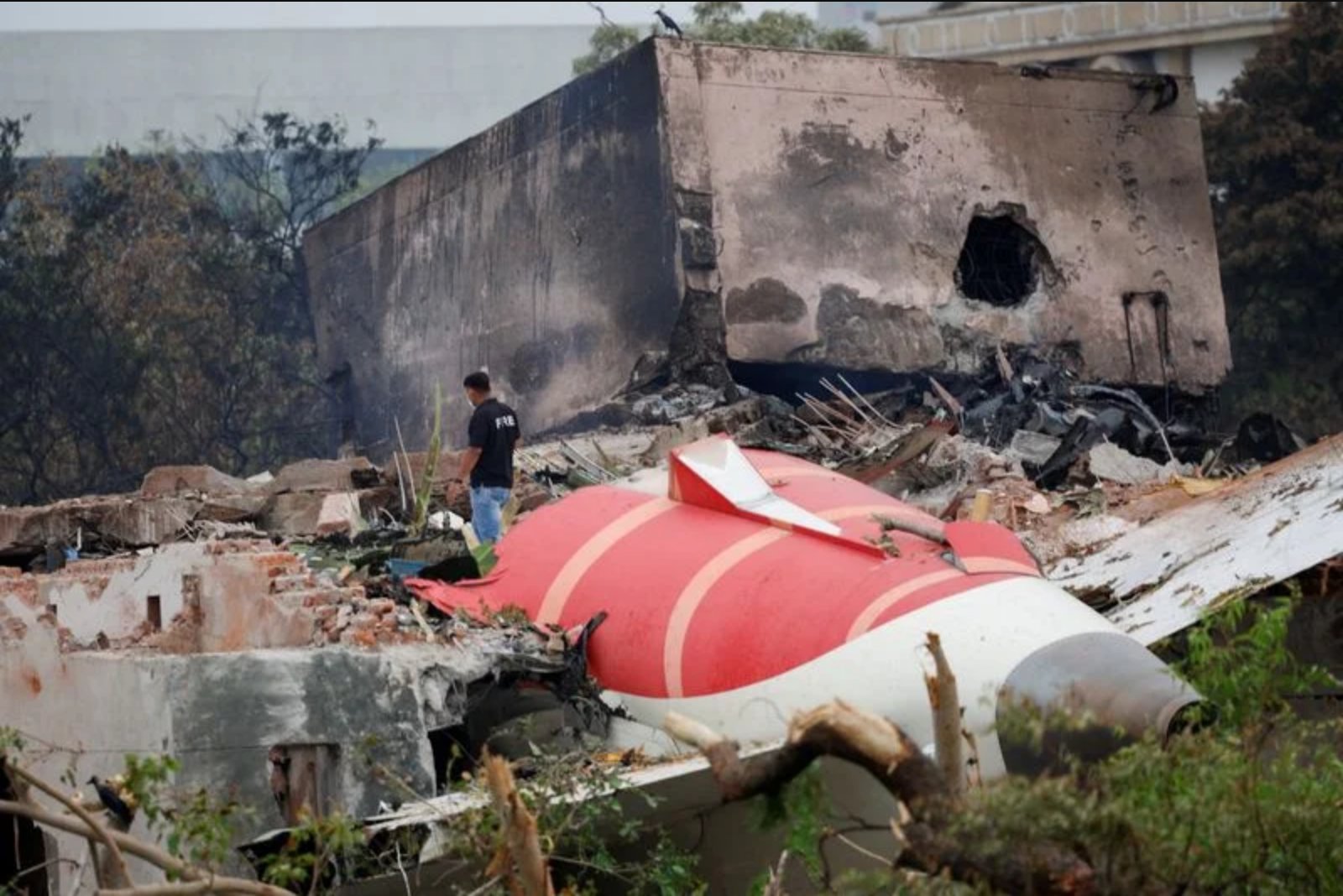
June 11 - Indian authorities are expected to postpone issuing a final accident report into the Air India Boeing 787 crash by the one-year anniversary, officials with knowledge of the inquiry said, citing outstanding work to complete an analysis of the aircraft's engines.
Early assessments by U.S. officials last year, drawing on a cockpit audio recording, concluded that the conversation between the two pilots supported the view that the captain had cut fuel flow to the engines. Indian investigators at the time cautioned that it was "too early to reach any definite conclusions." Below are compact profiles of the two pilots involved, based on the preliminary investigation report and various media accounts.
Captain Sumeet Sabharwal
The captain was 56 years old and held an airline transport pilot's licence that remained valid through May 14, 2026. His certifications permitted him to serve as pilot-in-command on multiple types, including the Boeing 787 and 777 as well as the Airbus A310. His total logged flight time reached 15,638 hours, with 8,596 of those hours accrued on the Boeing 787.
According to a media report, Sabharwal placed a call to his family from the airport before the flight, telling them he would call again after landing in London. A pilot who briefly interacted with him described him in media accounts as a "gentleman."
Following the accident, Sabharwal's father petitioned India's Supreme Court for an independent inquiry that would consider causes beyond pilot action. He said two investigators from India's Aircraft Accident Investigation Bureau (AAIB) who visited him after the crash had suggested his son may have cut the fuel to the aircraft's engines after takeoff.
First Officer Clive Kunder
The first officer was 32 years old and held a commercial pilot licence issued in 2020, valid until September 26, 2025. His certifications included pilot-in-command clearances for light twin and single-engine general aviation types such as the Cessna 172 and the Piper PA-34 Seneca, as well as co-pilot authorisations for larger transport jets, including the Airbus A320 and the Boeing 787. Kunder's total flight experience was recorded at 3,403 hours, with 1,128 hours as a Boeing 787 co-pilot.
Media reporting and family accounts indicate Kunder developed a passion for flying during his school years and began serving as a pilot in 2012. One report said he traveled to Florida to attend flight school. He joined Air India in 2017, initially flying Airbus A320 aircraft before being transitioned to the Boeing 787 fleet.
Family and friends, cited in press accounts, portrayed Kunder as a fan of superhero movies who had taught himself how to assemble a personal computer and who, while in college, came close to pursuing a professional competitive gaming career.
Context and next steps
Investigators have stated the final report will be delayed while engine analysis is completed. The preliminary materials and external assessments cited above leave open questions that the formal investigation must address. Indian authorities previously emphasised that investigators were not yet in a position to draw definitive conclusions about the sequence of events that led to the crash.
The aircraft accident inquiry remains active, with technical examinations and procedural reviews ongoing until the engine analysis and related investigative tasks are concluded.