
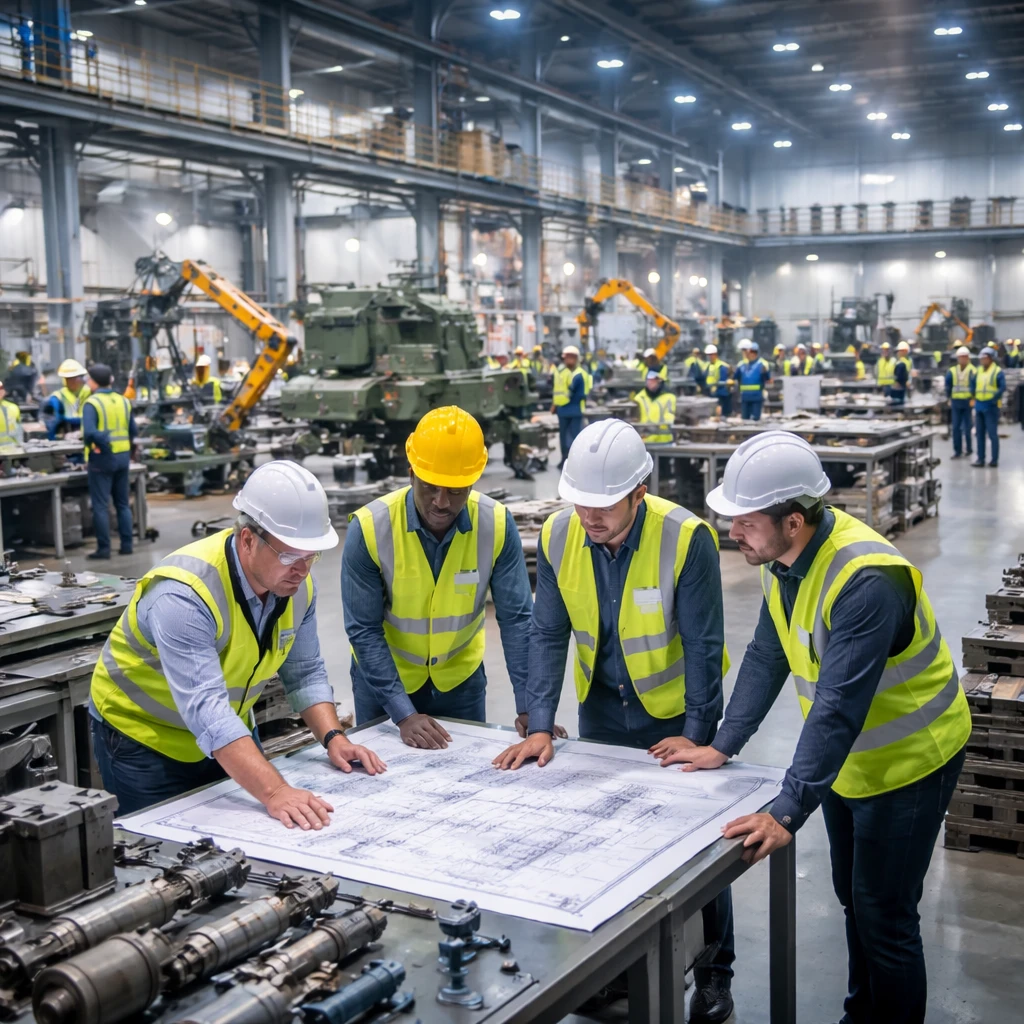
The Pentagon has initiated outreach to prominent U.S. manufacturers, including automakers, to investigate whether commercial production lines and staff can be repurposed to increase output of weapons and military systems. Senior defense officials have held initial discussions with executives from companies such as General Motors and Ford Motor, examining potential shifts in factory capacity and workforce allocation toward producing munitions and other military equipment.
Those conversations form part of a broader push under the current administration to put the defense industrial base on a wartime footing. Officials say the move responds to persistent international conflicts - including in Iran and Ukraine - that have reduced U.S. stockpiles and raised concerns about the ability of existing suppliers to meet demand.
Defense leaders are evaluating whether commercial manufacturers can augment traditional defense contractors and quickly scale production of specific items. Among the products cited in the discussions are missiles, drones and various tactical systems - categories that officials are seeking to expand production of in a short timeframe.
The outreach is not limited to automakers. Industrial and aerospace firms have also been part of preliminary talks. The effort has included discussions with companies such as GE Aerospace and Oshkosh Corporation as officials weigh how to mobilize private-sector capacity to support national security requirements.
Officials involved in the talks have framed the initiative as a response to limited domestic production capacity. The outreach signals a growing reliance on private industry to help reinforce supply chains and to meet rising national security demands as government stockpiles remain under pressure.
At this stage, talks are described as preliminary and focused on assessing capabilities rather than committing specific orders or conversions. The questions under review include whether commercial plants and personnel could be shifted without undermining core commercial output, and how quickly such shifts could be implemented to deliver additional quantities of munitions, drones and tactical systems.
As the Pentagon continues its assessment, the emphasis remains on identifying where commercial manufacturing might supplement established defense suppliers and on understanding practical constraints on rapid scaling. The discussions reflect both an urgency to restore stockpiles and uncertainty about domestic capacity to respond to surges in defense production requirements.
Contextual note - These developments are framed by officials as efforts to strengthen the defense industrial base. The outreach to private manufacturers is intended to help ensure supply chains can meet elevated national security needs stemming from ongoing conflicts that have depleted inventories.